
Tag: War
War-Torn Syria Courts Tourists. Really!
by Pam Mandel | 06.12.14 | 10:28 AM ET
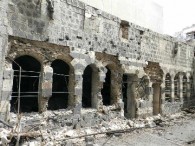
Six sites in Syria are listed as World Heritage sites and 12 more have been nominated. The World Heritage Foundation lists Damascus as “the oldest capital of the world” and “the cradle of historical civilizations.” Descriptions of Syria’s other cultural wonders are equally lofty—Palmyra has been settled since prehistory, the minarets in Bosra are the oldest in the world. Little wonder travelers want to visit Syria. It’s a cultural crossroads rich in history, home to a spectacular array of archeological wonders. But there’s one minor issue with visiting the country: For about three years now, Syria has been in the grip of a devastating civil war.
This is no deterrent to the Syrian Ministry of Tourism (sorry, no link, their site sets off a virus warning). It launched a new campaign designed to convince travelers that Syria is a safe destination. The New Republic points out how Syria’s tourist sites have been affected by the conflict. For example:
In Homs, site of that fabled “prosperous tourist season,” Jabhat al-Nusra continues to carry out bombings that have left dozens dead. In Hama, the regime is encouraging tourism while it is allegedly using chemical weapons, especially chlorine gas
Homs was under siege by Bashar al-Assad’s government for nearly three years, The New Republic posits that a tourism campaign to the region is more about showing who’s in control than about improving the country’s devastated economy.
And this story on Fox describes the issues one might encounter when making a hotel reservation:
No one denies that logistics are difficult for holiday-makers. Hotel reservations, for example, can be iffy. The other day a band of foreign jihadists blew up Aleppo’s Carleton Citadel Hotel, drastically reducing the supply of five star accommodations in Syria’s fabled second city.
Difficult logistics indeed. The campaign overlooks the tragedy of nearly 10 million displaced Syrians. The cost of war on Syria’s precious historical sites is heartbreaking, but the toll on human lives is incalculable.
More than a decade ago, I was invited to tag along on a friend’s visit to Syria and I hesitated, nervous about my nationality, my gender, my religious upbringing. “Propaganda,” insisted my friend, “you’ll be fine.” The pro-tourism campaign is propaganda, too, of a very different kind. I prefer the other flavor. I might have needed a head scarf to show respect, but a flak jacket? Not so much so.
I deeply regret not going while I had the chance.
 Email to friend
 del.icio.us
 Digg
Digg Facebook
 Furl
Furl Ma.gnolia
 Mixx
Mixx Reddit
 StumbleUpon
 Yahoo! Buzz
Drawing Connections in Mostar
by Candace Rose Rardon | 05.30.14 | 9:12 AM ET
 Candace Rose Rardon
 Candace Rose Rardon began sketching in Bosnia to better remember the place. But something else happened along the way.
Welcome to the Baghdad Country Club
by Eva Holland | 12.27.11 | 2:41 PM ET
In The Atavist, Joshuah Bearman tells the fascinating story of the Baghdad Country Club, the only bar in the capital city’s fortified “Green Zone.” The bar was built and run by a mysterious British ex-military type, a contractor identified only as James. What intrigued me about the bar was the way in which it was both an escape hatch from the war and, at the same time, a place that was inextricably shaped by its surroundings. Here’s a taste:
In addition to tending bar alongside several Iraqi Christians, Heide manned the wholesale bottle shop that James and Ajax ran out of a guard shack on the property. The shelves stocked the finest spirits the pair could find, which sometimes meant actual quality, alongside gift-store items—T-shirts, mugs, and hats emblazoned with the BCC logo and motto: “It Takes Real Balls to Play Here.”
...Danny quietly managed the place: greeting patrons, dealing with staff, and running the kitchen. James wanted the menu to be good, which wasn’t easy. Whereas much of the food in the Green Zone was processed, packaged, shipped, and reconstituted, Ajax got fresh produce and meat for the kitchen. Danny got along well with Iraqis, and he made sure to serve the national dish of masgouf—fish with onion and pickles—alongside Western-style bruschetta, salads, and steaks. He brought in a chef named Dino to come up with recipes and marinades. Good fish was difficult to come by in Baghdad, but James knew a guy who knew a guy who could sometimes get trout flown in on Delta Force choppers. And Ahmed’s regular shipments of spirits kept the bar stocked for proper cocktails.
“We never hoped to get a Michelin star,” Danny says. “But we managed to give people the one thing you don’t have in Baghdad: a choice.”
The full (long) story is available for purchase from The Atavist—it comes in a variety of e-book formats. The Atlantic has a meaty excerpt. It’s a great read.
Of Laws and Loopholes
by Christopher Vourlias | 09.07.11 | 10:32 AM ET
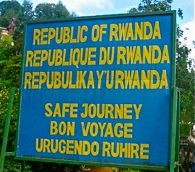 Photo: Christopher Vourlias
 Christopher Vourlias just wanted to cross the border, but one man stood between him and the Congo
‘So Everyone You See Here That’s Over 35 Lived Through the War?’
by Eva Holland | 08.04.11 | 8:58 AM ET
Over at Matador, World Hum contributor Lauren Quinn wrote a long, layered story about a visit to the Killing Fields in Phnom Penh, her childhood friendship with the daughter of expat Cambodian survivors in Oakland, and the silence that seems to linger over the war.
Here’s a taste:
Our tuk-tuk rattled along the unsteady pavement, taking us closer to the mass-grave execution site that is one of Phnom Penh’s two main tourist attractions. The other is the Tuol Sleng Genocide Museum, the former S-21 torture prison under the Khmer Rouge. All the travel agencies along the riverside advertise for tours of the two, sometimes combined with a trip to a shooting range where travelers can fire AK-47s left over from the war (ammunition costs not included).
Most travelers stayed in Phnom Penh only long enough to see S-21 and the Killing Fields, then scattered from the city. It was what Cindy was doing, and what I, if I hadn’t come for my particular project, would have done as well. I’d been putting off visiting the Killing Fields, not wanting, I’d rationalized, to spend the $12 tuk-tuk fare venturing out solo. Cindy offered an opportunity to split the cost—but more than that, she offered a buffer, a companion.
The wind grew stronger without buildings to block it, and I blinked bits of dust and debris from my contact lenses. By the time we pulled into the dirt lot in front of the Killing Fields, stinging tears blurred my vision.
“This happens every day here,” I laughed, and dabbed my eyes.
Our Own Apocalypse Now
by Haley Sweetland Edwards | 03.07.11 | 1:08 PM ET

From a football stadium in Seattle to a sweaty nightclub in Saigon, Haley Sweetland Edwards wrestles with the f*cked up magic of war
World Travel Watch: Traffic Restrictions in Italy, Conflict on the Thai-Burmese Border and More
by Larry Habegger | 11.10.10 | 1:29 PM ET

Larry Habegger rounds up global travel news
P.J. O’Rourke Goes to Afghanistan
by Jim Benning | 08.25.10 | 11:50 AM ET
The occasional travel writer takes a fun shot at parachute journalism:
If you spend 72 hours in a place you’ve never been, talking to people whose language you don’t speak about social, political, and economic complexities you don’t understand, and you come back as the world’s biggest know-it-all, you’re a reporter.
Ouch.
The Flame of Hope in the European Union
by Eric Lucas | 01.27.10 | 11:32 AM ET

Don't take it for granted. Eric Lucas explains why the EU matters to travelers.
The Challenge of Curating a ‘Museum of Ideas’
by Eva Holland | 12.15.09 | 4:35 PM ET
The Globe and Mail has a thoughtful, in-depth look at the process of creating Canada’s still-in-progress Human Rights Museum—a museum, as James Bradshaw, writes, “whose mandate is to grapple almost entirely with the world’s touchiest subjects.” He goes on:
“It is a museum of ideas. And ideas, of course, are never static,” says Yude Henteleff, the chair of the museum’s Content Advisory Committee.
If human rights are a human construction, a set of collective ideas, then the public view of them will be forever shifting, amorphous and vulnerable to attack. And a museum that tries to document that process on its walls promises to have its combustible moments.
A Tourist’s Afghanistan
by Cullen Thomas | 12.10.09 | 11:09 AM ET
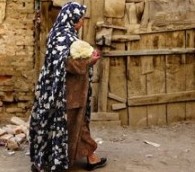 REUTERS/Jerry Lampen
 Cullen Thomas recounts an independent traveler's time in the war-torn country
One Night in Palestine
by Cory Eldridge | 12.08.09 | 10:33 AM ET
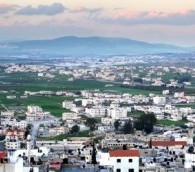 Photo by Cory Eldridge
 Cory Eldridge only smokes when he's drunk or in the West Bank. During one tense night in Jenin, he goes through a whole pack.
Photo You Must See: ‘Between the Crosses, Row on Row’
by World Hum | 11.11.09 | 2:32 PM ET
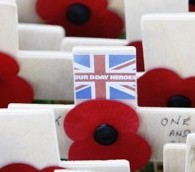 REUTERS/Luke MacGregor
 A Union Jack is seen among the crosses and poppies of Westminster Abbey’s Field of Remembrance. Remembrance Day services were held at the Abbey this past Sunday.
Afghanistan: The View From 30,000 Feet
by Eva Holland | 10.13.09 | 12:37 PM ET
The New York Times’ At War blog has a compelling slideshow of black-and-white shots from the window seat of a flight to Kabul. Photographer Moises Saman writes in the accompanying post: “From the air, the impenetrability of this region becomes evident.” (Via @elihansen)
Photo You Must See: A Girl and a Gun in Afghanistan
by World Hum | 10.06.09 | 5:15 PM ET
 REUTERS/Asmaa Waguih
 An Afghan girl looks up at a U.S. Marine on patrol in Helmand province, Afghanistan.
Afghanistan: ‘It’s Always the Fixer Who Dies’
by Eva Holland | 09.14.09 | 9:47 AM ET
George Packer responds to last week’s rescue effort, which freed kidnapped New York Times reporter Stephen Farrell but left his Afghan fixer, Sultan Munadi, dead: “Somehow, it’s always the fixer who dies. Of course, this is a false statement of fact on its face—at the very least, an exaggeration. But it feels emotionally true.” It’s worth reading in full.
No War Re-Enactments, Please, We’re Canadian
by Eva Holland | 09.04.09 | 11:33 AM ET
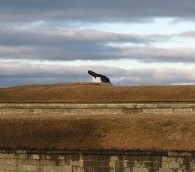
Next weekend marks the 250th anniversary of the Battle of the Plains of Abraham outside Quebec City, a decisive battle in the British and French struggle for present-day Canada—so you might expect a loud, colorful historical re-enactment, complete with muskets and period costumes. Right? Um, no. Instead, a “unifying” battlefield poetry slam is in the works. You can’t make this stuff up.
Make Guacamole, Not War
by Jim Benning | 07.22.09 | 10:17 AM ET
 iStockPhoto
 Does travel make us less happy? Jim Benning laments the news from the Mexican state of Michoacán.
65 Years Later: Robert Capa and D-Day on Film
by Eva Holland | 06.05.09 | 11:44 AM ET
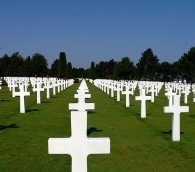
Tomorrow marks the 65th anniversary of the Allied landings in Normandy, an assault that is widely viewed as one of the key turning points in the Second World War. President Barack Obama, French President Nicolas Sarkozy, and Canadian and British Prime Ministers Stephen Harper and Gordon Brown will be converging on the area for an official ceremony this weekend, following in the footsteps of thousands of tourists who visit the beaches each year.
The event has me thinking about the enduring appeal of the D-Day beaches—after all, Europe has no shortage of battlefields and war monuments, but few are as well-known to Americans as Omaha Beach (or, for Canadians, Juno Beach). It seems to me that their historical significance alone doesn’t explain it. The beaches, I think, have such a powerful presence in the public consciousness thanks in part to a few iconic photographs by Robert Capa.
Colombo, Sri Lanka
by World Hum | 05.26.09 | 4:06 PM ET
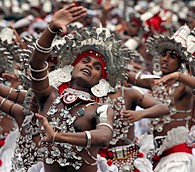 REUTERS/David Gray
 Dancers dressed in traditional costumes perform during a street parade in central Colombo, part of continuing celebrations following the end of Sri Lanka's 25-year civil war
- « Prev Page
- Next Page »