
How to Drink Kava in Fiji
How To: Laurie Pritchard explains how to properly imbibe with village chiefs, virgins and ancestral spirits
12.16.08 | 4:35 AM ET
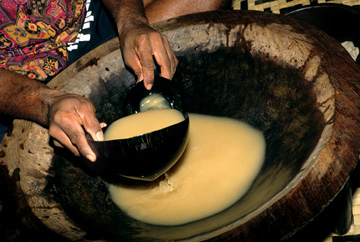 iStockphoto
The Situation: You have flown to Fiji, a corner of the South Pacific, and have strayed from your resort bungalow to get a taste of village life and Fiji’s ubiquitous kava drink. You now find yourself before a chief, the ceremonial kava bowl takes center stage and you are the guest of honor. But the intricate sevusevu, or welcoming, ceremony is laden with ritual. How not to offend the locals? You need a lesson in kava protocol.
The Basics: Kava, also known as yaquona or grog, is a mild analgesic, diuretic and stress reliever. It is prepared using the root of the piper methstyicum plant, part of the pepper family. Drinking it will make your body lethargic, tongue tingly and head fuzzy. A feeling of “yes, all is right in the world” will pervade.
Kava also occupies a central place in everyday life in Fiji. The drinking ceremony is a crucial element of diplomacy and all of Fiji’s important events are distinguished with kava consumption. Although non-alcoholic, it is the social lubricant, the deal sealer, the friend maker. Where there is a village, there is kava.
Background: Fijian custom dictates visitors to a village must bring a gift of kava root, found in almost every market, and not arrive there empty-handed. That’s just asking to be thrown into the cauldron. First ask permission from the chief to enter, and by offering a gift, you are likely—but not guaranteed—permission to hang out. The formal ceremony for giving a gift of kava to a village chief is called the sevusevu, and kava appeases both the chief and the ancestral spirits. And if the spirits ain’t happy, then nobody’s happy.
Preparing the Kava: Traditionally kava was prepared by chewing the root into a pulpy mass, spitting it into a bowl called the tanoa, and then mixing it with water—a task usually reserved for young virgins. Lucky for you, most kava these days is pounded by hand, using a mortar and pestle, into a powder. The powder is then placed in a cloth, dipped in the tanoa’s water and is massaged and squeezed—voila! Your beverage is ready. The kava is then poured into a bilo, or coconut shell, from which it is drank.
Sevusevu Etiquette: As a resort or hotel guest, you will have most certainly been brought to a village by a Fijian guide. The guide will instruct you to sit in on a woven mat in a semi-circle facing the chief. Be assured that this ceremony is quite serious. Respect the chief by keeping your head lower than his, remaining quiet, and sitting cross-legged while keeping your feet pointed away from the tanoa.
The ceremony will be conducted in Fijian. Your guide will act as your spokesperson; however, you may be expected to give a short speech. All Fijians speak English, but you can throw in a “Vinaka” (thank you) for extra credit. The chief will drink his kava first, and then the bilo will be dipped into and refilled from the tanoa, eventually making its way around the circle. The most important people drink first.
Before accepting the bilo, clap once with your hands cupped, not flat, and say, “Bula!” (it’s normally a greeting, but in this context it is an expression of gratitude). Take the shell with both hands, and down it all in one go like a tequila shot. It will taste like spicy dirt. Do not wince or say “bleh.” Hand the shell back to the host, and clap three times again in the same manner, saying “Bula!” once again. You will immediately feel your lips go numb.
Advanced Technique: Once you have mastered feigned delight, you can announce “Maca!” (“The cup is empty!”) If the locals sense your appreciation for their prized beverage, they will test your enthusiasm by asking, “High tide?” meaning the level of grog you want in your next shell. Don’t worry, you can’t really go overboard with kava consumption, and you won’t have to fear for your safety. Even the fiestiest Fijians are rendered placid. Kava drinkers don’t get rowdy, they just fall asleep.
What to Wear: Fiji did not escape the influence of the missionaries, therefore dress involves full coverage, even in oppressive heat. Cover your legs and shoulders, and remove your shoes when entering the bure (hut). You will find both women and men wearing traditional sarongs, called sulus, which are often oddly paired with t-shirts of the Monster Trucks variety. Hats, sunglasses and shorts are a big no-no.
Do’s: Bring your own gift of kava root. Pick up some at any market for about $5 a pound. Avoid the cheap powdered kava—it’s like coming to a dinner party with a gift of Cheetos. Most Fijians prefer to pound the kava root themselves, creating a more potent concoction than processed kava. If you stay overnight in a village, you’ll soon get used to sonorous metal clang of the giant mortar and pestle, along with the sounds of shouting children and the omnipresent rooster cackles.
Don’ts: Never touch anyone’s head in Fiji, especially the chief’s, as the head is considered sacred. Not-so-ancient history tells of missionary Reverend Thomas Baker who angrily saw that a Fijian chief who had rejected Christianity had taken a liking to his comb. After he snatched it from the chief’s hair, he quickly became Baker bouillabaisse. (Interestingly, a few years ago Fijians conducted an official “Sorry we ate you” apology ceremony for the Methodist missionary that involved—you guessed it—drinking a lot of kava.)
Where to Go: All Fijian resorts seem to have a kava night on offer, during which the weak Diet Coke version of kava is served in a sterile environment. To get down and dirty, sign up for a village visit through Rosie Holidays in Nadi or Suva and head for the highlands. Villages like Rokovuaka and Sawanivo are used to visitors but live, for the most part, in a traditional manner. On Sundays, don’t expect to do anything except go to a village church service and of course, drink kava. But that’s what you’re here for, isn’t it?