
San Miguel de Allende: ‘The Loser Now Will be Later to Win’
Travel Stories: Peter Ferry celebrates a beloved Mexican city where you might not get all the avocados you want
02.19.10 | 10:34 AM ET
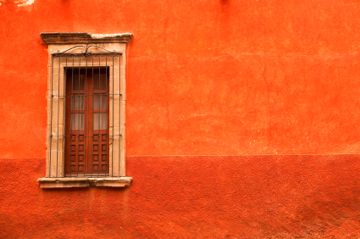 San Miguel de Allende (iStockPhoto
Question: What do Brouwershaven in The Netherlands, Galena, Illinois, and San Miguel de Allende, Mexico, have in common?
Answer: They are all losers.
In 1600, it was a toss-up as to whether Brouwershaven or Rotterdam would become the largest sea port in northern Europe.
In 1850, it was uncertain if Galena or Chicago would become the largest city in the Midwestern United States.
In 1800, San Miguel was a center of gold and silver mining with great churches, convents and theaters, handsome public buildings and dozens of palatial houses. Its rival was not another city but time; the mines played out and by 1900 San Miguel was a virtual ghost town.
But in that odd way of things, these big losers became small winners later on. Each stopped growing and is thus a frozen moment in time, preserved as surely as a bee in wax or a fish in a fossil. Each in its entirety is a historical relic.
San Miguel was founded in 1542 as a mission, but most of the buildings in its center went up in the 17th and 18th centuries in Spanish colonial style. That is to say, they were built around a central plaza called el Jardin that has a bandstand, sculpted trees and cast iron benches, and that is faced by a monumental church called the Parroquia, which is surrounded by the pastel spires, lighted bell towers, and tiled domes and cupolas of half a dozen other churches. Off this plaza in all directions uphill and down run narrow cobblestone streets packed with stone and stucco buildings painted in bright earthy shades like burnt umber, ochre, terra cotta, and deep yellow as well as cream and stark white. The real charm and beauty of these ancient structures is found in spacious interior courtyards full of lush gardens, draping bougainvillea, ancient trees, sunshine and caged birds, as well as in the high blue skies above.
MORE: Five Photos: The Painted Walls of San Miguel de Allende
Some of these beautiful old buildings are still private homes, but many have been turned into hotels (these range from five star to funky), restaurants (the same), stores, schools and one is even the public library, the only one I know where you can have a glass of beer or wine with a book, salad or sandwich. This is a very civilized place in addition to being beautiful.
And half the beauty is the climate. Located two days’ drive south of Texas and three hours north of Mexico City, San Miguel is high on Mexico’s central plateau at over 6,000 feet. That means it is warm in the sun, cool in the shade with average winter daily highs in the 70s. Fortunately, winter is the dry season, so the sky is almost always blue. Almost. It’s been raining perros and gatos since we got here three days ago, and rain is in the forecast, too, so that sun-drenched veranda of ours with the breathtaking views we thought we’d be sitting on in shorts and T-shirts? Well, our only view is of the rain-drenched veranda itself from our living room, where we sit in sweaters and wool socks, and it’s not breathtaking at all. No fear. It’s supposed to clear up on soon. It’s a good thing we have a month here. If we’d only had a week, I’d be melancholy going on morose.
But the real beauty of San Miguel de Allende is that it is in Mexico and it’s full of Mexicans. What does this mean? An American woman who moved here to start a new life after the suicide of her husband explained it by saying that she has never been anywhere that’s so full of life. And growing things, chirping things, barking things, colors, smells and a different way of living.
A friend went to the local mercado to buy nine avocados for guacamole she was making for a party. She found a little Indian woman wrapped in a little shawl sitting on a little blanket on the floor with exactly nine avocados arranged in a pyramid. “Perfect,” my friend said in Spanish, “I’ll take them all.”
“Well, you can’t have them all,” said the woman.
“Why not?”
“Well, if I sold you all of my avocados, what would I do?”
My friend bought five.
Now, if that story does not make sense to you, San Miguel may not be your cup of tea, but if it does, you might want to pay a visit.