
Six Cities to Explore Martin Luther King’s History
Lists: From Atlanta to Washington, D.C., Larry Bleiberg highlights the must-see places where the civil rights leader lived and made history
01.18.10 | 1:19 PM ET
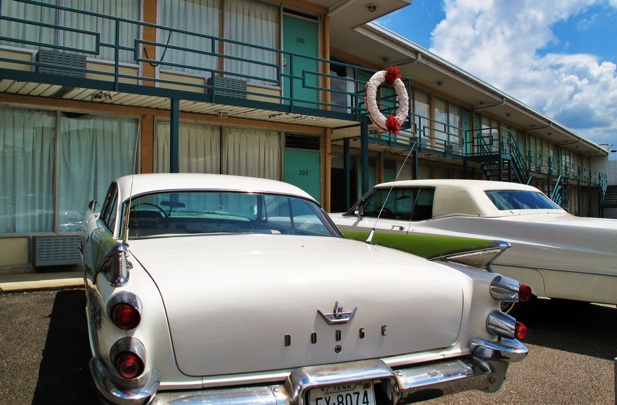 Photo of Lorraine Motel/National Civil Rights Museum in Memphis by Victor Chapa, via Flickr (Creative Commons)
No other name is so closely linked to the civil rights movement. A civil-rights traveler can visit the movement’s most important sites just by touring the cities where Martin Luther King Jr. lived and made history.
Atlanta, Georgia
King’s story begins and ends in Atlanta. Visit the National Park Service’s King site, his home pulpit, and his gravesite. No city is so closely linked to King as his hometown, Atlanta. There are literally hundreds of King sites here.
But to understand the scope of King’s legacy, one only need visit the National Park Service’s Martin Luther King Historic Site. Exhibits expertly capture King’s era and follow him from childhood to his historic role on the international stage. Introductory films offer a moving biography along with excerpts from his most famous speeches.
The visitors center anchors the entire Sweet Auburn district, once the center of Atlanta’s African-American life. Affiliated sites include King’s home pulpit, Ebenezer Baptist Church, where he was baptized and his father and grandfather both served as pastor.
The King Center includes exhibits on his wife, Coretta Scott, and Mahatma Gandhi, whose philosophy of non-violent protest inspired King. King and his wife are buried here in a moving memorial, surrounded by water. At anytime, find visitors from around the world pausing to meditate on his legacy and courage.
Montgomery, Alabama
The Alabama capital was where King first became a pastor, and a historic figure. Visit his home, learn about his role in the bus boycott, and honor him and other victims of the civil-rights struggle at a moving memorial.
King was the senior pastor at Dexter Avenue Baptist Church (now Dexter Avenue King Memorial Church) during a key moment of civil rights history: the 1955 Montgomery Bus Boycott. It was sparked by the arrest of Rosa Parks, a 43-year-old seamstress, who refused to give up her seat to a white man, as required by the era’s Jim Crow laws.
As a relatively new resident, King became the spokesman for the protest and a symbol. He received dozens of threatening calls a day, and his home, the church’s parsonage, was firebombed.
- Civil rights travelers must visit the Parsonage Museum, which is open for tours by appointment. They’ll enter a homey scene from the 1950s and see the mark on the porch left by the bomb which smashed through a living-room window. The Kings’ 10-week-old daughter was sleeping in an adjacent room at the time. King later wrote that he nearly lost his courage at that moment, wondering if the boycott and the larger struggle for civil rights were worth endangering his family. History records the answer.
- The Bus Boycott, an unprecedented community-wide movement for equality, is honored in the Rosa Parks museum. Visitors enter a vintage city bus and watch a video showing how one woman’s act of defiance made a difference.
- Montgomery, Alabama’s state capital, was where many of the state’s discriminatory laws were passed into law. It was also the endpoint of the Selma-to-Montgomery march. The march, which made international headlines, finally reached the statehouse steps after violence and murder. It was here that King, addressing a crowd of more than 25,000, gave his “How Long? Not Long” speech.
- Those who died during Selma and in other places are remembered at a moving monument at the Southern Poverty Law Center. The Civil Rights Memorial, designed by Maya Lin, best known for the Vietnam Veterans Memorial in Washington, D.C., lists their names. King, of course, is included, and so is the Biblical quote he cited during his “I Have a Dream” speech: “until justice rolls down like waters and righteousness like a mighty stream.” Fittingly, the names of the fallen are covered with a thin sheet of rolling water.
Washington, D.C.
King made international headlines during the March on Washington. Visit the site of his stirring address at the Lincoln Memorial.
The most famous words of the 20th century were delivered from the steps of the Lincoln Memorial. King’s “I Have a Dream” speech will be remembered long after our civilization is gone. He delivered the final address during the 1963 March on Washington for Jobs and Freedom. The event drew 200,000 spectators, a quarter of them white. Celebrities on hand ranged from Sammy Davis Jr. to Marlon Brando to Bob Dylan.
A marker, dedicated in 2003 by King’s widow Coretta Scott, memorializes the moment. The memorial has been the site of many other pivotal moments in U.S. history. Some say the modern civil-rights movement got its start with Marian Anderson’s 1939 Easter Sunday concert at the memorial. The African-American performer had been banned from performing at Constitution Hall by the owners, the Daughters of the American Revolution.
Birmingham, Alabama
See the cell where King wrote his famous Letter from Birmingham Jail. Confront police dogs captured in mid-attack, visit the church where four girls were murdered in Sunday school.
When King pastored in Montgomery, Alabama, he was a frequent visitor to Birmingham and came to know the city’s racial strife—and its African-American leaders.
It would be hard to understate the city’s role in civil-rights history. The city, once known for police-dog attacks and murder, is now a leader in preserving the history of the civil-rights era. Today visitors find a sophisticated city that looks forward while helping visitors explore its rocky, racial history.
King’s letter from Birmingham Jail—an eloquent plea for non-violent protest—has been called the most important document of the era. It was scribbled on the margins of a newspaper after his arrest during 1963’s Birmingham Campaign that would eventually end segregation in the South. King’s actual jail cell is displayed at the Birmingham Civil Rights Institute.
- Start your visit with a visceral trip to the past in Kelly Ingram Park, where statues of attack dogs snarl at tourists as they once menaced non-violent protesters, including women and children. Even nearly 50 years after the 1963 marches, which King helped organize, a visitor recoils at the assault, and can only imagine the horror protesters faced. Statues of King and other ministers are also shown.
- The moving and extensive Birmingham Civil Rights Institute includes a burned Greyhound bus, a tribute to the Freedom Riders who were attacked in Birmingham during the historic 1961 protest to desegregate interstate transportation through the South. Riders were beaten in Anniston, Alabama, about 60 miles to the east. When protesters arrived in Birmingham on Mother’s Day, they were brutalized as well.
- Birmingham’s most notorious site is the Sixteenth Street Baptist Church, located across the street from the park and Civil Rights Institute. Klansmen placed ten sticks of dynamite by the building in 1963, showering stained glass on worshippers and killing four girls attending Sunday school. The church, which served as a staging area for the 1963 marches, is open for tours by appointment. A memorial area remembers the victims, and a wall clock is forever stopped at 10:22, the time of the explosion. King spoke at the funeral for three of the girls.
Selma, Alabama
Walk across the Edmund Pettus bridge, site of the last significant confrontation of the civil-rights era. Visit a museum, and read recollections of participants. Take a city tour, and see where King galvanized marchers.
One of the last cities to attract the attention of protesters, Selma flashed on the nation’s screens and conscience during the 1965 march to Montgomery. The searing images of protesters beaten as they reached the Edmund Pettus bridge are some of the most notorious scenes of the era, making the city a must-stop for any civil-rights traveler.
The 54-mile march, organized to support voter registration, took two weeks to leave Selma due to the violence. Two days after the first attack on March 7, 1965, remembered as Bloody Sunday, King led a symbolic second attempt, stopping at the bridge to kneel in prayer. Finally on March 21, protected by national guard and federal troopers, King led the five-day march on to Montgomery. The march is reenacted every year during the first full weekend of March.
- Civil-rights travelers will want to visit Selma’s National Voting Rights Museum, which includes clothes worn by the protesters beaten on Bloody Sunday and voting records, documenting how citizens were disenfranchised. The “I Was There” wall includes notes left by some of the thousands of marchers, recalling their memories of the events. The museum is open weekdays and only by appointment on Saturdays, so plan carefully.
- A 20-stop Martin Luther King Jr. walking tour features the Brown Chapel AME Church, where the march was organized and began, and the First Baptist Church, which was the home of Selma Campaign—the Student Nonviolent Coordinating Committee (SNCC )—and where King spoke several times.
- The route to Montgomery is now a National Historic Trail, marked by historic markers and a National Park Service visitors center, located halfway between Selma and Montgomery. The Lowndes County Interpretive Center recounts the events in grim detail, including the deaths of several marchers, such as Viola Liuzz, killed by Ku Klux Klan members as she was driving marchers between Selma and Montgomery. The center is near the site of “Tent City,” the home of black sharecroppers who were kicked out of their homes when they attempted to register to vote.
Five months after the events, President Lyndon B. Johnson signed the national Voting Rights Act into law.
Memphis, Tennessee
As King had predicted, he never lived to see the country’s racial wounds healed. Visit the motel room where he was gunned down.
King seemed to realize he would not see his journey to the end. In a speech on April 3, 1968, he alluded to the possibility of his death in his “I’ve Been to the Mountain Top” speech.
The next day he was assassinated. The world was shocked when James Earl Ray allegedly shot King on the balcony of the Lorraine Motel. No civil-rights traveler should miss the place where King’s life came to an end.
The assassination site is carefully preserved at the National Civil Rights Museum. Visitors can spend most of the day here, absorbing the detailed exhibits of African-Americans’ struggle for equality. Equally absorbing are the displays tied to the assassination. King’s motel room, number 306, is preserved, as is the adjacent guesthouse, where James Earl Ray allegedly shot King through a bathroom window.
This story first appeared at CivilRightsTravel.com. 