
Eating Like a Viking in Minneapolis
Travel Blog • David Farley • 12.29.08 | 6:45 PM ET
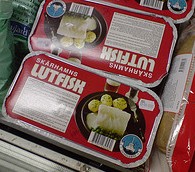 Photo by
 The first indication I knew I was in trouble was when the waitress told me I was the youngest person to order the dish since they put it on the menu a month ago. And I’m 37. The second—and the worst part—occurred when the dish actually arrived. Staring at me from a plus-sized plate was a variation on the theme of pale: diced boiled potatoes, golf ball-sized pearl onions, lefse (a flatbread not unlike lavash or tortilla), a thimble of butter, and, the plate’s tour de force, a three-inch quivering gelatinous beast. Otherwise known as lutefisk.
Welcome to Minneapolis, home of Ancel Keys (the man who gave post-World-War-II Europe K Rations and, later, the Mediterranean Diet), Prince, a burgeoning East African population, and, of course, the patron saint of adventurous eating, Andrew Zimmern. It’s also home to lutefisk (pronounced loot-a-fisk), a “fish,” for lack of a better term, that was brought over by Scandinavians. Lutefisk actually starts out as a typical Scandinavian white fish (cod or haddock, for example), but thanks to a rigorous drying technique (it’s rehydrated with lye, commonly found in drain cleaners, by the way), it becomes something else. And that “something” is actually consumed more in the state of Minnesota than in Scandinavia today. I’d visited Minneapolis more than a dozen times, but I always opted for the city’s better, more ethnically diverse restaurant fare. This time, however, smack in the middle of lutefisk season (October-March), I thought it was time.
Lutefisk lovers say the putrid-smelling fish squirms down your throat so quickly, you can’t really taste it (that’s a positive attribute, I guess). Throughout the season, lutefisk is served regularly at church suppers where (usually) geriatrics of Scandinavian descent go to slurp down their heritage. I opted for the “safer” option: the recently created “haute” version at the white-table-clothed Landmarc Grill. I had no idea what was so “haute” about the offering, except that it was tall. The waitress didn’t ask to see my AARP card, so I picked up my fork and let it glide through the nearly transparent clump of fish.
I’d love to write here that lutefisk wasn’t so bad after all, that it’s received a bad rap, probably due to a younger generation of Viking descendants eschewing what their grandparents ate. I won’t. I can’t. But I will say this: it wasn’t so bad that I had to plug my nose while chewing. It was like having a forkful of phlegm in my mouth that quickly disintegrated when it hit the palate, the taste of nothingness—eventually eclipsed by a non-intrusive, but unforgiving fishy aftertaste. Its only offense was the $18 bill afterward.
A few of the older staff—wearing open smirks—stopped by to ask how I liked the lutefisk. “It was…good,” I said, trying to play the diplomat.
When I left, however, I was still hungry. So, having tasted my slice of Scandinavian Minnesota, I opted for something a little more typical of Minneapolis: one of the city’s many Ethiopian restaurants.