
From Tonga to Texas, Doing the Haka
Travel Blog • Jim Benning • 11.14.07 | 11:31 AM ET
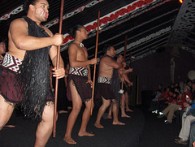 Photo of Maori dance by Gaetan Lee via Flickr, (Creative Commons).
Texas is not a place where you’d expect to see the haka—the war dance that originated with New Zealand’s Maori and is performed on a number of Polynesian islands. But that’s changing. The CBS Evening News aired a terrific segment last night on how the migration of Tongans to Dallas Fort-Worth, largely to work in the airline industry, has led one high school football team in the nearby city of Euless to take up the dance as a pre-game ritual.
The team was inspired by New Zealand’s All Blacks rugby team, which performs the haka before matches. One of the Texas players, a Tongan immigrant, saw a video of the team on the Internet.
According to The Wall Street Journal, which covered the story last year:
The team first performed the haka for fans at the beginning of the 2005 season. Concerned about seeming to taunt opponents unfairly, the coach restricted the haka performance to the sidelines at the end of the field where most Trinity students sit.
It was an instant hit. Today, the stands closest to where the team performs the chant are full an hour before kickoff. An eerie silence falls over the stadium as soon as the tone is sounded on the conch shell as fans strain to hear the haka leader urging on the team.
After taking up the dance, the team soon won the state championship.
The most touching aspect of all this? Reported the Journal:
Ilaiasi Ofa, executive director of the Voice of Tonga, the organization that serves as a local advocate for Tongan immigrants, said the haka has become a source of pride for a community that hasn’t always been sure of its place in Texas. Shortly after the team first began performing it, Mr. Ofa showed a videotape of it to a group of older Tongan residents. Their attention immediately gravitated to the white players standing in the front row, performing the war dance alongside their Tongan teammates.
“I had two older men with tears in their eyes tell me afterward, ‘After seeing that, we know that our future generations will be accepted here,’” Mr. Ofa said.
Ofa told the CBS Evening News: It’s “A reassurance from the outside world that we are part of this community - reassurance that they accept us as we are.”
CBSNews.com has the video of its report.