
Hawaii vs. Office of Hawaiian Affairs
Travel Blog • Pam Mandel • 02.24.09 | 12:48 PM ET
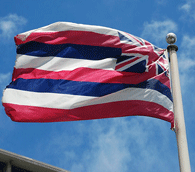 Photo by
 A brief disclaimer: I’m not an expert on legal matters and while I’ve been doing lots of reading, there’s still lots I don’t understand. Because of that, I absolutely welcome your more enlightened comments on the case. I’d just like to get you interested in what’s happening and why it’s a big deal, I’m going to keep it brief and send you elsewhere to more expert commentary. Now, in summary:
The Hawaiian State Supreme Court previously ruled that the state (Hawaii) could not sell lands ceded in the overthrow of the Hawaiian Monarchy until a settlement on those lands had been reached with the Hawaiian people. The gist? The lands were ceded to the U.S. government by those who had no right to do so.
The state of Hawaii is appealing the decision—it wants the right to sell those lands. It says that its ability to manage the lands is impeded by this ruling. That’s the bare bones of the case. But Native Hawaiians see a lot more at stake in the Supreme Court’s first case tomorrow.
There’s a critical sidebar here—Native Hawaiians have received no federal recognition in the way that many Native American and Alaskan people have. They’re depending on state law for their entitlements. The 1999 Apology Resolution acknowledged the impact of the overthrow of the Kingdom, but did not resolve land claims.
Because of that, the Office of Hawaiian Affairs is concerned about three things when the case comes before the court.
- The state will be able to proceed with land sales to private parties. Native Hawaiians will not be able to settle with private owners on ceded land issues.
- The case will invalidate Native Hawaiian entitlements. The Supreme Court’s primacy may invalidate prior rulings at a state level about Native Hawaiian rights.
- Native Hawaiians will lose further ground in gaining federal recognition as a people.
There’s more, of course, that’s just the entry point. For more detailed information check out these sources:
- ScotusBlog Argument Preview: Hawaii v. Office of Hawaiian Affairs
- Kupu’Aina Coalition: The Background of the Native Hawaiian “Ceded” Lands Case
- Ka Wai Oloa Loa: Native Rights on Trial