
How to Make a Great Road Movie
Travel Blog • Michael Yessis • 11.14.07 | 6:35 AM ET
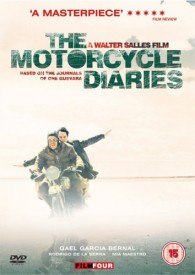 Who better than Walter Salles to define what makes a stellar road movie? The Brazilian director of the best road movie in recent years, The Motorcycle Diaries, and the upcoming adaptation of Jack Kerouac’s On the Road, wrote an excellent essay in the New York Times Magazine outlining his “theory of the road movie.” Salles gets the influences out of the way in short order—all road movies, he believes, owe a debt to “The Odyssey”—then dives into an insightful analysis of the ingredients of a great road movie. It should resonate with anyone who looks at travel as an immersive, life-altering experience.
Salles writes:
After directing three road movies myself (“Foreign Land,” in collaboration with my friend Daniela Thomas, “Central Station” and “The Motorcycle Diaries”), I believe that a defining aspect of this narrative form is its unpredictability. You simply cannot (and should not) anticipate what you will find on the road—even if you scouted a dozen times the territory you will cross. You have to work in synchronicity with the elements. If it snows, incorporate snow. If it rains, incorporate rain.
He continues:
In terms of film grammar, the road movie is limited only by one obligation: to accompany the transformations undergone by its main characters as they confront a new reality. The road movie is not the domain of large cranes or steady-cams. On the contrary, the camera needs to remain in unison with characters who are in continual motion—a motion that shouldn’t be controlled. The road movie tends, therefore, to be driven by a sense of immediacy that is not dissimilar from that of a documentary film.
Toward the end of the essay, Salles reveals a conversation he had with poet Lawrence Ferlinghetti, who says that today, in a world with television, there’s no more “away.” Everything is familiar and, thus, the road movie may not have “a reason to exist.”
It seems an overstatement. The world seems to change faster than anyone can fully document, and cultures continue to collide in spectacular and unexpected ways, leaving plenty of “away” to see.
Salles admits that sometimes when he’s in an “especially melancholic mood,” he thinks road movies don’t have a reason to exist anymore. However, those are fleeting thoughts. “[E]very time I turn the TV on and see a reality show, I change my mind. Reality shows offer the audience the illusion that they can live through certain experiences, but only vicariously. What is sold is the impression that all has been lived and that nothing is left to be experienced anew.”
He adds:
Road movies directly challenge this culture of conformity. They are about experiencing, above all. They are about the journey. They are about what can be learned from the other, from those who are different. In a world that increasingly challenges these ideals, the importance of road movies as a form of resistance can’t be dismissed.
Related on World Hum:
* Will ‘The Motorcycle Diaries’ Spawn a New Magazine: Condé Nast Revolution?
* Rex Pickett on Road Movies
* Will ‘On the Road’ Ever Be Made Into a Movie?