
From Ipanema to Copacabana: What Rio de Janeiro’s Beaches Say About Brazil
Travel Blog • Michael Yessis • 02.07.07 | 8:17 AM ET
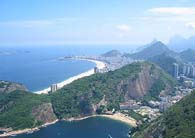 Photo of Rio de Janeiro by
 A lot, it seems. “Brazilians like to say that the beach is their country’s ‘most democratic space,’” writes Larry Rohter in a terrific story in the New York Times. “But some bodies—and some beaches—are more equal than others.” Rohter focuses on Ipanema and Copacabana, revealing what groups frequent each of the 12 postos (lifeguard stations) that span Rio’s most elite beaches and how Brazil’s cultural and social trends are often born on the sand. “When, in the early 1970s, for example, the actress Leila Diniz wore a skimpy bikini to Posto 9 while gloriously pregnant and unmarried, traditionalists were horrified,” Rohter writes. “But feminists point to the episode as a galvanizing moment in their efforts to gain equal rights.”
He continues:
A few years later, with a military dictatorship still in power, Fernando Gabeira, today a writer and a prominent member of Congress representing the Green Party, returned from exile in Europe and signaled his generation’s split from the Stalinist left by wearing the briefest of crocheted trunks to the beach.
More recently, gays have staked out an area near Posto 9, which now flies the rainbow flag that is the emblem of their movement.
A map and a photo gallery accompany Rohter’s story.