
Mind the Vog
Travel Blog • Pam Mandel • 02.02.09 | 10:32 AM ET
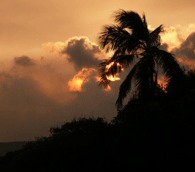 Photo by
 It’s the byproduct of an active volcano. Vog, it’s called, volcano plus smog. It might make for some pretty sunrises or sunsets, but vog also produces acid rain and can aggravate respiratory conditions. The Department of Health just launched a website to monitor vog conditions and United States Geological Survey (USGS) has a fact sheet up about the dangers of vog:
SO2 is a poisonous gas that irritates skin and the tissues and mucous membranes of the eyes, nose, and throat. During even moderate physical activity, SO2 penetrates deeply into the airway and can produce respiratory distress in some individuals. In the absence of strong winds, SO2 emitted by Kilauea can accumulate in the air and reach levels that exceed Federal health standards. Since 1986, this has occurred more than 85 times within Hawai`i Volcanoes National Park, which includes much of Kilauea.
Kiluea Volcano is a stunner, but she’s also the culprit, emitting sulfur dioxide into the air whenever she erupts. Hawai`i Volcanoes National Park keeps their site up to date with not just where to see the lava, but which parts of the park are closed due to vog. Live lava is a big draw, but don’t be disappointed if the volcano isn’t active for you—your lungs may be thankful for the volcano’s rest.