
Notes From the Global Travel & Tourism Summit
Travel Blog • Michael Yessis • 04.20.06 | 2:27 PM ET
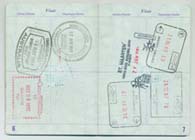 Last week in Washington DC, travel ministers, travel company CEOs and other industry bigwigs gathered for a three-day Global Travel & Tourism Summit, an event that, if my Google searches are any indication, didn’t get much coverage from major media outlets. That’s not just a shame. It’s practically unconscionable. The travel industry is central to the economies of so many countries around the world, and here in the United States, the number of incoming visitors is at its lowest rate since 1992. According to a story on Hotelmarketing.com about the summit, the U.S. market share for international travel has decreased 35 percent, which has cost the country’s economy $286 billion. Yes, that’s billion.
Industry leaders who attended the summit know trouble when they see it, particularly when they’re taking massive hits to the bottom line. According to Jen Haberkorn’s story in the Washington Times, the tourism industry, led by the Travel Industry Association of America, wants the federal government to do more to promote tourism to the U.S.
Haberkorn writes:
They are looking for a Cabinet-level tourism position, similar to a minister of tourism in European countries, as well as $200 million to $300 million in public and private funds for a marketing campaign.
Australia, by comparison, spends $120 million in public funds per year advertising itself as a destination.
It has become the most desired travel destination among Europeans, TIA research shows.
The industry seems to have the ear of some U.S. government figures. Secretary of State Condoleezza Rice, Homeland Security Secretary Michael Chertoff, Commerce Secretary Carlos Gutierrez and Transportation Secretary Norman Y. Mineta all spoke at the conference. Yes, that’s four cabinet members at one event. Shouldn’t that be big news?
I read Rice’s speech. She says some things about President Bush that made my eyes roll (“To put it simply, the knowledge and experience that citizens gain through their private travels is vital for the cause of diplomacy and international understanding in the 21st century. We in America recognize this fact and we value it, especially President Bush and all of us who serve this nation’s government.”) and she spends a lot of time defending some of the over-the-top security measures that have made it difficult for international travelers to visit the U.S. That said, I did like a good chunk of what she had to say.
This, for instance:
Now, when I took this job nonetheless I knew that I wanted to have an active travel agenda. Because despite the modern prevalence of mobile phones and wireless internet and video conferencing, travel is not less important for diplomacy, it’s more important. When you can look a person in the eye as you have a conversation, when you can see the people and the places of foreign countries firsthand, you gain a sense of intimacy and knowledge that does not just come from a phone call or in an e-mail.
That is why last October I invited British Foreign Minister Jack Straw to spend a weekend in my hometown of Birmingham, Alabama, and why I was eager to join him in Blackburn and Liverpool, England, just two weeks ago.
Too often we diplomats spend all of our time in capital cities which, though nice, may not be entirely representative of the whole country. In the coming years, I plan to invite a lot more foreign colleagues to travel with me to American cities that show a different side of our country and people than you may find in Washington, D.C. or in New York.
The benefits of travel, though, are not limited to the official comings and goings of diplomats. They extend especially to the global journeys of private citizens. As this audience surely knows, traveling to another country, for whatever reason, is a highly entertaining and enriching experience. It breaks down stereotypes and makes people quicker to listen and slower to judge. Travel fosters understanding and builds respect and creates a subtlety of opinion.
The text and video of Rice’s 13:49 minute speech has been posted in its entirety on the U.S. Department of State Web site. Choice quotes from other participants can be found on the summit Web site here and here. Other full speeches and presentations can be found here.