
Recalling Hemingway’s ‘A Moveable Feast’
Travel Blog • Jim Benning • 12.13.06 | 4:02 PM ET
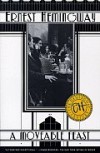 Like so many other American college students over the years, I read A Moveable Feast
While Yardley has decidedly mixed feelings about Hemingway and dislikes the novels published after his death—they are, in Yardley’s words, “uniformly dreadful, embarrassments that he almost certainly would have refused to publish and should have burned”—he still enjoys “A Moveable Feast.”
He writes:
Rereading “A Moveable Feast” in the late 1960s and again in the 1970s, I understood that in certain passages—those dealing with Gertrude Stein, Ford Madox Ford and, most particularly, F. Scott Fitzgerald—it is unforgivably vicious. I also came to understand that Morley Callaghan’s “That Summer in Paris” (1963) is a better book about the same time and place, not least because Callaghan was a better man than Hemingway, more tolerant of and amused by other people’s shortcomings.
Yet “A Moveable Feast” retained a certain irresistible charm. It was a privilege to be able to read about that time in Paris in the words of one of the most important literary expatriates, and it remains so to this day. Reading “A Moveable Feast” for the fourth (and probably not the last) time, I was struck by how much of it is still agreeable to me. It is actually possible to like Hemingway as he plays with his little son and his cat, fondly nicknamed Bumby and F. Puss, as he talks and travels with Hadley, the first of his four wives and the only one whom he may have loved, as he swaps gossip and stories with friends and rivals while knocking back impressive amounts of alcohol in the cafes and (when he could afford them) restaurants of Paris.
The book’s title, Yardley points out, was apparently chosen by Hemingway’s widow, Mary. It’s a phrase he once used in a note to a friend.
Wrote Hemingway, “If you are lucky enough to have lived in Paris as a young man, then wherever you go for the rest of your life, it stays with you, for Paris is a moveable feast.”