
South Africa: Three Great Books
Travel Blog • Eva Holland • 12.18.07 | 7:37 AM ET
 In Three Great Books, we highlight must-reads for a topic, city or country.
Photo by Victor Geere via Flickr (Creative Commons)
The German philosopher Friedrich Schiller believed that periods of oppression and tyranny produce the greatest works of art; in his words, that “truth and beauty, with their own indestructible vitality, struggle triumphantly to the surface.” In South Africa’s case, at least, he just may have been right. The apartheid era and its aftermath have inspired a wealth of high-quality literature from the likes of Alan Paton, Zakes Mda and Nobel Prize winners Nadine Gordimer and J.M. Coetzee. Three great books:
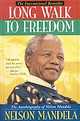
by Nelson Mandela. Mandela’s autobiography is an essential primer for understanding both South Africa’s past and its present. The book covers the major milestones in the fight against apartheid, from the debate over civil disobedience versus armed resistance to the 1960 Sharpeville killings, the Rivonia trial, Mandela’s 27 years in prison and the events leading to his release. The details of his everyday life, from a childhood in the rural Transkei region to his obsessive exercise regime while imprisoned, add color and humanity to the political narrative. The final section of the book deals with the conflict between Mandela’s ANC and the Zulu-dominated Inkatha Freedom Party, a division that still informs South African politics today.
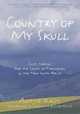
Country of my Skull: Guilt, Sorrow, and the Limits of Forgiveness in the New South Africa by Antjie Krog. Krog is a journalist, poet, and—a relative rarity in the apartheid years—a staunchly left-leaning Afrikaner. She spent a good portion of the 1990s traveling around the country covering the Truth and Reconciliation Commission for SABC radio, and “Country of my Skull” is a memoir about her experiences. Krog mixes wrenching transcripts from the hearings with interviews, anecdotes and thoughtful personal reflections: about the nature of radio journalism and the inherent strangeness of packaging human suffering into 30-second soundbites, about the conflict between her feelings of guilt and loyalty as an Afrikaner, and about her hopes and fears for her country.
She writes:
In the second week of hearings, I do a Question and Answer on a current affairs program. I stammer. I freeze. I am without language. I put the receiver down, and think: Resign. Now. You are clearly incompetent. The next morning, the Truth Commission sends one of its own counselors to address the journalists. “You will experience the same symptoms as the victims. You will find yourself powerless—without help, without words.” I am shocked to be a textbook case within a mere ten days.
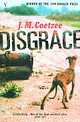 Disgrace by J.M. Coetzee. Coetzee won the Booker Prize in 1999 for this novel about David Lurie, an English professor who seduces a student, loses his job and moves from Cape Town to his daughter’s isolated Eastern Cape farm to regroup. When he and his daughter are attacked on the farm, Lurie is forced to confront not only his changing status, but also the broader changes and shifting power dynamics in post-apartheid South Africa. It’s dark, cynical and totally engrossing. Coetzee won the Nobel Prize for Literature in 2003, and his other South African novels include Age of Iron, Life and Times of Michael K and In the Heart of the Country.