
The Universal Language of Karaoke
Travel Blog • Michael Yessis • 08.31.06 | 8:23 AM ET
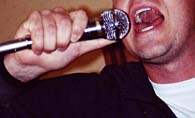
For immigrants in the United States, karaoke sounds like home. Today’s Washington Post has a fantastic story today about the immigrant karaoke scene around Washington D.C. “In the Washington suburbs, where this Salvadoran-Mexican restaurant sits next to a Vietnamese deli, karaoke transcends borders,” Karin Brulliard writes. “At hole-in-the-wall cafes and crowded bars, song lists come in Filipino and Korean and Spanish and Chinese, allowing laymen of all tongues to unleash their inner singers.” Drinks and laughter and bonding are the core elements of the experience, and Brulliard finds a theme in the songs a lot of immigrants choose. “Songs are steeped in memory and distance,” Brulliard writes. “And many are about heartbreak.”
At Cafe Muse, Brulliard writes, karaoke is a way Vietnamese people to connect.
“It’s a miracle that I can still speak Vietnamese,” said Danh Tran, a Fair Oaks real estate agent who grew up in the United States and has visited Vietnam. He leaned back and considered this and the scene around him, as if searching for higher meaning. Karaoke, he concluded, was a way for them to feel “back home again.”
The screen filled with people riding old-fashioned bicycles on streets lined with low-slung stores, a video for the Vietnamese song “Saigon, Vietnam.”
“It’s not called Saigon anymore. It’s called Ho Chi Minh City,” Tran said. “So when we sing it, we think about the old times.”
Other stories Bruillard finds are simply heartbreaking.
But for Ana Torres, 22, it was a way to forget everything. That’s what drives many to the microphone, she said. “They have fights with their wives. They come from work tired. Sometimes they feel sad about their countries,” she said.
She wants to get ahead, but she lacks the means. Every spare dime, she said, goes to her twin 6-year-old daughters in El Salvador. She last saw them four years ago.
Her head dropped. She fought tears, then wiped them away.
Then she headed toward the music—to sing, and to forget.
Photo by Jim Benning.