
Gwendolyn Oxenham and Ryan White: ‘The Soccer Project’
Travel Interviews: The pair is part of a team playing pick-up soccer around the world. They plan to turn their experiences into a documentary. Michael Yessis talks to them about the power of the game to unite and taking to the pitch in Brazil with real bulls.
09.21.07 | 10:41 AM ET
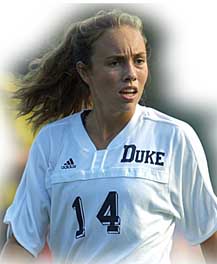 Photos courtesy of The Soccer Project.
Last week, a team of four travelers, filmmakers and soccer lovers—Gwendolyn Oxenham (pictured), Ryan White, Rebekah Fergusson and Luke Boughen—flew to Trinidad to begin the first leg of The Soccer Project. Their mission: to play in pick-up soccer games throughout the world, and to chronicle their travels and experiences in a blog and, foremost, a documentary film. Joining soccer games as they travel, they believe, will offer insight about and entry into cultures throughout the world.
The core of the group met as soccer players and student filmmakers at Duke University. They spent the months before their departure working up an itinerary beyond Trinidad that includes hot spots and not-so-hot spots in the soccer-wild continent of South America and beyond. I called up White and Oxenham—he’s the producer of the project; she’s going to be playing a lot of soccer—on the eve of their departure.
World Hum: On The Soccer Project Web site, you tout soccer’s power to unite people. Why do you think it can do that?
Gwendolyn Oxenham: Simon Cooper puts it nicely when he says the only things humans attend more than soccer games is church. Soccer is the world’s game and everyone from Muslim women in Afghanistan to old men in Speedos in Brazil play. It’s such a connective force. The ability to kick a ball can create such an intimacy and feeling of commonality.
How did the project arise?
G.O.: It was a late night in the library on alumni weekend, and I was trying to figure out a way to combine my passion for soccer and documentaries. Anytime I traveled, I always played pick-up soccer. I just loved it. They’re some of my best soccer memories, so I guess it was natural that the idea would come up.
And you recruited everybody else?
G.O.: Ryan and I were camera partners our senior year. He was in New Zealand at the time I came up with the idea, so I shot him an e-mail to see if he was interested. He was.
What did you think, Ryan, when you got the e-mail?
 Photos courtesy of The Soccer Project.
Ryan White (pictured, right): I had quit my job the year before to travel around the world. I was actually in my last month on the road when I got the e-mail from Gwendolyn, so it was sort of ironic that I’d spent my entire savings to travel around the world and now I had a project that would pay for it. But I guess I’m not really in the position to complain. I get to keep going.
So, Gwendolyn, you contacted Ryan, and then you had Luke and Rebekah in mind as well?
G.O: Right. Luke is my boyfriend. We, ironically again, met playing pickup at Notre Dame. I was there for grad school and he was a senior, and Rebekah was a freshman soccer player at Duke when I was a senior. She was one of the four players I featured in a short documentary about soccer players, so she got hooked on the documentary thing, too, and went on to study film and documentary studies.
You mention that you’ve played pick-up games throughout the world already. Do you find it easy to jump into games anywhere?
G.O.: Yeah, I think sometimes they’re a little taken aback that I’m female. In our country, I think ever since Brandi Chastain and the World Cup [in 1999] they’re used to girls being on the field. In a lot of other countries, it’s always a surprise, but then they’re not only accepting but wildly excited that there’s a female who can play well.
R.W.: Tell the story from Mexico.
G.O.: I was a deckhand on a boat in Mexico after I graduated from college, this $15 million yacht. It was a pretty sweet job. But we were anchored far out in Ascension Bay and it had been weeks since we’d been off the boat. We anchored off this island that serves and an outpost for the Mexican army. Mexican soldiers sat on the dock with machine guns and machetes, and they were staring at us. Alfredo, a local Mexican guy that I worked with, said it was where all the screw ups or the trouble makers get sent because it’s such a buggy, remote location.
But right across from the soldiers there was this makeshift soccer field, and after weeks without ball or field I was dying to play. So I dinghied over and made kicking gestures and said “futbol,” and they knew what I was after. Within the hour we were playing in monsoon rain and sharing goal celebrations and ceviche, and taking pictures with our arms around each other’s shoulders. That’s the way that soccer can take you from two completely different strangers who would never have otherwise interacted to being as chummy as all get out. I think that’s one of the coolest things that soccer can do.
That’s fantastic. Ryan, have you had any experiences like that?
R.W.: I did, but I’m obviously not of the caliber that Gwendolyn and Luke are. But, yeah, I played in Fiji. I played in New Zealand. I played in Southeast Asia all over the place.
So you just did your kicking motion and jumped in?
R.W.: I’m not as bold as Gwendolyn and Luke have to be for this—it probably stems from my lack of talent. I was usually drawn in by people that I was traveling with, there would be an odd number on the field and they would require me to get out there.
Tell me a little more about the kind of movie you want to make.
G.O.: We don’t want to make a Luke and Gwendolyn highlight video around the world. I think we’re using the two of us as a thread to connect everything together and to use it all to tell the stories of the people we end up playing with.
R.W.: I think of this as a travel documentary with a soccer theme. And like Gwendolyn said, besides church, which would be a totally different type of documentary, I’m not sure there’s a subject as universal as using pick-up soccer. We’re not only visiting the places that are amazing at soccer. We’re going to even try to go to American Samoa, which is literally the last-ranked team in soccer.
You’ve said that The Endless Summer was inspiration for the project, too.
G.O.: My father is a big surfer and from the age of 6 he made me watch it every year. At the time, I wasn’t interested in watching a 1960s film but then as the years went on I was more compelled by it, the beauty of it and the romantic angle of two guys going around the world to do the thing they love.
R.W.: We’ll run into people who’ll say, “Do you think a documentary like this can really be commercially viable in the U.S.?” Soccer, at least professionally, isn’t the most popular sport, but I think “The Endless Summer” is a good example to follow because it’s the classic sports documentary. Surfing’s not our national sport. Not everyone does it. But people still love watching “The Endless Summer.” I have friends who aren’t interested in surfing or documentaries at all, that when I mention “The Endless Summer” they say, “Oh, I own that film. I watch it to relax.” We want to use that as our model for the kind of sports documentary and travel documentary that we’re trying to make.
We’re also trying to not stay in hostels or eat meals with just the four of us. We’ve been working to make contacts within countries where we don’t already have them so we can stay in the communities with individuals or families. So the movie won’t only be about soccer. We can keep shooting when we go back to someone’s house. The stories can also encapsulate whatever these communities that we visit are.
Are you looking forward to visiting any place in particular?
G.O.: Brazil is obviously the Mecca of soccer. but I’m getting more and more excited about places that aren’t as renown for their soccer savvy. In Peru, these Andean women play in top hats and hoop skirts, and I’m pretty damn excited to play with them. Then we got an e-mail from a woman who played on the Colombian national team. Her family lives in Bolivia and they have a hunting lodge in the jungle and right by their lodge there’s a Mennonite colony where they play all the time. I’m pretty excited to play with Mennonites as well.
And then I read about a small town in Brazil where they take the bulls that are not aggressive enough for bullfighting and put them into the middle of a small-sided soccer game. I don’t know if Luke is as excited about that as I am, but it sounds great to me.
Me, too. Thanks to both of you, and safe travels.
 Email to friend
 Twitter
 del.icio.us
 Digg
Digg Facebook
 Furl
Furl Ma.gnolia
 Mixx
Mixx Reddit
 StumbleUpon
 Yahoo! Buzz
Michael Yessis is the cofounder and coeditor-in-chief of World Hum.
ronny 07.08.08 | 2:45 PM ET
Being able to play the world’s game, all over the world must be an awesome experience.
football 07.08.08 | 7:12 PM ET
That sounds amazing!