
The Great Wall, Siem Reap, Stonehenge Getting Too Much Love
Travel Blog • Jim Benning • 11.27.06 | 9:14 AM ET
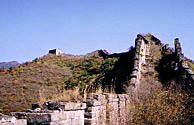 They’re not the only places in the world being overrun with tourists, of course, but their tourism woes have been highlighted in recent days by the New York Times, Associated Press and Los Angeles Times, respectively. The New York Times on Sunday focused on the Great Wall of China, which is suffering under the weight of an estimated 13 million visitors a year. “[T]he Great Wall is not just crumbling,” writes Jim Yardley. “It is disappearing. Roughly half of the estimated 4,000 miles of the wall built during the Ming Dynasty no longer exists, according to a recent report. It is also regularly being abused.” Among other problems, he writes, last year “the police broke up a huge dance party of Chinese ravers atop the wall a few hours’ drive outside Beijing.”
I visited a so-called wild section of the wall outside Beijing several years ago. I didn’t see any ravers, but the wall was crumbling, and Chinese tourists were shooting off huge firecrackers, which left me ducking for cover every few minutes. Poor Great Wall, I thought.
According to the story, new regulations to protect the wall will go into effect Dec. 1. Still, it’s hard to imagine a way to protect every inch of a disappearing 4,000-mile wall.
The AP, meanwhile, reported on growing pains at Siem Reap, the gateway to the Cambodian ruins of Angkor Wat. Tourism in the town is on the rise—up 37 percent last year from the previous year. The result is “unregulated development,” the AP reports, and specifically, “unrestricted local pumping of underground water to meet rapidly rising demand.” Unfortunately, the pumping “may literally be undermining Angkor’s foundations, destabilizing the earth beneath the famous centuries-old temples so much that they might sink and collapse.”
Finally, on Sunday, Susan Spano at the Los Angeles Times wrote about overcrowding at tourist sites, covering challenges from Venice to Mount Everest.
At Stonehenge, which gets 800,000 visitors a year, she writes:
A fence has been erected around the monument to stop vandals from spray-painting graffiti on the 4,000-year-old stone circle. Seeing Stonehenge today is hardly magical. In fact, a parliamentary committee in 1989 called the situation a “national disgrace.”
Several groups, including English Heritage, the National Trust and the British Highways Agency, have proposed changes to protect and enrich the experience of visiting Stonehenge. These include the construction of a visitor center designed to blend into the landscape, creating an environmentally friendly transportation system to move visitors around the site, restoring natural vegetation and channeling the A303 highway through a 1.3-mile tunnel.
Related on World Hum:
* One Thousand Places to See Because They’re Disappearing?
Photo by Jim Benning.