
Baby on Board, Baby Abroad
Travel Books: Frank Bures ruminates on the art of travel with kids and the guidebooks aimed at helping parents through the experience
04.09.08 | 4:05 PM ET
 A couple years ago, my wife, Bridgit, and I had our first child, a 7-pound anchor who temporarily ended our days of carefree, long-distance travel. After Libby was born, it seemed more important to be around the house to figure out how to keep her alive and healthy and (if possible) happy. None of which is as easy as it seems.
But the road calls, and when we were reasonably sure Libby would survive, we started taking her on long car rides. Then we ramped up some short plane trips. But we both wanted to go farther.
Airlines play a cruel trick on new parents. For the first two years, your child is seen more as an appendage than a person, and tickets are priced accordingly. And while these first two years can be rough traveling, it’s a lot cheaper to go on two tickets than three.
So when Libby was approaching her second birthday, we decided to go to France. I had a good friend we’d always wanted to visit there, and she had a daughter Libby’s age. So we did the math and bought our tickets. Then we had a sinking feeling: How were we going to swing this?
Fortunately, these days a growing number of guidebooks address exactly this question: Lonely Planet’s Travel With Children (in which LP cofounder Maureen Wheeler highlights the perks of traveling with young kids, among other things); Frommer’s 500 Places to Take Your Kids Before They Grow Up (which includes “500 thoughtfully-chosen places that will enchant and beguile both the young and the young at heart”); and Travels with Baby: The Ultimate Guide for Planning Trips with Babies, Toddlers, and Preschool-Age Children (covering a range of issues, from jet lag to travel gear). For those with bigger ambitions, there’s also The Family Sabbatical Handbook: The Budget Guide to Living Abroad with Your Children, which explores topics such as foreign schools, bilingual education and medical care overseas.
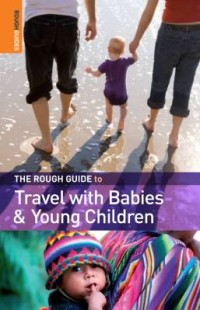
Unfortunately, having kids also makes running even the most minor errands a gigantic pain. So by the time I actually got to the bookstore just before our trip, the only one on the shelves was Rough Guide’s new Travel With Babies and Young Children, so I bought that. It’s full of decent, no-nonsense tips. It lists some good websites and offers a lot of practical reminders (get a visa, bring toys, stay calm if you get separated). But sadly, the juicy bits weren’t there: Is it safe to drug your kid on the plane? What if your kid’s eardrums explode from cabin pressure? What if your child fills her entire airplane seat with vomit?
Our plane trip turned out not to be that bad, thanks largely to “The Aristocats” on the seat-back movie screen. When we arrived in Paris, we rented a car at the airport and headed for the French countryside. After staying a few days with some relatives in a tiny village just south of Paris, we went south to St. Amand-Montrond, a nondescript French town with winding streets, an old fortress, a medieval abbey and several nice pastry shops. Not much of a tourist destination. My friend and her family lived there.
But our agenda was different than agendas past. During the days, we laid low, staying at my friend Elisa’s place, where her daughter, Lucy, and Libby played, fought and eventually came to an amicable détente. They kept each other busy, and for that we were glad. That’s the standard we were shooting for.
We did take some day trips. One day we walked up to the abandoned fortress. Another day, we drove out to the abbey. And on other days, we just wandered around town. We weren’t traveling as we once had. The abbey was locked, but it didn’t matter, because Libby and Lucy had a blast running back and forth across an old bridge. At the fortress, the history was interesting, but more importantly, the kids had a great time bashing a pile of leaves with sticks. On the walk home, Libby fell asleep in my arms, and I can still remember the peaceful look on her face.
The criteria for a successful day of traveling, in other words, had changed.
That night, after the kids were asleep, we sat drinking wine, eating dinner, trading war stories about the early years of child-rearing. Travel wasn’t the only thing harder with kids. Elisa talked about how badly Lucy had slept early on, and as she remembered it, she put her head in her hands.
“I don’t know,” she said. “I have no idea what I’m doing. Looking back, I probably didn’t help the situation.”
“Well,” I said, trying to make her feel better, “as far as I can tell, a lot of parenting is just trying to take credit or avoid blame for things that are totally beyond your control.”
The next day, Libby and I were walking outside when she heard a bird. She looked up at me.
“It’s a crow,” she said.
“Yep,” I said. “You’re right. It’s a crow.”
Then she looked at me again and said, “It’s kind of different.”
I hadn’t even noticed, but it was true. This crow sounded different from the crow she knew at home. I stood there for a second, as if I were watching the world grow before her eyes. I wondered if she would remember this, if part of her would always know there are different crows out there, if this was the beginning of the opening of her mind.
Or if it was just a crow. Either way, I’ll take whatever credit I can.
In the end, I didn’t end up using my guidebook at all. Paging through it later, I realized why: Guidebooks like that are good for giving you a rough idea of what you’re getting yourself into, and for letting you know what is possible.
But in the end, the world is full of surprises, and to travel, whether with kids or by yourself, is simply to get out there and find out what they are.
 Email to friend
 Twitter
 del.icio.us
 Digg
Digg Facebook
 Furl
Furl Ma.gnolia
 Mixx
Mixx Reddit
 StumbleUpon
 Yahoo! Buzz
Baby Gund 08.14.08 | 6:53 PM ET
Great story - you’re definitely not alone. In fact, I think this is very common and natural with all couples when they have their first child. ~Glenn
Pascua Lagos 09.29.08 | 1:56 PM ET
I have a little baby of 15 days. And our first concern as parents was to decide to take a travel or not far away from Santiago, in Chile. We decided to visit some relatives in the south of Chile in a place called Puerto Montt in Lake District. The travel was amazing, since at this period of time the weather was great for traveling with a little child. My problems began when we arrived in Puerto Montt..probably due to the new sounds, too many new people or something like that, she lost completely the times for taking milk. Before the trip she was very clear about her times. But during the stay out of home, she was completely lost and myself very upset, since I didn’t know what to do. After one week of trip, we returned to our place and after one day of crying and crying she began to take her milk according her times, and more calm. I don’t know what was, but afterwards, she remember her best place now is her home. So thanks for the information, next time when we decide to take another trip, we certainly will read some of the books you said in your article.
Shelly Rivoli (Travels with Baby) 11.18.08 | 12:51 AM ET
Frank - Sorry we missed each other. By no coincidence Travels with Baby actually does include “A Traveler’s Guide to Ear Infections” (including info on ruptures) and also addresses the hot-button issue of “dosing” kids for plane rides. Like many parents driven to desperation on a sleepless flight, I had to learn the hard way that Benedryl has the opposite effect in some children. (Yikes!) ;-) I’d stick with The Aristocats.