
Destination: Italy
Italy’s Dark Heart
by Jeff Biggers | 11.19.03 | 9:48 PM ET
In the Umbrian hilltown of Narni, Jeff Biggers stands face to face with 2,000 years of grim history
 Email to friend
 del.icio.us
 Digg
Digg Facebook
 Furl
Furl Ma.gnolia
 Mixx
Mixx Reddit
 StumbleUpon
 Yahoo! Buzz
Update: German Tourists, Italian Insults
by Michael Yessis | 08.06.03 | 12:26 AM ET
The Baltimore Sun’s Todd Richissin recently visited Pesaro, Italy, the place German Chancellor Gerhard Schroeder had planned to spend his summer vacation until Italian tourism minister Stefano Stefani referred to Germans as hypernationalistic, beer-swilling, competitive belchers. What did he find there? Not many tourists, of course. Says Hemil Simoncelli, a waiter in Pesaro: “Everything about tourism is about being nice, so you can’t insult people and expect them to come to your home and give you money.”
How Dare You Call German Tourists ‘Stereotyped Blondes With a Hyper-Nationalist Pride!’
by Jim Benning | 07.10.03 | 11:43 PM ET
That’s the message from German Chancellor Gerhard Schroeder. He just canceled his planned vacation to Italy after Italy’s tourism minister refused to apologize for making the crack about Germans who flock to Italy on vacation. Germans account for about a quarter of all visitors to Italy, so this spat could really cut into Uffizi ticket sales. Question: Isn’t the tourism minister supposed to attract visitors, not offend them? Unbelievable. CNN.com has the latest.
Seeing Rome through a Native’s Eyes
by Michael Yessis | 06.28.02 | 1:01 PM ET
Peter Davison had visited Rome five times, each with “fascination and love.” For his sixth trip this past May, he took along a copy of G. Franco Romagnoli’s new book, “A Thousand Bells at Noon: A Roman’s Guide to the Secrets and Pleasures of His Native City.” It left a huge impression.
A Pilgrimage to Atessa
by Michael Yessis | 06.27.02 | 1:22 PM ET
Pasquale Serafini left Atessa, Italy for America at the age of 18, became a tailor and shop owner in New Hampshire, and died there in 1960. “In all his 81 years of life he never went back to his birthplace,” his grandson, Frank D. Roylance, writes in Sunday’s Baltimore Sun. “Neither did his American-born son or daughter—my Uncle Enzo (for Fiorenzo), and my mother, the former (let this roll off your tongue) Elvira Lucia Filomena Serafini.”
A Pilgrimage to Atessa
by Michael Yessis | 06.12.02 | 1:13 AM ET
Pasquale Serafini left Atessa, Italy for America at the age of 18, became a tailor and shop owner in New Hampshire, and died there in 1960. “In all his 81 years of life he never went back to his birthplace,” his grandson, Frank D. Roylance, writes in Sunday’s Baltimore Sun. “Neither did his American-born son or daughter—my Uncle Enzo (for Fiorenzo), and my mother, the former (let this roll off your tongue) Elvira Lucia Filomena Serafini.” Recently, however, Roylance did go back—guided by his grandfather’s old letters. His essay touches on the mixed feelings inspired by his visit. “It appeared that pictures and memories were all we would bring home,” he writes. “It was much more than anyone in our family had ever known of Atessa, yet I couldn’t help wishing I had done more planning, more digging for connections.”
“I Felt Like the Molting Goat in a Petting Zoo That No One Wants to Touch”
by Michael Yessis | 05.28.02 | 5:04 PM ET
What made Mark Rotella feel so isolated? Traveling in Italy by himself. “I couldn’t have felt better prepared - I spoke the language, could understand dialect and had a contract to write a book about Calabria,” he writes in Sunday’s New York Times. “But I was in for a surprise. I never expected to feel alone in one of the most sociable countries in the world. I found that it’s precisely because Italians are so social that the solo traveler - however outgoing - can feel an acute sense of loneliness.”
Venice: That Sinking Feeling
by Jim Benning | 05.16.02 | 8:12 PM ET
Checking In: Americans Living Abroad
by Michael Yessis | 10.29.01 | 8:39 PM ET
The New York Times tracks down U.S. residents in Italy, France, Saudi Arabia, Japan, Indonesia, Mexico and other countries to find out how lives of ex-pats have changed in the six weeks since the terrorist attacks. Some anecdotes sound like benevolent urban legends: “Most Americans in Saudi Arabia live on enclosed compounds…At one recent dinner the conversation inevitably turned to security concerns. The couples traded stories, like the one about two Americans whose car broke down on a stretch of desert highway. They were immediately wary of two Saudi men who stopped to offer help. Sensing their unease, one Saudi turned to the Americans and said, ‘By the way, we hate Osama bin Laden.’ ” Other stories are a bit creepy and, possibly, paranoid: “Not long ago, [24-year-old English teacher Gabrielle Parnes] said, she was with two girlfriends [in Paris], giggling and talking loudly when a group of Arab-looking men walked by and purposely elbowed each of them. ‘I can’t be sure they knew we were American,’ she said. ‘But I think so. Before I might have thought they were just nasty guys. But now I can’t help thinking it was because we were American.’”
Three From the Road
by Michael Yessis | 10.08.01 | 8:54 PM ET
The New York Times tripled its normal travel essay output this weekend with a trio of excellent pieces. Terrence Rafferty weighs in on the state of road movies. “When we’re not feeling free enough, we take to the road,” he writes. “That’s the mythology, anyway. But as I look at the recent onslaught of American road movies, arriving at the multiplexes with the regularity of big rigs pulling into truck stops, I can’t help wondering if it isn’t time to lay that seductive myth to rest.”
International Herald Misses Mark
by Jim Benning | 06.01.01 | 12:08 AM ET
One of the great joys of global travel is settling into a far-flung coffee shop or teahouse with the day’s International Herald Tribune, always a great read. When I sat down with the paper and a hot, foamy latte on a recent Italian Riviera morning, however, I almost choked on my brioche reading an article about life on Thailand’s Khaosan Road, a popular crossroads for Asia travelers. Writer Seth Mydans correctly notes that places like Khaosan Road, with their bacon-and-eggs breakfasts and Internet cafes, have lost some exotic luster. But he goes too far when he writes: “It is the black hole at the center of a shrinking world where the Age of Discovery has ended, all roads have been traveled, and the words ‘remote’ and ‘exotic’ have all but lost their meaning….The world of travel has been tamed.”
Ciao, Bella
by Sarah Schmelling | 05.02.01 | 1:13 AM ET
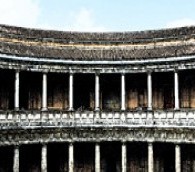
The rains came to Siena, and Sarah Schmelling fell ill. But Signora Franci stayed at her side, bringing velvet slippers, tea, and lessons in basic human kindness.
- « Prev Page
- Next Page »