Travel dispatches from a shrinking planet

Travel dispatches from a shrinking planet

RECENT DISPATCHES
5.6.08

On the Occasional Importance of a Ceiling Fan

Emily Stone knew well the kind of moment she was experiencing in Puerto Rico: the guy, the Cuba libres, the accelerated intimacy. It was perfectly safe, she told herself, as long as she knew when to get out.

4.23.08

A Writer’s Port of Call

Adam Karlin went to Indonesia to work as a reporter. But after a visit to Jakarta’s old wharf to see the aging Makassar schooners, he left with a calling of a different order.

TRAVEL BLOG
Q&A
image

Tony Horwitz: Rediscovering the New World

Ben Keene talks to the author of the new book “A Voyage Long and Strange” about travel, American myths and the importance of visiting places where “history happened”

SPEAKER'S CORNER
image

In Patagonia, In Patagonia

Tim Patterson packs his fleece and long underwear, and enters the Twilight Zone where corporate branding meets the multilayered reality of place. 

ASK ROLF
image

Should I Quit Law School so I can Travel the World?

Vagabonding traveler Rolf Potts answers your questions about travel

BOOKS
image

‘The Worst Guidebook Writer Ever’?

Lonely Planet author Robert Reid reviews Thomas Kohnstamm’s “Do Travel Writers Go to Hell?” and weighs in on the controversy surrounding it

HOW TO
image

Have a Hockey Night in Canada

From Montreal to Sault Ste. Marie, the sport is the country’s greatest passion. Eva Holland explains where to go to indulge—and who you need to know.

AUDIO SLIDE SHOW
image

Promised Land Closed

And other odd and unlikely signs from around the world. Aficionado Doug Lansky, editor of the book “Signspotting,” recounts his 10 favorites.


THE LIST
image

10 Sizzling Hot Travel Tips From Sir Francis Bacon

Rolf Potts repackages the 17th century philosopher’s ‘Of Travel’ essay in the manner of a 21st century magazine feature

DISPATCH
9.21.06

The Winding Road to Joshua Tree

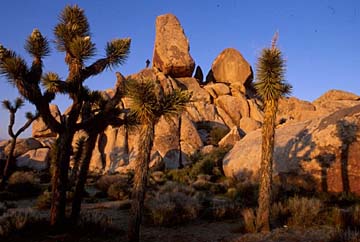
She moved to Los Angeles, found herself in the midst of a personal monsoon and began skipping dinner parties. Then Deanne Stillman rearranged her life around trips to her new church: Joshua Tree National Park.

imageEighteen years ago, I set up camp in the golden West, joining the hundreds of migrant workers who made small fortunes by hauling what is now called content out of the television mines that, like Los Angeles itself, periodically cave in without warning. I was satisfied by neither work nor love, but the terrain began to comfort me in unexpected ways.

In Ohio, where I grew up, I never felt at home; I realized at an early age that I did not belong on the shores of a lake that was frozen most of the time, or in a city that always seemed to whisper discouraging nothings in my ear. I guess that’s why I always preferred the New York Yankees to the Cleveland Indians (although felt like a traitor for rooting for them before I moved to New York, the anti-desert, land of nonstop reaction), and why I used to send away for cactuses (I know you’re supposed to say “cacti,” but I don’t like the sound of it) that I could get from places with named like Kaktus Jack’s and Desert Botanicals and keep them on a window ledge near my bed. I don’t know if my window ledge faced west or not (the gray skies often obscured the sun), but seeing the outlines of my little cactuses against the clouds fueled my fantasies of the never-neverland where the turnpike went, the land where the misunderstood found understanding, the land where Zorro and Bat Masterson and Wyatt Earp wouldn’t let anyone hurt you, the land where a girl named Jane lives forever as a Calamity, the land where the only thing anyone or anything really wants is a drink of water.

Once in Los Angeles, I immediately had the sense that I had planted myself at the edge of a desert, and that I was indigenous and could flourish here. I liked the idea of sinking roots into this quicksilver garden, this false greenhouse watered by hijacked rivers and tended by gatekeepers anxious to keep the temple of fame from getting too crowded. Maybe it was the light; the light was different out here—things showed up better, looked more like themselves. Maybe it was the space. Maybe it was in the seamless stretch of sunny days; they were different too, a bright backdrop for a carnival of beautiful creatures who lived phototropic lives, predators who drifted in to drink at the oasis from regions where those who stay behind get old.

Or maybe it was that song in the background, coming from what I soon learned was Joshua Tree National Park, fading in and out, connecting me to some other world, the enchanting tinkle of chimes, from hidden patios up there behind the bougainvillea, rearranged by the Santa Ana winds that swept across the endless waves of sand outside the city, carrying good news.

The song first came and got me when I was on assignment for a local alternative newspaper, attending a workshop facilitated by “the shaman of Beverly Hills,” a well-known woman who had written a series of books about women and inward spiritual journeys involving power animals and other primal symbols. The workshop was at a banquet room in the airport Hyatt, down the hall from a meeting of the International Chiefs of Police, who presumably were power animals. Several hundred women were in attendance. After various introductory remarks, the lights were dimmed, candles were lit, and Native American flute and drumming tapes began. We were told we were going on a shamanic journey. (As an anthro major whenever I had bothered to, one, declare a major and, two, appear in class, I was not alarmed by this statement and in fact took it with some excitement.) “Close your eyes, get quiet, and visualize yourself going down a hole into the earth,” the workshop leader said. “Along the way, take in whatever crosses your path. I want you to follow this path, however it looks to you, to an altar. At that altar, I want you to find something you need from someone you know.”

I had not yet been to Joshua Tree National Park, but at the airport Hyatt with my eyes closed, I knew I was deep inside it, traveling down a path marked by ocotillo and sage, crossed by a desert tortoise. As my trance deepened, the path took me to a large sandstone altar that stood under the shade of an ancient and giant Joshua tree. Atop the altar was a small vial of what I took to be water. The sun glinted off the vial, and then from behind the tree my maternal grandmother appeared.

In my family history, she was a woman known for the wonderful and cryptic line, “Life is funny. Oh dear, oh dear.” She had died at least a decade before this shamanic encounter at the airport Hyatt, with a letter from me in her hands. It was while living in New Mexico—another desert—that I had found out about her passing. As she approached me in my trance, she handed me the vial from the altar. I took it and started to cry, knowing in my bones that what she had just given me was not a vial of water, but a vial of tears, my own tears, tears I had not shed since my parents’ divorce when I was in fourth grade, and from that point on, had pretended that everything was funny and fine when in fact it was rarely either. As I clutched the vial to my heart, my grandmother faded back behind the Joshua tree, reclaimed by the desert. A raven’s cry joined my own and then I followed the path back to the surface of the earth, exchanging a glance with the tortoise. Sometimes life is not funny. Oh dear, oh dear.

In an instant, everything had changed. Mary Austen’s land of little rain had yielded to me a personal monsoon. I started skipping dinner parties, openings, reordering my life. Joshua Tree National Park had become my church, my temple, my Stouffer’s frozen turkey tetrazzini. Week after week I would leave Los Angeles, the Xerox machine of America’s dreams, and head for the Mojave, where they all started. I felt at home in this vast space where, if you happened to be near the right dune at the right time, you might stumble across a cosmic joke in the form of a shamanic workshop at the corner of Highway 111 and Bob Hope Drive, a biker with a used bookstore and an espresso machine (more on this later), a cosmetic epiphany in the form of a shack that peddles thigh cream next to an earthquake sinkhole, or endless miracles of nature such as the reclusive desert frogs that leap out of the sands after a rainstorm.

The more time I spent wandering the trails of Joshua Tree National Park, the clearer it became that the desert—not Long Island, Wall Street, the White House, Madison Avenue, the Home Shopping Channel, or other regions born of mirage—explains the national character: it is the wide-open space that rocket-fuels the American obsession with personal rights, an extreme terrain that both comforts and kills; an underrated scape that is always there but doesn’t particularly care if you are; an ever-changing blank slate that does its own kind of business, turning tricks if the tricks are there to be turned, but has no price or any other result in mind. And then, of course, there’s Indian bingo.

Soon I was spending so much time there that I found the very Joshua tree of my dreams—the one that looked just like the one under which my grandmother had appeared in my vision—and I visited it often. JTNP became my second home; my friends in L.A. started calling me Chuckwalla Deanne and the friends I made out there started calling me Deanne from L.A. And that’s how I learned the cardinal rule of the desert: Don’t ask, don’t tell. The desert doesn’t care who you are, and neither does anyone or anything who lives in it.

* * * * * *

imageDeanne Stillman has written for Rolling Stone and the New York Times, among many other publications. She is the author of the Los Angeles Times bestseller Twentynine Palms: A True Story of Murder, Marines and the Mojave. This story is an excerpt from her new book, Joshua Tree: Desolation Tango, featuring photographs by Galen Hunt.


WEBLOG CATEGORIES

Adventure Travel
Afghanistan
Air Travel
'Airworld'
Africa
Alaska
Albania
Antarctica
Architecture and Travel
Argentina
Asia
Audio/Video
Australia
Bali
Bookstore Tourism
Belize
Ben's Place of the Week
Bhutan
Bolivia
Botswana
Brazil
Brand That Nation!
Budget Travel
Burma
California
Cambodia
Canada
Caribbean
Celebrity Travel Watch
Chile
China
Colombia
Costa Rica
Cruising
Cuba
Denmark
Czech Republic
Dominican Republic
Dubai
Eco-Travel
Ecuador
England
Egypt
El Salvador
Estonia
Ethiopia
Europe
Family Travel
Fiji
Finland
Florida
Food: The Moveable Feast
France
Geography for Fun and Profit
Germany
Georgia
Global Village
Ghana
Greece
Greenland
Guatemala
Guest Blogger: Thomas Swick
Guest Blogger: Michael Shapiro
Haiti
Hawaii
History Travel
Holland
Honduras
Hong Kong
Hot Americans on Television Botching Geography Questions
Hotels
Iceland
Icons: Ernest Hemingway
Icons: Che Guevara
Icons: Jack Kerouac
Icons: Mark Twain
In the News
India
Indonesia
Iowa
Iraq
Iran
Ireland
Islands
Israel
Italy
Jamaica
Japan
Jordan
Kenya
Kosovo
Las Vegas
Latvia
Life of a Travel Writer
Lebanon
Libya
Literary Travel
Los Angeles
London
Malaysia
Mali
Media Addict
Mexico
Moldova
Mongolia
Morocco
Moscow
Movies and Travel
Music
Nation Branding
Nepal
New Orleans
New Travel Books
New York
New Zealand
9.11.01
Nicaragua
North America
North Korea
Norway
Outdoors
Page Turner
Pakistan
Paris
Peru
Planet Theme Park
Poland
Portugal
Puerto Rico
R.I.P.
Road Trips
Romania
Russia
San Diego
San Francisco
Saudi Arabia
Scotland
Shameless Self-Promotion
Shanghai
Shrinking Planet Statistic of the Week
Singapore
Somalia
South Africa
South America
South Korea
Space Travel
Spain
Suriname
Sweden
Switzerland
Syria
Taiwan
Tanzania
Technology and Travel
Thailand
The Critics
Thomas Swick on Travel Writing
Three Great Books
Three Travel Books
Tibet
Tokyo
Top 30 Travel Books
Train Travel
Travel and Security
Travel Disease du Jour
Travel Fashion
Travel Headline of the Day
Travel Lexicon
Travel Photography
Travel-Terror Fatigue Index
Travel Tips
Travel Writer Book Tours
Tres Loco
Turkey
Ukraine
United States
Venezuela
Vietnam
Voluntourism
War and Travel
Washington D.C.
What we Loved This Week
What Would Edward Abbey Think?
Where in the World Are You?
World Hum Travel Zeitgeist
Zambia