
Christopher Wakling: “Beneath the Diamond Sky”
Travel Interviews: A new travel novel tells the story of Western travelers taken hostage in Kashmir. Frank Bures asks the author about risky travel, and about how his own journey inspired the tale.
10.24.05 | 8:25 AM ET
In 1995, Christopher Wakling  was backpacking through India when he and his girlfriend decided to go hiking in the once mythical province now claimed by India, Pakistan and Kashmiri separatists. The two took a bus from Delhi to Srinigar, spent a week on a houseboat, then went trekking in the mountains near the Kashmir Valley. But while the two of them were there, in the same valley another group of Western travelers was taken hostage at gunpoint. The women were set free. One of the men escaped. Another was beheaded. The rest have not been heard of since. Wakling got to thinking: What if that had been us? In time, he decided to explore this question through fiction. The result was his new book, Beneath the Diamond Sky, which joins the growing ranks of travel-fiction, a genre whose current popularity was virtually launched by Alex Garland’s The Beach. Wakling fielded my questions by e-mail from his home in London.
World Hum: In your synopsis, you compare “Beneath the Diamond Sky” to “The Beach.” Was that book an influence on you?
The reference to “The Beach” in the synopsis of my novel had as much to do with my publisher’s admiration for its sales figures as my admiration of that book! But yes, I did enjoy “The Beach.” It’s an exhilarating story, simply told, and its publication opened up new possibilities for travel-fiction. By “possibilities” I really mean “readership.” “The Beach” found a huge audience amongst the legions of folk with a scruffy Lonely Planet or two on their shelves, who wanted to read fiction that explored the backpacking culture they were part of. Novels such as Emily Barr’s straightforwardly titled Backpack, William Sutcliffe’s Are You Experienced? and Will Rhode’s Paperback Raita have since mined the same seam.
How is your book different?
There’s 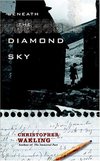 an (intentional, I believe) cartoony quality to “The Beach.” Its characters tend towards caricature as a result. In “Beneath the Diamond Sky” I wanted to make readers empathize with the protagonists and understand how they respond so differently to the horror of their shared experience.
A big theme in “The Beach” is the search for authenticity, for an authentic experience. What are your thoughts on that?
I think the paradox of travelers seeking authenticity abroad—why isn’t home as real?—is interesting. It has to do with risk, in part. We in the West, by-and-large, lead cotton-wool-clad lives. Strip away the protection by going somewhere dangerous and you intensify experience, creating an illusion of authenticity.
How would you say your travel informs your writing?
It provides perspective. In the three novels I’ve written I’ve enjoyed experimenting with how place affects character. Putting a person out of their normal context is a good way of revealing them in an interesting light.
| CHRIS WAKLING’S TRAVEL PICKS The Birthday Boys by Beryl Bainbridge. “Not a travel book as such, but historical travel fiction, a viscerally imagined account of Scott’s trip to Antarctica, told from the multiple perspectives of the expedition members. Bainbridge achieves in 200 pages what most authors would struggle to do in 600: an epic book which manages to breathe new life into a well known, epic journey.” Digger by Max Anderson. “An account of the author’s recent search for gold in the Australian outback; this funny, contemplative book gripped me from start to finish.” Are You Experienced? by William Sutcliffe. “Another entertaining travel-novel. Sutcliffe skewers aimless gap-year-to-India-wanderers with a satirical spear in this book. It’s a deceptively light, unflinching take on backpacking culture.” |
Do you think you would have reacted to being kidnapped like any of your characters?
There’s an element of how I think I might have reacted in each character’s response. I hope I wouldn’t suffer from Stockholm Syndrome, but who can be sure? Part of the harrowing joy of writing the book was thinking through each reaction. My sympathies shifted as I wrote. If I read the book again now I hope I’d find each character’s development convincing enough to persuade me in new directions as I read.
Does anyone know what happened to the travelers who were actually kidnapped in 1995? As far as I can tell, they’re missing and presumed dead.
That’s my understanding, too. One hostage, an American, escaped early on, but the others are now presumed to have been murdered. I should stress that my novel is in no way an account of real events. I have no idea how the poor, real, hostages coped; as far as I know nobody does. Huge differences between reality and fiction start before the first page of my novel. From the flap copy you’ll learn that my story concerns Kate and Ethan, a young couple taken hostage in Kashmir. Those abducted by Kashmiri militants in 1995 were all men; the women traveling in the party were released.
You say you “set out to explore what motivates western travelers to take risks.” What would you say does?
I’d say read the book! The search for authenticity, described above, comes into it. But there’s a wide range of motives. Some people want to help in blighted regions. Some are voyeuristic war-tourists. Some are plain clueless about the nature of the risk they’re taking.
Is there a certain amount of hubris in all travel?
I’m not sure that’s a meaningful statement. Certainly there’s a continuum of danger/risk involved in all travel, from a fortnight on the Costa Brava to a summer in Iraq, but calling a trip to Mediterranean Spain “defiant-of-the-gods” dilutes the meaning of hubris!
You have done some travel writing yourself. What about?
I’ve written about a wide variety of travel experiences—from canoeing down the Danube to trekking through the Australian outback.
What kind of travel writing have your mostly done, narrative or destination?
I’ve done a bit of both, destination pieces for newspapers, narrative pieces for magazines, such as Adventure Travel. But far and away the biggest chunks of travel-informed writing I’ve done have been in my novels, which have so far swerved through America, India, Kashmir and Australia, as well as the UK.
Do you have any favorite travel writers?
Paul Theroux, Tim Cahill, William Fiennes.
Do you ever plan on writing a straight travelogue?
I’ve no plans to write a book-length travel narrative just now, but in the future who knows?
 Email to friend
 Twitter
 del.icio.us
 Digg
Digg Facebook
 Furl
Furl Ma.gnolia
 Mixx
Mixx Reddit
 StumbleUpon
 Yahoo! Buzz