
Dan Bilefsky: Telling Counterintuitive Stories From the Edge of Europe
Travel Interviews: The International Herald Tribune's Central and Eastern Europe correspondent has developed a reputation as one of journalism's finest voices. Joanna Kakissis asks him about "Balkan idols" and unlocking cultures.
02.21.08 | 12:05 PM ET
 Almost three years ago, when journalist Dan Bilefsky was working as a financial reporter for The Wall Street Journal, he wrote a head-turning story about Villa Tinto, House of Pleasure. The Antwerp brothel run by a transsexual prostitute named Georges/Joyce billed itself as Europe’s most “high-tech,” thanks in part to the use of biometric scanners to keep track of its city-approved prostitutes. But the strange tale was more than a quirky story about a revamped section of Antwerp’s red light district, which city officials hoped to market as a tourist attraction. It also offered a case study in the benefits and pitfalls of European efforts to legalize prostitution in order to wrest it from the control of organized crime.
Funny, dark and meticulously reported, the story marked the rise of a young journalist who excelled at finding unusual, counterintuitive stories that read like vivid travel narratives and stood apart from newspaper journalism’s pack mentality. Bilefsky soon left the Wall Street Journal to become a Europe correspondent for The International Herald Tribune and The New York Times. During his two years based in Brussels for that gig, Bilefsky’s dispatches included explorations of laughing schools in Munich to teach depressed Germans how to giggle; a Eurovision-ruling monster metal band that gave shy Finland an identity crisis; Belgians reliving their long-lost medieval days by re-enacting the Middle Ages; and an exhausted polygamist with five wives in southeast Turkey who became a newfound champion of monogamy.
At the beginning of this year, the 35-year-old Montreal native became the Central and Eastern Europe correspondent for the IHT and The New York Times. Last week, as media swarmed into Kosovo to cover its independence, he wrote one of the most original and compelling stories in the news deluge.
World Hum: My favorite story of yours is the one on Finland’s freak out over monster-metal stars Lordi representing the country at Eurovision in 2006. The details wove together a vivid and strange tale but also illuminated a surprising problem in the country—its lack of self-esteem.
Dan Bilefsky: I spent a lot of time in rock ‘n rock bars in Helsinki when I was researching that story, and I learned very quickly that you have to have epic tolerance for beer or vodka to commune with Finns. Finns have something of an identity crisis, perhaps derived from their geographic isolation or because of their peculiar language in which one word with three umlauts is not uncommon. People in Finland like to say that when a Finn first meets you, he will stare at his own feet. Then, after ten years of close friendship, he will stare at your feet.
The truth is that the Finns are also intensely proud people, who rightfully appreciate how they have transformed a timber economy into a high-tech center, all the while preserving a social welfare model that is the envy of the world.
Based on your more recent story about the new “Balkan idols”—statues of Rocky, Bruce Lee, Tarzan and Samantha Fox going in the village squares of small Serbian villages—it seems the former Yugoslavia is also going through an identity crisis.
In Serbia, one senses a feeling of angst and despair as it loses Kosovo, the last piece of bedraggled Balkan real estate that it is desperately trying to cling to. Yet the bars and cafes of Belgrade spill over with young hipsters whose oversized Mercedes are parked outside. Monthly wages are tiny, yet the hunger for consumer goods has seldom been stronger.
In Kosovo you can see this identity crisis in the monuments to Kosovo Liberation Army guerillas, who wield AK-47s and stare down at passersby on Pristina’s main boulevards. The glorification of these guerillas is part of the territory’s attempt to forge a new identity on the eve of independence. (Editor’s note: Kosovo declared its independence earlier this week.) The glorifying of America, which played a key role in overthrowing Milosevic, is also abundantly evident. There is even a Bill Clinton statue in the works and a replica of the Statue of Liberty atop the Victory Hotel in Pristina.
How do you look for those telltale details that unlock a culture for your readers?
I like to think of feature stories as documentaries with characters and action scenes. But instead of a video camera, I have to use my eyes and ears. I always try and interview people while they are in their natural surroundings or engaged in what they do—whether that means interviewing a bullfighter while he is bullfighting or a bird-singing trainer while he is finessing a song with his prize-winning finch. In this way, I can try to show—rather than tell—the reader my story.
Journalists and travel writers are often accused of stereotyping. How do you avoid it?
I try not to fall back on easy clichés by seeking out stories that are counterintuitive.
Like what?
For example, when I recently wanted to write about Spain, a Spanish friend of mine mentioned in passing that her boyfriend and father were both taking Viagra. So I called Pfizer, the maker of Viagra, and asked how Spain’s Viagra sales compared to the rest of the continent. They were sky high. Then I traveled to Madrid and discovered the open secret, that millions of men were taking Viagra (or being force-fed it by their wives, girlfriends or mistresses), in part because the country’s record economic growth has diminished the siesta, wreaking havoc with the Spanish male’s libido. Post-Franco sexual liberation also has made Spanish women far more assertive.
Counterintuitive stories are also the hallmark of great travel writing. What travel writers do you admire?
I am a big fan of Calvin Trillin, whose travel writing about food is second to none, whether he is describing a noodle bar in Singapore or a hot dog stand in the Bronx. His eye for detail is so forensic and sensual that he makes you want to eat the page of the magazine you are reading. I also like William Dalrymple’s work, in particular his books on India, which combine great narrative flair with historical exposition. I loved his book City of Djinns, about Delhi. My friend Michela Wrong wrote the best book I have read about Africa, In the Footsteps of Mr. Kurtz, which chronicles, with wonderful irony, wit and intelligence, the pillaging of the Congo by Mobutu.
All these writers possess a keen eye for detail, a sense of the absurd and, above all, empathy and humor. And they are original. So much travel writing fails because it falls back on easy clichés.
In your travels, are there stories that still stick with you?
I wrote a story last year about the forced suicides of young Muslim girls in southeast Turkey that left an indelible mark on me. The European Union had been pressing Turkey to take tougher action to prevent honor killings—when a brother or cousin kills a female relative for transgressing sexual norms and bringing shame to her family. As a result of this EU pressure, Turkey introduced life sentences for the young men who committed these crimes. But rather than the tougher sentences stopping these killings, some families responded by forcing the girls to kill themselves instead. An epidemic of suicides broke out in Batman, a dusty and poor city in southeastern Turkey, in which young women were dying nearly every week under mysterious circumstances.
I went there to investigate and met a young Muslim girl of 17 called Derya, whose family had tried to shame her into killing herself because she had started an affair with a boy at school. First, she slashed her wrists. When that didn’t work, she tried to jump into the Tigris River. Then she hung herself. She survived, traded in her veil for a pair of jeans, and sought refuge in a women’s shelter.
Her story illustrated the culture clash between official secularism and conservative Islam in Turkey. But more than anything, Derya’s intelligence, courage and resilience impressed me. It is one story that stayed with me long after I wrote it.
Joanna Kakissis is a freelance writer based in Athens, Greece, and a contributor to the World Hum blog. Her work has appeared in The New York Times, The Boston Globe, The Washington Post and other publications. Her last story for World Hum was The Cost of Kindness.
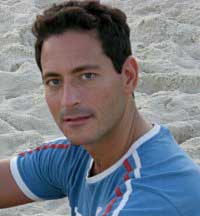
Photo courtesy of Dan Bilefsky.
 Email to friend
 Twitter
 del.icio.us
 Digg
Digg Facebook
 Furl
Furl Ma.gnolia
 Mixx
Mixx Reddit
 StumbleUpon
 Yahoo! Buzz
Terry Ward 02.21.08 | 5:34 PM ET
Great interview, thanks Joanna! I was interested to read that Bilefsky is a fan of William Dalrymple, too. And his advice to think of feature stories as documentaries with characters is really inspiring. Enjoyed this.
Jack from eyeflare.com 02.22.08 | 6:07 AM ET
Great interview, thanks for highlighting this voice for me.
Ketill 02.25.08 | 3:22 PM ET
Absolutely wonderful interview!
My sincere thanks to both Dan and Joanna.
Phillipe 05.12.08 | 3:00 PM ET
Awesome interview, good job!
Peter 06.15.08 | 7:15 PM ET
Dear Dan,
Please visit to our site and get real with us.
Jason 07.24.08 | 1:06 AM ET
Very nice interview…
Thanks for keep our head up. :D
Jayce 08.22.08 | 12:29 AM ET
Denya…is one of the girl that try to fight her faith ...
Maybe in Turki the Islam Culture still dominate the culture…so that’s why people still hold their believe above everything