
Jeffrey Tayler: Facing Africa’s “Angry Wind”
Travel Interviews: Jim Benning asks The Atlantic's Moscow correspondent about travel writing, his latest book and the allure of the world's most remote regions
12.31.05 | 9:22 PM ET
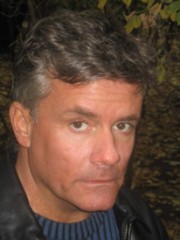 Photo of Jeffrey Tayler by Tatyana Shchukina.
As travel writers go, Jeffrey Tayler is about as erudite and daring as they come. Fluent in five languages, including Arabic, he delights in lighting out for the globe’s most remote and challenging areas. In 1993, for his first book, Siberian Dawn
World Hum: You once said that your career as a writer “sprang from desperation, obsessive reading, and a willingness to take risks.” How so?
It seems that as far back as I can remember, I’ve been searching for an escape, another means of getting by, a different life. I wasn’t a particularly happy child. I never really experienced the cozy, toy-filled cabin of childhood; and then, when I was in my mid-teens, my parents split up—a messy, traumatic two-year process in the 1970s, before the advent of no-fault divorce. A common enough minor tragedy, but the result was that I never aspired to domestic bliss, never expected to find a wife and settle down. (I ended up being wrong about that.) I also had no interest in “established” or prestigious careers—another liberating factor. I’m not ruing my childhood years here or calling them unusual—since the 1960s, divorces have been probably more the rule than the exception—but the gist is that from an early age I wasn’t inclined to follow roads most traveled.
 Anyway, when I read as a youth, I did so not for information or entertainment, really, but for a way out, an escape plan. In college I began envisaging my life as a novel, with myself as the protagonist. All sorts of odd books gave me clues and ideas for the plot—“Zorba the Greek,” “The Death of Ivan Il’ich,” “Anna Karenina,” “Crime and Punishment,” “A Bend in the River,” to name some. These are not “happy” books, of course. But I wasn’t searching for an easy or even pleasant escape; I aimed to script my time on earth in such a way as to snatch all I could while I could and make my life exciting. Behind that lust for excitement lay desperation, an emptiness; I felt there was no other way ahead for me.
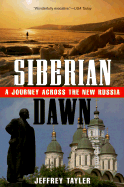
Taking risks is much easier when you believe you have no choice. Desperation drove me to undertake the trans-Russia trek I recount in “Siberian Dawn,” my first book. But desperation or no, I’m talking here about taking calculated risks, for a purpose—for writing. Even without knowing it, I had been preparing myself all my life for “Siberian Dawn.” I had been a Russophile since my teens; I spoke Russian; I had studied Russian history in graduate school; and had just finished setting up a Peace Corps program in the former Soviet Union. When I couldn’t sell that book, I marshaled my angst and frustration as motivation for my second book, “Facing the Congo.” The expedition involved, doomed as it ultimately proved to be, took six months of preparation and planning. However, it led to my break as a writer—the publication of “Vessel of Last Resort” in the Atlantic Monthly.
| JEFFREY TAYLER’S TRAVEL PICKS
Night Train to Turkistan |
A final thought. There’s one work of literature that I read only in the past few years, but it might as well have been the first book in my life: “Don Quixote.” The hero famously feigns locura and tilts at windmills, and gets beat up time and time again, but the message matches my own—life is unbearable without a dollop (or more) of madness; one can live one’s life as a knight errant (or whatever) if one is ready to pay the consequences. But successfully executed madness for artistic purposes requires aforethought. Before setting out to right wrongs, Don Quixote did his reading, outfitted himself authentically, and acquired a squire.
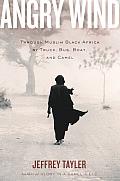
You note early on in “Angry Wind” that the region of Africa where you traveled for the book—the Sahel—is among the most difficult regions to travel through in the world. What was it about the area that so attracted you?
I’ve always been intrigued by the “back of the beyond,” the “hinterlands,” the “barrens.” Those words stir my blood. Apart from Antarctica and the North Pole, there are fewer places remoter than the Chadian Sahara, than western Niger, than Gao or Ansongo or Timbuktu.
However, for me, plain old remoteness alone wouldn’t have qualified the region to be the subject of a book. The Sahel blends elements Arab and African in a way I found viscerally exciting, being an Arabic-speaker and an aficionado of Africa. I got a dusty taste of the Sahel during a month-long trip around Nigeria in 1997 and had longed to return.
The attacks of 9/11 gave me a reason to do so and prompted me to write “Angry Wind.” The mostly Islamic Sahel had—and still has—the potential to become an African Afghanistan. (The American military is helping regional governments pursue terrorists in the region as we speak.) Vast expanses, especially in Chad and Niger, are hardly governed and often beset by civil war; poverty is some of the worst on earth; and with Bush declaring his intent to invade Iraq at the time of my “Angry Wind” trip (late in 2002 and early in 2003), entire populations were coming to see the United States as their mortal enemy. I wanted to document this and do so in a way that showed Western readers what life was like there, why people were angry, and, at the same time, show them a fascinating part of the planet, where sandstorms roil the sky red at dusk and turn landscapes into a terrestrial Hades, where sword dances and the slaughtering of sheep are transcendental experiences. I also wanted them to see how we could help alleviate poverty there and reverse the current radicalizing trends.
Are you optimistic about the region’s future? How likely is it that it will become an African Afghanistan?
 I’m deeply pessimistic about the future there. Even though the causes of much of the region’s poverty—European and American farm subsidies and trade barriers—are man-made, they’re of a peculiarly intractable man-made kind that derives from voters and interest groups choosing to keep themselves wealthy and others far away poor. Sahelians don’t vote in U.S. or European elections, and the restrictions that keep them in poverty persist, despite year after year of Western politicians’ numbing blather about the need to eliminate them. (“You go first” one leader says to another, “and I’ll follow.” Neither moves.) Desertification, whether caused by climate change or not, is eating away arable land; populations continue to expand while income falls.
Terrorist groups are already operating in the Sahel, the largest country of which, Nigeria, has been called “ripe for liberation” by bin Laden. Here again the problems—corruption, crime, nepotism, etc.—are man-made, and the gushing bounty of oil is of use only to mankind, yet the Niger River delta, where most of the oil fields are, has been decimated by decades of neglect and is one of the most miserable places on the planet. I see no evidence that this is changing. It’s getting worse, with a separatist movement in the delta now well established. Oil is to Nigeria as heroin is to Afghanistan—it dictates economic deals that people can’t refuse.
Nigeria is on the verge of implosion, and with 137 million people, ranks as the largest failed state on earth. Yet it’s also the potentially wealthiest country in Africa—more grounds for pessimism, cynicism, and despair. But as far as I can tell, people suffering under the scourges of corrupt regimes often don’t get sad, they get mad, and there are plenty of ideologies they could avail themselves of to justify killing for a greater purpose. Extremist Islam is only one of them.
The area, you note, is basically ignored by the Western media. Why is that? Do you think this will ever change?
Journalists traveling in the Sahel can count on a dearth of hookers and hotel bars (and hotels, for that matter); whence the resulting absence of a “foreign correspondent community.” And there are other reasons not many reporters cover the harmattan-ravaged beat. Nigeria, for instance, confronts visitors and residents alike with armed robbers, failing electricity, gasoline shortages, malaria, and corpse-strewn highways—problems that will persist and keep away those who might otherwise find a lot to write about there.
You’ve chosen to write books about regions where few writers go—particularly American writers. Do you seek out those places in part because they aren’t being written about? How do you decide on the subject of your books? What do you think makes for a great travel book?
Basically, I chose areas I’m interested in and have been following, ones suffering problems that have been personally important to me (Russia in transition for “Siberian Dawn,” the dwindling numbers of the noble Bedouin in the Moroccan Sahara for “Glory in a Camel’s Eye,” for example.) That is how I come upon my topics. 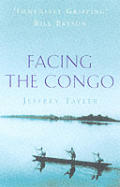 But not all travel writers do this. Two books I enjoyed immensely, “Malaria Dreams” and “Night Train to Turkistan,” both by Stuart Stevens, are hilarious, without any serious intent, though they give you a vivid, if disgusting or infuriating glimpse of how life was when he passed through Africa and western China. In general, I don’t think there’s a formula. But if there’s one thing to avoid, it’s being the pompous writer who comes sneering into a country uninvited, ridicules its people and exalts himself. Travel writers should remember that their voyage is elective, but residency for locals in beleaguered lands rarely is.
According to the book jacket, you are fluent in Russian, Arabic, French, and modern Greek and you can “get by” in Spanish and Turkish. How did you come to speak so many languages?
Living in the relevant countries has helped a lot, as has spending six months a year on the road in Europe, Africa, and the Middle East (with my base as Moscow) traveling for my stories and books. But what has helped me most of all is a desire to read various works of literature in the original, to sense how the author really chose words, to read his words (not those of a translator), and then to hear them and use them myself. I’ve compared enough translations to distrust anything but a text in the original.
Certain works of literature intrigued me, even before I knew little more than their names. A sampling of motivating books in Spanish would include, besides “Don Quixote,” “Sonatas de Otoño” by Ramón del Valle-Inclán, a vastly underappreciated author; “Zorba the Greek,” in Greek; “A Thousand and One Nights,” certain passages from the Qur’an, and the Al-Mu’allaqat poems in Arabic; and “Mehmed, My Hawk” in Turkish. There are so many works in Russian that I hesitate to name some in place of others, but I can’t pass over “Anna Karenina,” “Crime and Punishment,” and the stories of Chekhov, the early novels of Nabokov.
Otherwise, had I not been desperate to fashion a foreign-tongued doppelganger of myself—a necessity, given my ambitions—I would not have plunged into languages as I did. There were things I wanted to learn about in other countries, people I wanted to meet. Now I find that as a writer, a range of languages gives me a broader choice of stories to pursue—which keeps money coming in.
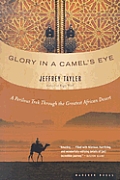 Your knowledge of Arabic seemed to open many doors for you in your journey across the Sahel, warming people to you who otherwise might have turned a cold shoulder (or worse) because you were American. How important was your knowledge of Arabic there, and in your ability to make sense of the region?
I wouldn’t have been able to make the trip, or make it in any worthwhile sense for the book, without Arabic and French. Only in Nigeria is English spoken along the route I took, and at times in such a pidgin variety I had trouble understanding people and I wished we could have spoken another language. To meet and socialize with people, Arabic and French were as necessary there as English would be in the States. Arabic specifically helped, because Arabic-speakers don’t expect foreigners to speak their language, and huge barriers drop when they see that you do.
Any tips for the rest of us on learning a new language?
Live and study abroad, if possible. Find a work of literature and resolve to read it in the original. A good way to do this is to recall which books you’ve liked in translation and start with those. Otherwise, acquire a lover (or a spouse) with another native language. Think of how exactly you want to express yourself to your spouse, of how much wrong words can hurt or confuse. I don’t mean “pillow talk.” Your spouse may love Tolstoy or debating the Iraq war, so your vocabulary needs will be extensive. In any case, you’ll want to be yourself in your new language—a huge motivation for hard study and attentive reading.
What is it like being The Atlantic’s correspondent in Moscow? It sounds like a great job.
I wish it were a job, in the traditional sense, but there’s no salary. The title of “correspondent” is honorific. I’m 100 percent a freelancer who lives by writing alone, and The Atlantic is the publication that has published me the most.
I was afraid you were going to say that. Then you’ve been making a living as freelancer then for many years now. What are the pros and cons of freelancing for you? For many writers, of course, it’s a tough way to make a living.
And it’s tough for me: Fear of starvation is an unpleasant if cogent motivator. Nowadays, though, I don’t fear for my future - after all, at 44, I’m living it—but then I entered the business out of the desperation I spoke about above, so I felt I had little choice. I do value the freedom of freelancing. (Incidentally, unlike certain high-ranking ignoramuses, I wouldn’t grab a gun and go around forcing this freedom on others.) I can’t speak much about other freelancers, because I hardly know any; the (foreign) journalists I know in Moscow are on comfortable salaries, with health-club memberships and living allowances.
How has all your experience abroad changed you?
Since I’ve passed the better part of my life overseas—close to 13 years in Russia alone, and more than four years total in the Arab world—I don’t know who I would be now if I had lived in the States. I do know that each time I return to the U.S., I feel more and more alienated, as if I were a foreigner in what should be my own country.
I began feeling this most acutely after 9/11. I was as devastated as anyone by the attacks, and supported the invasion of Afghanistan for the purpose of catching bin Laden, but I just could not comprehend the wave of pro-Bush patriotism that persisted and led us into the Iraq debacle. The American television news I managed to catch in the ensuing couple of years struck me as more Soviet than the Soviets, filled with simpleminded paeans to The Leader and Pravda-cartoon analyses; Congress reminded me of the Supreme Soviet, where deputies would rise from their seats and applaud at length The Leader’s lies. My Russian friends found it inconceivable that a supposedly free people would voluntarily execute the will of a cabal so transparently bent on making the poor poorer and the rich richer. Russians expected this of their leaders, but not of America’s, and when they asked me to explain it, I couldn’t. As far as the media goes, now things are leveling out but the transpiring lesson from the Iraq war couldn’t be clearer: We can trust neither the media nor the government; we need to study Arabic and Turkish and Persian, read history, and get out into the world, especially the Islamic world, and see things for ourselves.
The flip side was that my American friends—in fact, everyone I personally encountered on my annual visits to Boston, NYC, and DC—were against the Iraq war and understood what the Bush administration was really up to. With them I’ve felt no alienation whatsoever.
Thanks, Jeffrey.
 Email to friend
 Twitter
 del.icio.us
 Digg
Digg Facebook
 Furl
Furl Ma.gnolia
 Mixx
Mixx Reddit
 StumbleUpon
 Yahoo! Buzz
Jim Benning is the editor and co-founder of World Hum.