
Michael Palin: The New ‘New Europe’
Travel Interviews: David Farley asks the Monty Python member-turned-travel host about the call of the road and his new television series
01.24.08 | 11:53 AM ET
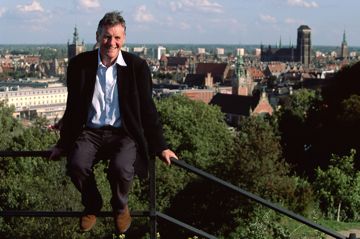 When Michael Palin goes somewhere, people follow. “The Palin Effect” was coined to describe the influx of tourists inspired to visit the places the Monty Python member-turned-travel TV host features on one of his travel shows. Palin’s six series—“Around the World in 80 Days,” “Pole to Pole,” and “Himalaya,” to name a few—capture a sense of place equaled by few travel shows. Now post-communist Europe is getting the Palin treatment. Michael Palin’s New Europe, a seven-show series, will air Mondays at 8 p.m. on the Travel Channel, beginning next week. (Full disclosure: World Hum is owned by the Travel Channel.)
Palin visits 20 countries in Central and Eastern Europe. Among other adventures, the charismatic host walks through a minefield in Sarajevo, is robbed in Budapest and watches a pig get slaughtered in Slovakia. I chatted with him about his philosophy of travel,Donald Rumsfeld’s “new Europe,” and how to describe the Balkans without getting death threats.
World Hum: Do you think you avoided covering Europe for your travel series so long because it’s so close to home and perhaps doesn’t appeal as much to your sense of the exotic?
Michael Palin: Yeah, I suppose so. These series of shows started about 20 years ago. I had just finished “A Fish Called Wanda” and someone rang up and asked if I wanted to do “Around the World in 80 Days,” which was only meant to be one program. It turned out so nicely we expanded it into a series and then ended up doing “Pole to Pole.” So it was never really a planned campaign to do all these series, but I suppose it’s true: Europe was always a place I flew over; I’d be on a flight from Hong Kong or Hindu Kush and I’d peek out the window and look down on Poland or Germany and realize that I’ve really got to see this part of the world. I knew less about Eastern Europe than I knew about Vietnam or the Andes.
Intellectually, how did you prepare for the trip?
I read quite a lot of general books on Central and Eastern European history—books by Misha Glenny and Robert Kaplan. I also read a few novels, the Turkish writer Orhan Pamuk comes to mind.
As travel TV host and travel author, what’s your philosophy for trip preparation: Do you want to step off the plane or train and know everything about the place or do you prefer to have a sense of surprise?
For the purposes of the television series, I like going to places I haven’t seen before and don’t know a lot about so that my reactions will be spontaneous and fresh. I don’t want to read too much about other people’s views of a place either because then you tend to be biased. Also, I like learning about a place from the people who live there. But I try to have a basic grounding of the places I go to. For this latest series, I read a bit on every country I went to—enough so that I could fit it into a historical context.
You start in the Julian Alps in Slovenia and then head to the Balkans and then south to Turkey and up to Bulgaria and over to Ukraine and so on. Was there a strategic reason to start in the former Yugoslavia and then progress the way you did?
I liked the idea of starting high in the mountains right on the border, so there was some sense of a physical border between east and west. It was more of a symbolic place. I didn’t want to start in the middle of a city, but rather in nature so that viewers could see that this part of Europe is just as exciting visually as anywhere else we’ve covered. And then once we were in the Balkans, it just made sense to go south to Turkey and after that it made sense to go up to Bulgaria and so on.
Did you have any thoughts about how you were going to approach the Balkans? I once wrote a newspaper travel piece on Montenegro and I quoted a few people on the war and the state of the country. Their comments seemed relatively harmless but turned out to be quite politically loaded, inspiring a few angry letters from people in the region.
Absolutely. I was aware of that and I tried to be as unbiased as possible, but you’re absolutely right: There are some tricky demarcations. The only real problems I got from people were that we didn’t spend much time in Slovenia and Macedonia and they were quite upset. People are quite sensitive. In Slovakia we only showed a scene from a village where they slaughter a pig and the Slovakians were upset that we didn’t go around showing their castles instead. As you know from traveling there, the divisions between some of the countries go very deep and that’s not something I expected.
Well, after the Palin Effect, the Slovakians and others should be very happy with the number of tourists who show up.
There is quite a bit resentment toward the west in Eastern Europe. I didn’t quite understand that until I went there. In the Balkans there’s a feeling that we didn’t do enough and we let the siege of Sarajevo go on for too long and didn’t save the bridge in Mostar when we could have; the Poles wonder why we let Stalin march in and so on.
Were there any places that went beyond your expectations, good or bad?
I rather fell in love with Moldova. It’s a country the size of New Hampshire and they’ve had two secessionist movements within their own country. It’s an attractive place with a lot of potential.
Was the name of the show inspired by former U.S. Secretary of Defense Donald Rumsfeld’s remark about the region as the “new Europe” because a few post-communist countries were supportive of the invasion of Iraq?
[Laughs] My friend Terry Jones said to me, “You can’t call it ‘New Europe.’ People will think it’s Donald Rumsfeld’s memoirs!” The reason for the name is that Europe or Eastern Europe isn’t really a sexy name for a series and when I suggested such a title to the BBC, they looked at me rather incredulously. Besides, had I called the show “Eastern Europe,” the Hungarians and the Czechs, for example, would have quickly pointed out that they’re in Central Europe and have never been a part of Eastern Europe. So we went with “New Europe,” and, fortunately, we haven’t been sued by Donald Rumsfeld yet.
Referring to everything east of the Czech Republic as “Eastern Europe” seems a bit of an outdated political expression rather than a geographical one, anyway. In the book that accompanies the series, you go into a lot more detail about your experiences than you do on the show. Do you have a preference between doing a travel show and writing a travel book?
That’s a very good question and one that I think about a lot. Travel writing is very difficult; it’s something I learn more about with each book. I quite like working with our crew. We’ve all worked together for a long time and we love traveling. With the show, it’s a bit more difficult because you can’t exactly go off and do what you want because I’ve got a cameraman and a director and others standing there. I think the series and the book complement each other very well. But yes, I would like to just do a book sometime; I’m afraid, however, that my publisher would tell me that I’ve got to do a show, too, because that’s what helps promote the book.
It’s sort of ironic that nearly everyone in America has had ancestors who had to travel to get here and yet, America lacks the strong culture of travel that exists in Britain and Australia.
It’s a very interesting idea. It’s almost as if the people who have made the trip to America have done their traveling and found their place and are staying put. I had a very interesting discussion with a man in Prague who said there’ll never be a United States of Europe. Europeans will always be tribal. People who have gone to America, on the other hand, would suspend their national identity and be happily absorbed into what the United States offers. It’s like: Okay, I got there, shut the door.
You recently wrote in the Guardian that “any journey away from the room you’re sitting in will increase the potential for coming upon the unexpected and occasionally wonderful, but that’s not to equate travel with ultimate enlightenment or universal solutions, any more than breathing will ensure you become president of the U.S.” That’s a great observation. I’ve always considered travel a vehicle for potential personal change, but there’s also a tendency to put too much stock in it. So why do you think many of us have such an urge to get past our front doors, our city walls, our borders?
I sometimes wonder if we have a natural nomadic tendency—a feeling like we have to move on. The world is in a constant state of movement. But to me, personally, it’s simple: I find travel alters my perspective on the world and it excites me. I enjoy dealing with people who don’t speak the same language as me and who eat different foods. We’re all on the same planet and the more we know each other and interact together, the safer we’ll all be.
 Email to friend
 Twitter
 del.icio.us
 Digg
Digg Facebook
 Furl
Furl Ma.gnolia
 Mixx
Mixx Reddit
 StumbleUpon
 Yahoo! Buzz
David Farley
Julia Ross 01.24.08 | 3:25 PM ET
Thanks David. Great interview.
John M. Edwards 01.25.08 | 12:39 PM ET
Hey David!
I enjoyed your conversation with Michael Palin. As a visitor to Central and Eastern Europe both before and after the fall of Communism, the term “New Europe” I think is misleading.
As capitalists observing life behind the Iron Curtain, we may have falsely imagined a long time ago that “Czechoslovakia,” for example, was a heavily industrialized country full of five-year-plan factories and beer-swilling commies standing in line for stale bread and shoddily-made boots. They in turn may have thought of us as decadent bourgeoisie living in an unfair playing field filled with graft, corruption, and violent crime. So it comes as a surprise to us after the end of the Cold War, that the former Soviet-satellite countries are, in some ways, more beautiful and romantic than the famous cities of the west. Prague certainly looks like a blast from the fanciful European past, compared to, say, Rotterdam or (even) Rome.
But in fact, there is only One Europe, a geographical entity of the intellect (art, culture, history, music) designated as “Europa”—stretching from the British Islands to the farflung outposts of Russia. It’s quite telling, though, that when I was in Communist Central Europe, a Slovak engineer showed me an atlas of Europe in which the Western part was depicted as a sizable gray blotch! I’m not sure what the region was supposed to be called then: maybe the Forbidden Zone, since most of them were not allowed to travel in the west.
Needless to say, I’m looking forward to revisiting this surprising, rapidly changing area in the capable hands of a skilled humorist and cultural adventurer, one who hearkens back to an era when the going was good. Palin seems more like an Empirical throwback nodding to Evelyn Waugh or Peter Fleming than a Budget Travel Guideist trading tall tales with Tony Wheeler or Rick Steves.
Anyway, best of luck on your next trip to Europa!
Daniel Reyes 02.07.08 | 1:47 AM ET
Have you ever thought of highlighting the newest and most emerging of the Eastern European Countries, Lithuania ? It’s people are very interesting from the Capital Vilnius with it’s rich history to it booming port city of Klaipeda. This is a jewel of Eastern Europe that deserves a very serious look at it’s customs and brave history.
merrill kinnaird 03.17.08 | 12:15 PM ET
I just watched your show about Albania the Mayor of some city, I didnot see which city, but he was an artist. His thought about color was spot on!!Color will help the wondweful people of his city!!I am new to this show but loved it.Thanks Please have safe travels all the best Merrill Kinnaitd
ivona 05.20.08 | 4:49 PM ET
I was watching the second part of the “New Europe” show this morning with special interest because it was suppose to future Macedonia, where I am from. I was very disappointed that the part that shows Macedonia was 3 seconds long. Wow, I am not sure why the author decided not to have any coverage of the beauties of Macedonia, but for the rest of the world that wants to learn more here is a link to a web site http://faq.macedonia.org/travel/map.index.html.
Dashia 05.21.08 | 12:15 PM ET
Why is there not more on Ukraine? I would love to see a segment of Ukrainian Society.
Dave 05.23.08 | 7:29 PM ET
Does anyone know the composer of the background music in the New Europe episode, by Micharel Palin, the Baltic States?
david 07.07.08 | 1:07 AM ET
I think that the travel show should send one of its members to Albania to show how Albania has progressed to a modern european country it has beautiful beaches cities and people are extremely friendly i was there last year and i am going to visit it yearly what an experience like no other i had it was great. I also thought it was a very safe country and i loved its colorful capital. I personally think you should go there michael it would make a great show!
walter 11.18.08 | 6:53 AM ET
does anyone know of some accomadations in Ukraine..like bed & breakfast type..something other than $420 a night at the palace?