
Rick Steves: Reflections on Three Decades of World Travel
Travel Interviews: Jim Benning asks the famed guidebook writer how Europe has changed, why he no longer writes about Asia and about places "so back door" he chooses not to cover them.
08.10.07 | 11:12 AM ET
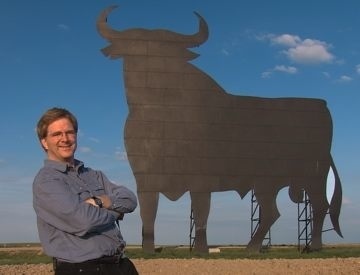 Photos courtesy of Rick Steves.
Rick Steves hardly needs an introduction. He’s written countless Europe guidebooks, stars in his own PBS travel show, hosts a syndicated radio show and is the only American travel writer who breezes around Europe with adoring groupies—Rickniks—calling out his name as he passes. If all that weren’t enough, CBS’s “60 Minutes” once gave him the full profile treatment. In a country where only a fraction of the population holds passports, his influence is remarkable. After I invited him to a Tijuana-Off—someone had to do it—we had a good laugh and he agreed to be interviewed. I dialed him up in Seattle, where he was, not surprisingly, packing for Europe.
World Hum: How has travel in Europe changed since your first trip there decades ago?
The fear was that Europe would become more homogenous culturally and everything would be efficient, but the good news is that the diversity is still there, and it’s there as vividly as ever. Right now I’m sorting out a little bit of controversy I caused by talking about the aspirations of the Catalonian people, who want to be called not a region but a “nation without a state.” When people call them a nation, that’s the terminology Franco used when they were establishing that Catalonia was a part of Spain. By accepting the term “region” they’re accepting the notion that they’re a part of Spain. So there are these little fine points that are really deep-seated.
The charm of Europe is the cultural diversity and the pride people have in their way of living, and how complex the continent is. After a generation of exploring Europe, I find that it is as vital as ever. Wales is starting its first daily newspaper in Welsh, which is great. The big changes have been in efficiency and in affluence. Old ladies are standing straight and not wearing black and they have straight good-looking teeth. As a photographer and a traveler, you look for bent-over old ladies with canes and two teeth and this kind of thing. You want to find that for your photography but you’ve got to celebrate that there’s orthodontia now in Europe.
Nowadays—I’ve been tuned onto this because my son is traveling around Europe—it doesn’t take eight hours to go from London to Paris, it takes you two and a half hours. You don’t have to get off the train and get sniffed by dogs and get onto the boat and get seasick and then get off the train in the middle of the night and get sniffed by dogs and get back on the train. You walk onto the train in London and two and a half hours later, after a nice lunch, you step out in Paris. That’s radical. And that’s the tip of the infrastructure iceberg.
Stuff that we couldn’t even imagine 30 years ago is commonplace now in Europe. In the old days, it was a big issue how to stay in touch with a loved one. You’d go to the American Express office, and you’d pick up mail that was two weeks old, and you didn’t know if you got it all and so on. Now, my son just calls me on the cell phone and you pay a buck a minute and it’s great. I just love it.
Do you think all the conveniences have taken anything away from the travel experience?
That’s a good question. What takes away from the experience is having enough money that you buy yourself out of all the risk and all the unpredictability. That could happen 30 years ago, it can happen today. When I travel, there’s no unpredictability. If I’m determined to get from Milan to Córdoba today I’m going to get from Milan to Córdoba. There’s something to be said about roughing it for the sake of roughing it. You just have a more vivid experience. You meet more people. You’re more needy. You let yourself into people’s care. I get that in Eastern Europe now. If things are getting too smooth and efficient, head east and you’ll have more of a challenge. In Europe everybody’s got the same coins in their pocket, but in Eastern Europe, you still have the stotinki here and lati there.
I just went to Montenegro and Bosnia. Wow, what a powerful experience that was. Everybody goes to Dubrovnik. There’s nothing adventurous about that. So the big question is, you have a day or two outside Dubrovnik, where do you go? Most people go to Korcula, a beautiful little Venetian-style island. And I would say that’s a distant third place after Montenegro and Mostar in Bosnia. Especially with the war in the recent past. It’s very poignant. It was very emotional.
Do you think American travelers have changed much in recent decades?
Americans have traveled a lot more. Everybody has their first trip and there was a time when your first trip was probably Europe and that was the trip and you didn’t expect to go back and back. And now, maybe it’s the circle I’m hanging out in, but it seems that a lot of people are going back and back, and for more focused trips. You can measure it by Eurail passes sold. In the old days, the best-selling Eurail pass, hands down, was all 17 countries. In the old days, the best-selling guidebooks were the Europe books, “Best of Europe,” “Let’s Go Europe,” whatever. Those Europe titles are nowhere near as dominant as they used to be. The real popular books are the more focused books. City books are selling as well as country books. People have short vacations, and they want to go deeper into it. I’m impressed by that, because I think it’s nice when you travel to assume you’ll return.
Are you at all surprised that America hasn’t become more European in more ways?
I’m not surprised. To me, I love to create a cultural hybrid and to sort of pick and choose what I want to weave into my personal character and way of living. I think that’s a beautiful thing to be able to do. A lot of people are threatened by that. I really felt that a lot of Americans actually thought it was a negative that Bill Clinton got schooling in England because that was poisoning him with European character. I would think you’d brag about it. I think his consultants probably—and probably wisely—told Clinton to downplay his European education. Just like Kerry. Downplay the fact that you speak French. What kind of decent, self-respecting American would care enough to learn how to speak French? Yet Franklin was a Francophile. He spoke French and lived in Paris. But a lot of people are threatened by that.
Even as a kid when I went to Europe I thought it was such a wonderful jolt. I just assumed women had to shave their armpits and then I went to Europe and, hey, look at that, they don’t shave their armpits. What a wonderful eureka. Not that it’s right or wrong, but everybody doesn’t shave the same hairs.
I’ve also been comparing American drug policy to European drug policy. People in America think you’re either hard on drugs or soft on drugs. They say Europeans are soft on drugs. I think you’re either hard on drugs or you’re smart on drugs, and I think Europeans are smart on drugs as opposed to waging war on drugs.
Those are the areas where I get frustrated. I think we can learn from other countries. We don’t need to sell out or abandon our principals. But we can certainly learn from the challenges that other people have had when they stumbled on a solution that works better than ours.
What kind of an impact do you think your books have had on the places you’ve written about?
Paris hardly notices it. It’s a cultural force that keeps going with or without tourism. On the other hand, Venice or Dubrovnik—they’re a cultural force that keeps on going because of tourism, and if there weren’t tourists, there’d be no Venice or Dubrovnik as we know them, that’s for sure. Money that tourists bring in keeps flamenco going, it keeps the slap dancing and yodeling going in a lot of ways. There’d still be slap dancing and yodeling in Switzerland, but it’s kind of nice that there’s enough interest in that to have people continue these traditional cultures. It’s not a bad thing. For me it’s entertaining. It’s culture on stage, Disneyland for adults. I’m OK with it.
Are there places you’ve left out of books out of concern over the impact too many visitors would have?
Yeah, there are little places. I look at it like a precious little cultural edelweiss. If I say, look at this place, it’s incredible, and then everybody goes there, it’d destroy it. I’m very tuned into that, and little fragile places that can’t handle the crowds—I don’t keep them a secret but I’m careful not to marquee them.
Is there an equation in your mind, or questions you ask yourself about infrastructure and such, to determine whether a place is capable of gracefully accommodating the visitors that your exposure would bring?
I was just in a bar in Istria in Croatia and it was so back door, it was like a Tolkien fantasy, and I just couldn’t believe it. I walked in there and it was like, I was a freak and they were freaks and we just kept looking at one another. I couldn’t say a word and I didn’t really want to drink their stuff because it was coming out of this murky jar. It was a very rough place. I thought, this is incredible and there’s no way I’m going to send my comfortable American tourists into this place. It’d be ugly. So I didn’t write about it. That’s kind of rare, actually.
It sounds like, in that case, you were looking to protect your readers more than the people who live there.
Yeah, I probably was. I’m a hired hand to my readers. I was looking at hill towns in Istria and I found places that had no tourism and it occurred to me that no tourism can be a bad thing. There’s no commerce in this town, there’s a couple of people sitting inside watching TV. There’s one bar, a little grocery store. You go to another town that does have some tourism and it becomes a nice mix. Like a town that has a vibrant local economy, a local metabolism that doesn’t rely on tourism. To me, that’s important. But the reality is that you want a place to check your email and you want a couple of hotels to choose from and you want a restaurant that will have an interesting menu and fresh food. It takes a certain amount of commerce, and in a lot of cases if there’s no tourism, there’s not enough commerce to make that happen.
It’s a complicated question. Most places in Europe that are great, I think, are discovered. And they’re great and they’re touristy and it is what it is. If you really want adventure you have to leave Europe.
Speaking of which, years ago you put out an “Asia Through the Back Door” book. When I went to Asia several years ago I brought it with me, along with a couple of other books. Even though it was dated, I really enjoyed it. I’m curious, was it a business decision to focus on Europe? I know you’ve said you love India and other places in Asia.
From the book point of view, it was just protecting my credibility. I couldn’t keep the book up to date to the standards I want for a Rick Steves book. So I just stopped updating the book and it went out of print. I love Asia, and India is my favorite country. It’s just, I have a job to do. I feel like I have a calling, and it’s to help Americans get out of our country and enjoy maximum travel thrills for every mile, minute and dollar on their vacation. I see Europe as the wading pool for world exploration. It was the most practical place for me to offer Americans a helping hand. And I personally have a passion for European culture because that’s my heritage and I love European history. So it’s natural for me to do that. If I was Asian I think I’d probably be doing “Asia Through the Back Door.” But if I wasn’t doing Europe, I’d spend a lot of time making up for lost time traveling through Asia.
So you won’t be expanding and writing a “The World Through the Back Door” series anytime soon?
(Chuckles.) No way.
You have kids, and I’m curious about balancing the demands of family life and the travel-writing life, which by its very nature requires you to be away. How do you do it?
Uh, not very well. Actually, I’m home for two-thirds of the year and when I’m home, I’m home, and I love home. I’ve got a great wife and wonderful kids and thankfully my wife is very good at holding down the fort when I’m gone. The result of that is, she gets to be a little more autonomous in how we run the house and I don’t have any grounds to come back and say, we should do it this way.
I’m gone for two two-month trips a year and the kids are essentially grown up—17 and 20. Jackie’s in Morocco, Andy’s heading to Rome. They both have an appetite for this.
How did you feel when your kids began traveling on their own? Were you nervous? I interviewed Andy two years ago when he was embarking on his first solo trip to Europe. That’s a big deal.
 It’s a huge deal. It’s natural for a parent to be nervous. My daughter is in Morocco right now. She’s with a school group, but still, that’s a long way away. I just have to always reason with myself and think, I was 18 and my parents were freaking out and I was capable at the time. Andy’s perfectly capable that way. What I really love is how confident he is being alone in Europe. He’s 20 now, he’s alone, and he’s in command, and he doesn’t know what’s down the road and he’s making friends and overcoming his own hang-ups in a beautiful way.
He never liked Germans for some reason. I don’t know why, but he just had a problem with Germans. Now he’s been traveling with a German for two weeks and he understands. It’s a great thing. He just made friends with two guys from Russia and now he wants to go to St. Petersburg. That doesn’t happen in a classroom.
You know, he confessed to me in the interview that he’s not too keen on washing his socks in the hotel sink, as you advise.
(Laughs.) Well, he’s lucky he’s traveling now instead of 30 years ago. It’s very interesting for me to read his journal, his blog, and to realize that the kids have more creature comforts now, and faster trains, and cell phones and email and all that kind of stuff, but the essential value and stimulation of travel is right there. Perfectly the same as when I was a teenager.
Has what you’re seeking in travel—the rewards—changed for you over the years?
I wish I was a better observer of people and cultures and economies and societies, this kind of thing. That’s one thing I’m humble about. I’m a good guidebook writer. I can find a good hotel and restaurant and I can design the information so it’s helpful for my travelers. But you look at some of these famous guys in travel literature—I find that to be a very different discipline from what I do—they go into a place and they observe and meet people and pull wonderful understanding out of mundane situations, and I just love that. If you’re gold-panning, those are the nuggets.
I get those once in a while. I was just in a little tiny humble grocery store in Mostar, Bosnia. A beautiful woman was there and she was looking at me wistfully like I had the world by the tail and she was a poor shop owner in this bombed-out town. She couldn’t bend down to get me the fruit I was looking for because she had shrapnel in her back. A bomb had hit 10 years ago across the street. You look at the asphalt and see little starbursts that have been paved over, and in Sarajevo they’ve been paved in red. They’re called Sarajevo roses. You’ve got those souvenirs all around from the war. It’s so poignant. You want to sit down and get out your notepad and collect all these thoughts and weave them into something coherent so people can vicariously be there through you and gain the same sort of empathy for peoples’ struggles. That’s something I’m working on.
My lucky situation is that I think more people read my material than the greatest travel literature writers because I have a practical rack to hang my information on.
Do you have plans to do more narrative travel writing?
Not big time, but my “Postcards from Europe” book was that way. Slowly I’m building the material through my blog. I’m doing a 100-day blog now. I did a blog last year. I find that’s the most enjoyable writing for me. You know what that’s like, developing a community of people following what you do. It’s just really fun. So from that, I’ll have the material to cobble together a book that will be able to paint those stories, like the woman with the shrapnel in her back. These stories are practical insights and tips, just as much as what train to catch, to give a person a better travel experience.
I couldn’t agree more. That’s a great place to end. Thanks for the time, Rick.
 Email to friend
 Twitter
 del.icio.us
 Digg
Digg Facebook
 Furl
Furl Ma.gnolia
 Mixx
Mixx Reddit
 StumbleUpon
 Yahoo! Buzz
Jim Benning is the editor and co-founder of World Hum.
Cliff H 08.19.07 | 4:41 PM ET
Rick is a genious. He has created a whole travel brand around himself, through just decades of good information and hard-work. Well done!
Andria 08.23.07 | 5:45 AM ET
Hi Rick, your introduction is very good. I read it well.
Veena.N.K 08.24.07 | 12:13 PM ET
I am from India. My husband and myself came to this country 10 yrs ago. We used to watch his programs in PBS and we loved it. We own the Europe series which we bought through PBS. His advice, tips and all the info is very useful. We have already been to Europe twice and still plan to explore as much as possible. Thanks for this interview. Its great. I really respect people who travel and are willing to share their experiences like this. It inspires people like us to know more about other countries and their culture. Needless to say we love the Travel Channel. Keep up the good work.
Kathleen Brock 09.04.07 | 3:36 PM ET
Mr. Steves has been with my husband and I in our travels for the past 15 years
Its amazing when you arrive at a particular location and sit and guess how many prople are in that very spot just because of the books and then someone pulls out the guide book and your just giggle.
One of our first experiences was in Brugge at breakfast in a recommended B& B. At the table was a couple from England , Spain and ourselves we all raved about the place only to find out we all used Rick’s book to locate this hide away. We have also made lasting friendships because of the book.
Early this year we went to The Chech Republic and Hungary. Again the Rick Steves books were spot on with the recommened side trips and orientation guides. We were doing just great until we realized that we forgot the book on our hotel room bed. I was so panic striken that I just cryed and said to my husband now what do we do, we are lost. After the realization of our loss I tried to recall some of the places in Buda hill. All at once I saw a young college student with her copy and told her of our loss. She let me peek and jot some notes while she was having a coffee break. She also had quite a few giggles about me. We did succeed and know that we can go without full attachment to the guru of travel. It is kind of like learning to ride a bike and we are about to take off the training wheels.
A couple,from Seattle who attend his seminars, we met in Spain. We got talking, did some touring together and we have maintained the friendship. We are going to China next month together. A little scarey without Rick to guide us but he has given us the confience to succeed on our travels and for that I say THANK YOU THANK YOU
johnh 10.17.07 | 12:01 PM ET
Hi.
I met Rick S. and his writer in Rovinj, Istria Croatia while sitting at a cafe on the riva.
Sorry to say, but Rick needs to think like a European and not like an American traveler. Most Americans want the 4/5 star accomadations, etc. their used to back home with the cheesy gold leaf details of Donald Trump. Obviously, people who travel like this need to make a statement onto themselves. What happened to yesteryear, like normal, natural settings, nothing over the top and showy.
Be like a European traveler! Simple, no frills, no complaints, chill out, ENJOY LIFE! Americans work to much! Have a lifestyle that is cultured, worldly, inovative and be friendly to mankind!
From an American traveler who extended his stay in Croatia to 6 months.