
Tony Horwitz: Rediscovering the New World
Travel Interviews: Ben Keene talks to the author of the new book "A Voyage Long and Strange" about travel, American myths and the importance of visiting places where "history happened"
05.13.08 | 11:00 AM ET
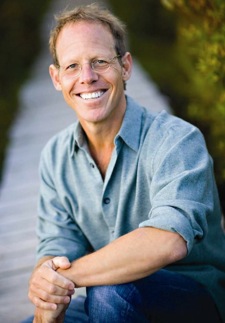 Tony Horwitz’s travel books have led him into the deep South, around the blue Pacific and, most recently, on a series of treks around the United States to rediscover over a century’s worth of history that Americans have all but forgotten. Children in the U.S. are taught about the arrival of Columbus in 1492 and the English settlers in 1620. But who explored the so-called New World in the years between? What happened?
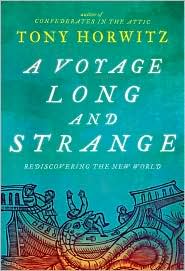
Inspired by a conversation with a park ranger during a chance visit to Plymouth Rock, Horwitz decided to find out with a research trip around the United States. As he writes, he wanted to answer the questions, “What would it be like to explore this New World, not only in books but on the ground? To take a pre-Pilgrimage through early America that ended at Plymouth Rock instead of beginning there?” I caught up with him via email to tease out a little more about the fascinating stories in A Voyage Long and Strange: Rediscovering the New World.
World Hum: Which of the explorers did you know the least about when you started writing the book? Whose story fascinated you the most?
Tony Horwitz: I knew almost nothing about any of these explorers, and that was the impetus for writing the book. As I dived in, I also discovered that the little I thought I knew—about Columbus, say, or John Smith—was 90 percent myth. If I had to pick one story that was particularly fascinating, it would be the incredible trek made by four castaways from a Spanish expedition to Florida in the 1520s. They became faith healers to the Indians who took them in, were passed from tribe to tribe as revered medicine men and, over the course of eight years, wandered west to the Gulf of California and then south into Spanish-held Mexico. In other words, they crossed the entire continent 270 years before Lewis and Clark. One of them was a black slave named Estevanico, and another a Spaniard, Alvar Nuñez Cabeza de Vaca, who wrote a stirring account of the journey that reads a bit like the first great American road trip.
What did you discover about the country (parts of which you say you hadn’t visited before) in retracing the land routes of conquistadors?
We think of ourselves as a young country, the New World, but traveling America in the wake of early explorers made me realize that we’re a lot older than we think. This is most vivid in the Southwest, where you encounter ancient pueblo cultures alongside Spanish communities that trace their roots to the 16th century, before Jamestown or Plymouth. Also, though I’d often traveled through the South, I’d done so searching for traces of the Civil War. This time I discovered the rich remains of the Indian “mound culture” that existed for centuries before Europeans arrived. The engineering and art of these societies rivaled that of the much better known civilizations of Mexico and Peru.
Were there any particularly powerful moments or stops you made in Arizona or New Mexico that reinforced this sense of history?
 Yes, a stone headland in New Mexico called El Morro. For centuries, the bluff offered shade and water to travelers on the long dry trail between Zuni and the Rio Grande, and many of them left inscriptions on the cliff-face: pre-Columbian Indians, Spanish conquistadors, missionaries, railroad surveyors, even members of a camel caravan. El Morro is now a national monument and you can still see the carvings, which cover almost an acre of rock. To me, it’s a vivid reminder of how rich and varied and ancient the Southwest’s history is.
Why do you think it’s important to visit places where, in your words, history happened?
Going to the places where history happened adds another dimension to what I can learn from documents alone. For this book, I visited a number of archaeological sites and, among other things, saw mass graves that gave vivid evidence of the disease that killed so many natives and early colonists. The remains of the South’s many mound cities visited by De Soto helped me appreciate the grandeur and sophistication of a lost Indian culture. And standing on the frigid shore of northern Newfoundland, or in the baking Sonoran desert of northern Mexico and Arizona, I sensed just how rigorous life was for early explorers and settlers. More generally, wandering these landscapes put me in the right frame of mind for thinking about exploration, and helped me make the story more vivid on the page.
Do you consider the various European chronicles and accounts to be early forms of travel literature? Do they share much in common with modern travel narratives?
It’s hard to equate explorers’ chronicles with modern travel writing. They were writing for a very particular audience (usually a royal patron), didn’t have contemporary qualms about plagiarism or simply making stuff up, and saw native cultures through a very distorted and Eurocentric prism.
That being said, as a former foreign correspondent, I found it easy to identify with the wonder and disorientation these early Europeans experienced on landing in utterly strange lands. The best chroniclers also convey some of the humor and absurdity that inevitably result when people who don’t have a common language or culture try to communicate and share customs and food. The French, for instance, found native food horribly bland, while Indians recoiled from the garlic and onion on their visitors’ breath.
The biggest difference between that era and ours is that modern travelers have some image of the place they’re going before they get there. Most of these early explorers were clueless about what they would find, and the little information they possessed was riddled with errors and legends.
Whose letters or journals drew you in the most?
Each chronicler has his own style and all are fascinating in different ways. The Spanish were the most prolific, in part because they were the most bureaucratic and kept a careful record of everything—including their own atrocities against Indians. For sheer reading pleasure, though, I’d have to pick Thomas Hariot, an Oxford-educated scholar who was sent by Sir Walter Raleigh in the 1580s to collect specimens and describe the landscape and people of coastal North Carolina. Hariot learned Algonquian, was a skilled observer and his Elizabethan language is familiar to us from Shakespeare. Among his many striking observations was that Indians, who often sickened and died after brief exposure to the colonists, thought the English were “shooting invisible bullets into them”—which in a sense they were, by infecting natives with European germs.
You list “initiative, courage, and hunger for glory and spoils” as classic conquistador attributes. What else did the characters have in common? And did you detect differences among the Spanish, French and English?
True explorers in every era have to improvise. They also need to have an instinct for survival. The most successful adventurers from this era, such as John Smith, were men who were able to shed their assumptions and sometimes even their original missions. They learned to live as Americans. Most didn’t. The failure rate was staggering, and so was the body count.
At the risk of gross stereotyping, there are clear differences between explorers from different countries. The Spanish tended to be God- and gold-mad—zealots who would do and endure almost anything to achieve their aims. The early English were focused on commerce and cared far less than the Spanish about converting or comingling with natives. I found the French the most sympathetic. They took a keen and sympathetic interest in natives, sought trade rather than conquest, and displayed a typically Gallic appreciation of the New World’s sensual pleasures. While the English were starving in warm, abundant Virginia, the French were gathering herbs and roots in frigid Canada. Samuel de Champlain even founded the first gastronomic society in America, the Order of Good Cheer.
I found the passages about the complicated interactions with the native population of the Americas particularly fascinating. Given that first contact is a theme you also addressed in your last book, “Blue Latitudes,” I wonder what other thoughts you have on this subject. When two cultures meet, do you think it’s inevitable that one of them will supersede the other or can they coexist?
First contact offers a fascinating study in human character. How do people who have never encountered or even imagined each other interact, communicate, get along, or not? This is an experience we simply can’t have today, no matter how far we travel. Yet Captain Cook, the subject of “Blue Latitudes,” had it dozens of times across the Pacific. And so did the forgotten European first-comers to America. That was one reason I wanted to write this book, to rediscover one of the richest yet most neglected chapters of our history.
I wish it were a happier story. I highlight a few instances in which individual explorers were vulnerable or open-minded enough to imagine a world where the discoverers and the discovered could coexist. But these were exceptions. European greed, weaponry and disease made the subjugation and destruction of native societies almost inevitable.
Was there an explorer who most deserved the 16th century humanitarian award for best behavior?
Unfortunately, the competition for such an award isn’t very stiff, since most explorers behaved very badly towards natives by the standards of today, and often by the standards of their own. But I’d give the prize to a little-known Spaniard, Hernando de Alarcón, who in 1540 took a boat up the Colorado River, making first contact with the Indians of Arizona. To signal that his intentions were peaceful, he threw down his sword and shield and stepped on them, and lowered his boat’s banner. The Indians responded in kind and Alarcón traveled for several hundred miles without incident, except for trade and the strange and amusing attempts by both sides to understand the other. Indians combed the Spaniards’ beards and patted the wrinkles on their clothing, perhaps thinking it skin. Alarcón tried to explain Christianity with pantomime and stick crosses, but acknowledged that he made little headway. His account of the journey is a rare glimpse of Europeans and natives reaching across the canyon of language and culture as curious fellow humans rather than as combatants.
Finally, you explore the power of myths in American history. What are we to make of our founding myths?
Myths are a way to simplify, make sense of and give meaning to history. Columbus, the Pilgrims, the Founding Fathers—that’s about all we remember of our origins. What I came away with from researching this book is how much messier and more interesting the true story is. We evolved as a country from multiple origins. In a way, early America resembled America today: a diverse and very fluid land. We should embrace that complicated heritage rather than put a band of late-arriving Pilgrims on our national birth certificate.
 Email to friend
 Twitter
 del.icio.us
 Digg
Digg Facebook
 Furl
Furl Ma.gnolia
 Mixx
Mixx Reddit
 StumbleUpon
 Yahoo! Buzz
John M. Edwards 05.15.08 | 12:41 AM ET
Hi Ben and Tony:
Tony, thanks for coming up with such a good idea.
I am a Bradford-Brewster Mayflower descendant, directly related to the 1620 origins of this country through my Grandmother, Helen Havighurst, who was so saintly she fed colorful train-hopping hobos sandwiches during the Depression and died on her birthday at exactly the age of 100. This is a true story.
Now get this: I was born on November 9—the exact day of the first Mayflower landing (and the fall of the Berlin Wall). With a beard I resemble the painting of William Bradford, resplendnat in his Conquistador-like armour, in Plymouth’s Town Hall. They even let me jump down with some friends and touch what’s left of the Rock.
I see a heavenly pattern, an actual design to earth, wind, and fire. The Milky Way might be a spacer with no life, cut to ribbons like a friendless Snickers bar crying out for a cosmic shower—like when you are stuffed in a hospital begging for more, but . . .
When I was a kid, I asked my father, who seemed semi-omniscient, almost like Superman’s forebear 2 Qs:
1. How large is the universe?
2. Why do people die?
The fact that he couldn’t answer either caused a bucketful of tears. I don’t cry anymore. The world won’t end with either a bang or a whimper. There was something “before” the Big Bang. The collective history of the Earth is a made-up story if these asteroids clobber us and Nasa can’t zap them.
The stuff of rumor and gossip in Ultima Thule.
John M. Edwards
Ireq 05.16.08 | 5:11 PM ET
John,
strange when I was a kid of 6 I used to ask myself similar questions. The most common was what is the point of living - unusual questions for a kid. Now when I observe landscapes to die for I have the answer to my question.
kiralik oto 05.22.08 | 12:40 PM ET
Now get this: I was born on November 9—the exact day of the first Mayflower landing (and the fall of the Berlin Wall). With a beard I resemble the painting of William Bradford, resplendnat in his Conquistador-like armour, in Plymouth’s Town Hall. They even let me jump down with some friends and touch what’s left of the Rock.
otokiralama 10.07.08 | 7:06 AM ET
I was born on November 9—the exact day of the first Mayflower landing (and the fall of the Berlin Wall). With a beard I
in Plymouth’s Town Hall. They even let me jump down with some friends and touch what’s left of the Rock