
Soccer: Three Great Books
Travel Blog • World Hum • 06.12.06 | 1:16 PM ET
 iStockPhoto
Soccer is more than just another sport. It often reflects centuries-old ethnic, nationalist and religious tensions. It’s a global business. Its fans are wildly—and sometimes violently—passionate about their teams.
While some writers have explored the subject as part of larger works—Ryszard Kapuscinski’s The Soccer War features (despite what its title might suggest) just one compelling chapter on the soccer-inspired war between El Salvador and Honduras, for example, and Paul Theroux’s “The Old Patagonian Express” includes a terrific passage about a soccer-related riot in San Salvador—other writers have devoted entire books to soccer and the culture that surrounds it.
Herewith, three great books about soccer:
 How Soccer Explains the World: An Unlikely Theory of Globalization by Franklin Foer. Foer travels the globe, hanging out with soccer hooligans and exploring age-old rivalries to see how soccer reflects—or doesn’t—the forces of globalization at work. His insights are fascinating. For example, he traces the relationship between the Balkan Wars and soccer: how, early on, soccer fans at Red Star Belgrade stadium had chanted for secession from Yugoslavia; how Slobodan Milosevic’s interior minister had sat on the soccer team’s board; how Serb leaders recruited nationalist Red Star fans for paramilitary operations. And that’s just the opening chapter. In the prologue, Foer addresses larger questions about the world’s future, noting that many have embraced traditionalism out of fear that globalization will obliterate indigenous cultures. But soccer, he finds, suggests the future is not so simple. Local allegiances and identities continue to thrive.
He writes:
By the logic of both its critics and proponents, the global culture should have wiped away these local institutions. Indeed, traveling the world, it’s hard not to be awed by the power of mega-brands like the clubs Manchester United and Real Madrid, backed by Nike and Adidas, who have cultivated support across continents, prying fans away from their old allegiances. But that homogenization turned out to be more of an exception than I had anticipated. Wandering among lunatic fans, gangster owners, and crazed Bulgarian strikers, I kept noticing the ways that globalization had failed to diminish the game’s local cultures, local blood feuds, and even local corruption. In fact, I began to suspect that globalization had actually increased the power of these local entities—and not always in such a good way.
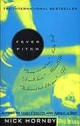 Fever Pitch by Nick Hornby. In his 1992 bestseller, Hornby explores the world’s fascination with soccer through his own obsessive relationship with Premiership powerhouse Arsenal. “While the details here are unique to me,” he writes in the introduction, “I hope they will strike a chord with anyone who has ever found themselves drifting off, in the middle of a working day or a film or a conversation, towards a left-foot volley into a top right-hand corner ten or fifteen or twenty-five years ago.” The great strength of “Fever” lies in Hornby’s recall of those details—the book is organized in short sections that take place at or are inspired by his memories of matches—right down to the noise in the stadium the first time he took his place in the jam-packed North Bank with Arsenal’s most passionate fans.
I loved the different categories of noise: the formal, ritual noise when the players emerged (each player’s name called in turn, starting with the favourite, until he responded with a wave); the spontaneous shapeless roar when something exciting was happening on the pitch; the renewed vigour of the chanting after a goal or a sustained period of attacking ... After my initial alarm I grew to love the movement, the way I was thrown towards the pitch and sucked back again. And I loved the anonymity: I was not, after all, going to be found out. I stayed for the next seventeen seasons.
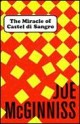 The Miracle of Castel di Sangro: A Tale of Passion and Folly in the Heart of Italy by Joe McGinniss. On one level, “The Miracle” is a book about soccer—the highs and lows, the dreams and despair that a team from Castel di Sangro in southern Italy faced throughout its hardest year ever. They lacked skill, talent, organization and money, but played from the bottom of their souls. On another level, “The Miracle of Castel di Sangro” is about people—the players, their families and their fans (for many of whom this would be the most exciting year since World War II). It is a book about a nuanced Italy, complete with its bumps, warts and graceful curves; the paradoxical land, as one player remarked, of both Dante and Machiavelli, where there is always more beneath the surface. McGinniss is a master of his craft. His sketches of life in Castel di Sangro are so smooth and so vivid that you can easily find yourself lying awake at night worrying about the next day’s game.
—Jim Benning, Michael Yessis and Frank Bures contributed to this report.
 Email to friend
 Twitter
 del.icio.us
 Digg
Digg Facebook
 Furl
Furl Ma.gnolia
 Mixx
Mixx Reddit
 StumbleUpon
 Yahoo! Buzz
Gino Zanetti 06.15.06 | 12:03 AM ET
Simon Kuper’s Football Agst the Enemy—just published in its first US edition as (surprise, surprise) Soccer Agst the Enemy really deserves to be in the company of these books. For the aficiandos, Kuper’s book is the book that explores the intersection between politics and soccer. In fact, Foer’s book, as Foer admits, is inspired by Kuper’s but Kuper’s book is much much better, the insights into the game and the understanding of history probe much deeper and nuanced than Foer’s sketch.
But if there’s one title I had to name as the GREATEST book on the game, that wld be Eduardo Galeano’s SOCCER IN SUN AND SHADOW, a book that manages to capture the madness, complexity, beauty and importance of the game in his inimitable, epigramtic style. It’s also, for my money, an incredibly moving book, Galeano sides with the millions of poor, working people whose game is being successively stolen by the imperatives of global capitalism. Galeano’s book is the “Mondovino” of the soccer world.
Jim 06.15.06 | 12:44 AM ET
Great suggestions, Gino. I look forward to exploring these books in the future!
Footballer 02.07.08 | 2:42 PM ET
Haha I’ve read the third book from your list, I didn’t actually like the content…
Watch Live Football 02.10.08 | 8:33 PM ET
Fever Pitch is a cracking read for any football fan. Recommended!
PS. Great reviews!
Free Articles 02.11.08 | 10:56 AM ET
Great books, thanks, the second is great!
Article Writer 02.14.08 | 2:22 PM ET
Hi! Thanks for the great info!
personal radar 02.14.08 | 2:23 PM ET
Do U know any other books by Nick Hornby?
Westlife Tickets 04.10.08 | 5:54 PM ET
I have some friends that will say, and believe what they say, that football defines not only the players but the fans as well. You can test them with the lie detector. You will see nothing strange. These people breathe, drink and eat football 24/7. I think these three books were written especially for them.
Setanta Sports 04.13.08 | 5:03 AM ET
Revealing book reviews on my favourite sports subject, thanks.
james 06.28.08 | 2:47 PM ET
great book, theres a film aswell which is really good
4-ad 06.29.08 | 5:03 AM ET
Awesome book..! I believe there is a movie by the same name.!
Live Football 07.08.08 | 6:28 PM ET
Fever Pitch is an excellent book, if anyone enjoyed that they should look up some of Nick Hornby’s other books that are not football related - the likes of High Fidelity are definetely interesting reading.
free bet 08.20.08 | 2:47 PM ET
one of my favourite all time books. Captures everything about being a football fan. Even if it is an Arsenal one :)