
How to Dig Dim Sum in Hong Kong
How To: No visit is complete without indulging in the breakfast and lunch specialty. Valerie Ng explains the difference between cha siu bao and daan taat -- and where to dip your Chinese donut.
02.21.07 | 3:00 PM ET
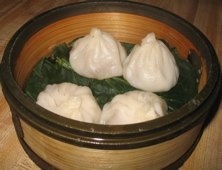 The situation: You’re wandering in Hong Kong or an overseas Chinatown when you succumb to the delectable smell of Chinese brunch fare. You and your companions head to a restaurant and are quickly overwhelmed by the many varieties of snacks rolling by on carts. Where to begin? You need a dim sum primer.
The basics: Dim sum and yum cha refer to a meal enjoyed with tea for breakfast, brunch or lunch. Dim sum roughly translates from Cantonese as “touch the heart.” Yum cha means to “drink tea,” or to have a tea breakfast or lunch with dim sum. Having dim sum is a little like having tapas in Spain—a meal is made out of several plates of snacks. It can be quick or lengthy. In Hong Kong and at most restaurants overseas, Cantonese is the dialect spoken, but English is often spoken as well.
Where to find it: Dim sum restaurants abound in Hong Kong. Popular spots include Victoria City, Jade Garden and City Hall Maxim’s Palace. Outside of Hong Kong, some of the most authentic dim sum restaurants can be found in cities and suburbs with vibrant Chinese communities, especially San Francisco, Los Angeles, New York, Honolulu, Toronto, Vancouver, Sydney and Melbourne.
Order like an expert: At large restaurants where you must wait for a table, go to the receptionist to get a number, which will later be called in Chinese and English. The dim sum experience is more fun with a group, so that more varieties can be sampled. Each plate usually has four to six pieces. At some restaurants, a paper menu with a list of plates will be placed on your table—much like a sushi restaurant—so that you can mark those plates you would like. When ready, hand it to a waiter or waitress. Otherwise, listen as the waitresses call out the names of dishes on their carts as they pass by. The names are almost always a description of the dim sum, such as barbecued pork buns (cha siu bao) or egg custard tarts (daan taat). Most dim sum dishes, especially dumplings, rice noodle rolls, no mai gai (glutinous rice wrapped in lotus leaf) and rice porridge (jook), contain meat. Try Chinese donuts, which look like churros, and dip them into the jook.
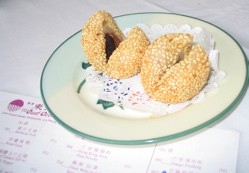 Dumplings can be boiled, pan-fried or steamed and are usually filled with meat and chives. Ha gow dumplings are filled with shrimp. Siu mai feature pork. You can often find vegetarian varieties. Bread (bao) is usually steamed, white, light and cakelike, filled with meat or a sweet paste. Dessert options include mango pudding, daan taat, almond pudding cubes and sesame-covered jin dui (which is filled with red bean paste). You can also order larger dishes, like pan-fried noodles, off the menu. Work hard to get the attention of a waiter or waitress; they usually zoom by.
When the teapot needs to be refilled, tip the lid (if it is porcelain) or open it (if it is metal). A waiter will refill it. A double tap of the index and middle fingers on the table or the side of the teacup signals a thank you.
Pay with panache: A card with a grid will be placed on the table to be marked by the servers. The grids are divided into three sections: small, medium and large, referring to the sizes of the plates selected. A stamp is given for each dish in the appropriate section. At the end of the meal, let a waiter or waitress know that you want to pay and the stamps will be counted and the bill added up.
Photos by Valerie Ng.
 Email to friend
 Twitter
 del.icio.us
 Digg
Digg Facebook
 Furl
Furl Ma.gnolia
 Mixx
Mixx Reddit
 StumbleUpon
 Yahoo! Buzz
movie reviews 03.09.07 | 8:24 AM ET
That thing looks pretty good. Is it easy to make ?
Robin Sparks 07.07.07 | 11:56 AM ET
Please pass this on to Valerie Ng…Thanks!
Dear Valerie,
I am writing to ask your permission to reprint “Dig Dim Sum in Hong Kong” in a future issue of EscapeArtist Travel Magazine online at http://www.escapeartist.com. Our magazines combined have 360,000 subscribers and we get over a million hits per month. So although we cannot pay in cash, we can offer you vast exposure. If you agree, please send photos that go with the article, a brief bio of yourself, and any links you’d like us to include. I look forward to hearing from you.
Robin Sparks
Editor and Columnist
EscapeArtist Travel Magazine
http://www.escapeartist.com
Hong Kong Travel Guide 04.11.08 | 12:06 AM ET
When you order dim sum, be sure to try the dish called “Cheung Fun” which is rice flour rolls with barbecue pork or beef. That is my favorite dish. Don’t eat it everyday though, because dim sum in general is high in cholesterol.