
Gregory Hubbs: Remembering Transitions Abroad Founder Clay Hubbs
Travel Interviews: Thirty years ago, he created a magazine to celebrate life-changing travel. Hubbs died March 29; the magazine lives on. Jim Benning asks his son about his father's legacy.
05.23.07 | 3:45 PM ET
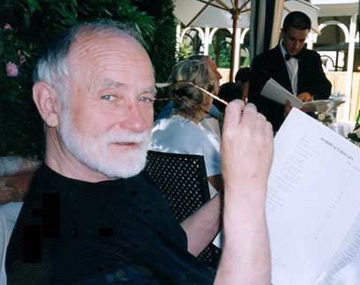 Photos courtesy of Transitions Abroad.
On March 29, the travel world lost a visionary: Clay Hubbs (pictured above), founding editor and publisher of Transitions Abroad magazine. A one-time English literature professor with a master’s degree in journalism and a deep sense of wanderlust, Hubbs launched the magazine in 1977 to provide independent travelers with thoughtful, timely information about traveling and living abroad. The name Transitions Abroad “was meant to suggest the changes that occur as a result of immersion in a foreign language and culture,” Hubbs once explained. “Travel that changes us, travel that is mind-expanding, travel that involves learning”—in short, the kind of travel we love.
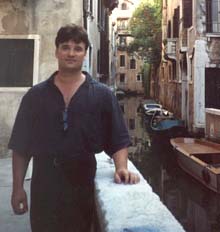
Just last year, reflecting on Transitions Abroad turning 30, Hubbs vowed that the publication would “continue to point the way toward positive change through travel—not just change in individual perceptions but putting what has been learned to use to make the world a better place for all of us.” I recently exchanged e-mails with Gregory Hubbs, Clay’s son (pictured below), who lives in New York City and edits TransitionsAbroad.com. Not surprisingly, Gregory has a wide-ranging biography of his own, having traveled extensively and studied French symbolist poetry and, at the University of Paris, Sarbonne, comparative literature and existential philosophy. I asked him about his father’s legacy.
 World Hum: What kind of guy was your father?
Clay was an exceedingly complex man, full of apparent contradictions that he somehow brought into harmony. I describe Clay as the mother of all fathers; he was the ultimate paternal figure. Clay was a quiet and strong-willed yet gentle and empathetic old school American man who was always calm in the face of any circumstance. For example, he found being an Air Force jet pilot in the 1950s so boring he quit to become an officer, as there was “so little to do up in the sky” and he found emergency landings only moderately interesting.
He met my mother, Joanna, who was born and raised in Europe and, beatnik that she was, ran away from it all when she was 20 and he was 24, in 1960. Their meeting coincided with Clay’s transfer to England as an officer in the Air Force, where he spent most of his time reading classical literature and picking up his wife who was engaging in small anti-war protests outside of the base with me in a stroller. When Clay resigned his commission in protest of the Vietnam War, he took off with my pregnant mother in a VW bus—I slept in the back—to follow the trail of Alexander the Great through deserts and deserted mountain roads in Turkey and civil wars in Iraq and Iran. When Clay was drunk or in other altered states, he would tell endless true stories about our many trips that strained belief, including instances of machine guns pointed at his head and my mother’s pregnant stomach by those who thought our family to be American spies in Iraq and Iran. Yet to his dying day, my father insisted that the people of the Middle East were by far the most hospitable people he ever had the pleasure to encounter.
Clay’s genuine appreciation for every human being and ability to adapt to every unique situation allowed our family to travel and live as a family all over the world in peace, even if he felt the hippie movement was somewhat naïve (he thought that the Beatle’s “All We Need is Love” was one of their best spoofs). Yet, when we lived near Paris in 1969, Clay’s persona was such that a national Italian magazine wrote a long illustrated piece that mistakenly described Clay as the head of the first hippie commune in France—who just happened to live on some run-down castle grounds.
What was his travel philosophy?
Clay preferred to stay as close to the people and the land in which he traveled as possible. He would insist that we stay in campgrounds by the side of some remote dirt road or beneath Mount Olympus, in tiny bed and breakfasts or farm stays, and eat from the local market or at small family-owned restaurants. Clay would always make a point of shyly expressing his appreciation for the hospitality of those who provided him food, lodging and directions no matter how lost we were while traversing the world in a series of VW buses. He did not particularly like pretension, but certainly enjoyed a great meal in a Michelin 3-star restaurant and relished a great wine. Clay would get up at dawn to visit every imaginable ruin in Rome, every museum in Paris, or Gallery in Soho. No matter which town we came across off-the-beaten-path, Clay would stop and check out the architecture and art in all the local churches and mosques. He felt that an honest attempt at immersion in the daily rituals of another culture to the extent possible—even given language limitations—was simply a matter of fundamental human respect.
Would you talk more about that?
Clay was very embarrassed when he was around tourists who spoke to natives as if they were their servants or inferiors, and he would do all he could to avoid the hordes streaming off tourist buses. While the creation of the magazine was in part due to an urge to buck the travel industry and offer other alternatives to the behavior of the “ugly American,” he later decided that such behavior was not restricted to his fellow citizens and he was more generally interested in educating others on how and not where to travel.
My father read widely, but had a very broad notion of travel literature. One of the books he reread before he died was Homer’s “Odyssey,” which was for him the ultimate travelogue, and one that we also briefly retraced as a family (which was a bit difficult lacking a boat). For Clay, mythological stories and the realities of travel had the same human psychological and aesthetic basis.
Was there any travel experience that stood out in his mind or changed him in a particularly profound way?
I believe that he had so many epiphanies during his travels that he would have a hard time highlighting any one instance. Clay was quietly dazzled and moved every day by his encounters with locals and the historical impact of native cultures on landscapes, architecture, art and food. The twinkle in his eye shone most brightly when our family was lost (likely intentionally on his part) and my mother was about to lose her mind at the thought of camping in yet another abandoned field or beach at the bottom of some unknown mountain road with no fuel and two screaming children.
What’s his legacy?
Over the years, I have seen his notions of responsible travel, educational travel, immersion travel, etc. imitated by many Web sites and travel writers. Clay’s refusal to accept the predigested and often fantasy-based travel experiences which the travel publishing industry has long found to be most profitable has had an influence on many of those who began writing and editing along with him some 30 years ago, and it has now become fashionable to espouse many of the ideas he helped promote. Clay was in awe of the potential of the Internet, always insisting that articles in the magazine provide links to practical information, but was somewhat unimpressed by the unedited self-indulgence and consumerism that made surfing for him a bit of a chore relative to reading a great book.
Now that I think about it, Transitions Abroad magazine was largely a community blog in print founded 30 years ago in which Clay respectfully edited the wide-eyed experiences of those willing to leave home at home. Clay was proud that many first-time and freelance writers went on to travel writing careers and was just as pleased that so many professional writers were willing to write for the magazine purely out of sympathy with his vision and not for the minimal payment he could afford as a small independent magazine publisher. Clay did not consider himself an innovator, just an engaged journalist, educator and editor. Just as he volunteered his time as a study abroad adviser in order to help enlighten his students, so he used his incredible energy to turn raw travel stories by aspiring writers into inspirational yet practical articles which have proven useful to so many throughout the years.
What’s in store for Transitions Abroad?
Sherry Schwarz took over as acting editor in 2003—even as my father did much of the behind the scenes copy-editing—and is doing an excellent job of continuing the vision with a particular emphasis on responsible, educational, immersion and long-term travel as well as voluntourism.
On the Web side, my father had long lamented to me that much of his work was essentially lost after publication, so I have spent much time initially attempting to consolidate years of stories and resources. I am currently working on expanding our editorial coverage online. I am very impressed by what sites such as World Hum, Vagablogging and Gadling have accomplished in terms of opening up new vistas and inspirational ideas and wish to remain a useful travel resource for curious and independent spirits who report their discoveries from home and abroad.
I am beginning to solicit and edit the type of articles that do not appear often in the magazine, as we are very interested in the Slow Food movement that originated in Italy but is spreading across the world. The Italians have once again found a brilliant idea by which to combine ethics and aesthetics with a concept that applies equally to travel. I am calling this future key section “Travel for Pleasure” and welcome submissions.
We’ll be reading. Thanks, Gregory.
 Email to friend
 Twitter
 del.icio.us
 Digg
Digg Facebook
 Furl
Furl Ma.gnolia
 Mixx
Mixx Reddit
 StumbleUpon
 Yahoo! Buzz
Jim Benning is the editor and co-founder of World Hum.