
Havana Homecoming
Travel Stories: Her family left Cuba when she was 3. Decades later, Leslie Berestein visits her old neighborhood, knocking on doors, searching for her Cuban self.
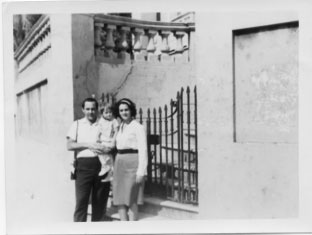 Photo courtesy Leslie Berestein
So tonight in the taxi I carried a few old photos with me, determined to breathe life into them. The streets grew darker and emptier as we moved away from downtown, past deserted intersections where burning oil cans glowed in the thick brown dusk, serving as rough street lamps. We eventually turned off the main thoroughfare onto a narrow street lined with decaying colonial houses, all of them huddled close. In the remaining light I could see that some had not been painted in decades. Their once stately facades were pocked with crumbling plaster, their graceful iron gates rusted through. The driver stopped in front of one painted a faded green. I had seen this house a million times, but no one had ever told me it was green.
“Calle Lacret, number sixty-five,” the driver announced. “This is where you wanted to go, right?”
Old women stared from their front porches as I got out. Maybe they had watched me as a baby, but now I was a stranger, someone to eye with suspicion. I stood in front of our old house for a long time, holding a wrinkled photo of my family posing outside, all of us gray. It was hard to imagine that this was the same house, that I had existed here.
No one seemed to be home tonight. But there were lights on next door, and I recognized this house, too, from photographs. I knocked on a heavy door flanked by dirty marble columns and it soon creaked open, revealing a heavy older woman, her hair in curlers.
“Buenas noches,” I started uneasily. “I don’t know if you remember me, but I lived next door when I was little. My name is Leslie. My family moved to the United States.”
The woman stared at me intently. “Leslita? You’re Leslita?” I nodded, producing a photo of her daughter and me as toddlers on a see-saw. The woman covered her mouth. She began crying.
“Ay, dios mio! Leslita!”
With that she flung her big arms around me. A younger woman rushed out to see what the commotion was. She was chubby, with long black hair and a cherubic face the color of nutmeg.
“Lolita,” her mother cried, flopping me around like a doll to face her. “Do you remember your first friend? Leslita, from next door?”
Lolita looked dumbfounded. “Is it true?”
I nodded. Her mother kept sobbing.
“Can you believe it?” her mother cried. “After all these years, she has come home! That same little girl who left so long ago has come home!”
These last words settled on me like magic dust. I suddenly took notice of the bright yellow tile on the front porch where we had played as babies, the lush green of the tropical plants surrounding us, the glitter of the marble columns beneath their coating of soot. Lolita stared at me in what looked like disbelief, then rubbed her eyes for several seconds. Her cheeks were wet when she took her hands away.
I glanced down quickly at the photograph in my hand, then back at Lolita’s face, smiling at me for the first time since early childhood. It was soft, brown, warm, real. A lifetime’s worth of gray myth was coming alive all around me in vivid color. The little girl in the photographs still existed for these people, still Cuban, still one of them. She was real. And she was me.
 Email to friend
 Twitter
 del.icio.us
 Digg
Digg Facebook
 Furl
Furl Ma.gnolia
 Mixx
Mixx Reddit
 StumbleUpon
 Yahoo! Buzz