
Morning, Not Smart
Travel Stories: She coped with the slamming car doors and the fumes from the gas station next door. But Thai pop gave Katherine LeRoy a hot heart.
04.16.03 | 9:53 PM ET
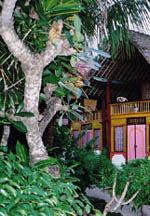 Photo by Katherine LeRoy.
Thai pop is an unsettling genre of music, much more grating on the nerves than hard-core gutter punk, elevator muzak, or even the latest brand of teen bubblegum pop. Singers string ridiculous sing-song words together into rhymes that make Mother Goose stories look like epic poetry. The high-pitched melodies seem composed for two-year olds and the voices, whether male or female, sound just a few years older.
Thai pop is also the music that was favored by the teenage employees of the 24-hour gas station and mini-mart next door to our house in Thailand.
A few years ago, my partner Gary and I quit our jobs, sold our belongings and boarded a plane for Bangkok. We were determined to make a life in the country we had fallen in love with while traveling. We politely declined the decrepit cookie-cutter townhouse offered by the college where we’d found positions teaching English, and opted for the housing allowance instead. In a matter of weeks we found a huge, solid teak house for rent. Eighty years old, perched on stilts and sprawled out on a private yard with fruit trees and flowering shrubs, the house was a dream.
We were well aware of the gas station when we signed the lease, but the house was so wonderfully far from the cracker-box sized apartment we had lived in back in San Francisco that we assumed we’d get used to the slamming car doors and the gasoline fumes. What we weren’t prepared for was the music that blared over the station’s loudspeaker, particularly early in the morning and late at night.
We first heard the music at 6:45 a.m. on a weekday. We were sitting at the table on our patio, eating breakfast. We engaged in this ritual at the exact same time every morning, but this was the first time in the two months we had lived in the house that we heard the music. We froze in disbelief, cereal spoons caught in midair, the music pounding. We waited for the music to stop as abruptly as it began, certain that someone had accidentally turned the volume dial the wrong way. Ten seconds, twenty, thirty. The volume went up half a decibel.
Without a word Gary got up from the table and walked across the patio and back into the house. A few seconds after that, through the fence slats, I could see him walking into the mini-mart. A few seconds later the music stopped and he walked back out and across the gas station floor towards the house.
“Well, I straightened that out.”
“What happened?”
“I just pointed to the stereo system, put my fingers in my ears and made a face like I was in pain. They obviously got the picture.”
We settled back with our corn flakes, laughing at the charade, when the music burst forth again, startling me so much I knocked over my water glass. Before I could grab a towel to wipe up the spill, Gary was heading back toward the mini-mart in long, determined strides. This time he was inside for several minutes before the music finally stopped. Walking back out the door, his stride was as purposeful as when he approached, as if he now had something even more troubling to take care of inside our own home. When he walked out onto the patio his face was ashen.
“That didn’t go so well,” he said, sinking into his chair. “There were three of them behind the counter, staring at me with smug smiles when I walked in. No one made a move to turn the music down so I started yelling. But they just stood there staring at me. So I reached across the counter and turned the music off myself. Then I turned around and walked out.”
Jai rawn. Hot heart. According to Thai people, every foreigner has one. In Thailand it’s considered extremely rude to show any form of anger, even if it’s just mild irritation. Displays of rage are simply unacceptable and cause both the source and the recipient of the anger to lose face, which in Thai culture is akin to relinquishing one’s core dignity. One is expected to keep jai yen, cool heart, at all times. In a holistic sense, this code of living would seem to keep the population’s blood pressure at a low level. By maintaining a cool heart, people can take advantage of the recommended ten seconds before raising their voice or acting out, the theory being that after ten seconds of reflection, the outburst will no longer be necessary. In practice, however, this isn’t the case. Thai people being a volatile combination of flesh and blood and raw emotion just like human beings the world over, the culturally imposed plugs on anger only serve to keep the population seething just below the surface.
 Email to friend
 Twitter
 del.icio.us
 Digg
Digg Facebook
 Furl
Furl Ma.gnolia
 Mixx
Mixx Reddit
 StumbleUpon
 Yahoo! Buzz