
Mark Ellingham: Rough Guides and the Ethics of Travel
Travel Interviews: The celebrated guidebook publisher marks its 25th anniversary this month. Michael Yessis asks its founder about the early years, "binge flying" and the ethics of travel in the modern age.
05.11.07 | 9:40 AM ET
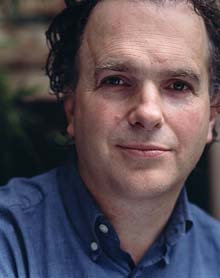 Photos courtesy of Mark Ellingham.
Earlier this week, I wrote about the 25th anniversary of Rough Guides. The post stirred up a few comments, including one from the company’s founder and publisher, Mark Ellingham. He sought to clarify the assertion in an article in the Observer that he “compared the damage done by tourism to the impact of the tobacco industry.” In doing so, Ellingham made some interesting points about the ethics of travel. I wanted to know more about his thoughts on travel and the anniversary of Rough Guides, so I sent him a few more questions via e-mail. Here’s our exchange:
World Hum: In the comment you posted on World Hum, you talk about discouraging binge flying. Can you define binge flying? Is there a line people shouldn’t cross?
Mark Ellingham: “Binge flying” is a useful phrase as it suggests something out of control. What does it mean? Flying as casually as going to the cinema or going out to a restaurant, or driving out to see some friends in the country for the weekend, perhaps? Not giving a thought about the consequences of your actions? I would be very reluctant to say to anyone “you must only fly x times a year”—it’s a decision for each of us to reach, personally. But I think the vogue for flying off on stag nights and hen nights is not a very healthy phenomenon. And nor are most flights in the UK: shaving off a bit of time, and saving a bit of money, by flying rather than taking the train between London and Manchester, for example.
You also mention that “the travel industry has a responsibility to address the facts of flights and carbon emissions, and must not (in the mode of the tobacco industry) ignore, deny or belittle the issue.” How do you think the travel industry should go about addressing those facts?
Rough Guides is an information company, so for us it is about putting clear information in the books, and online, about the effects of flights on climate change, and suggesting that we should all fly less, and offset when we do. I don’t think we can do much more than that. With holiday companies, I’d like to see similar information at the forefront of their websites and brochures: some companies, like The Adventure Company and Explore Worldwide already do this. I would also like to see them offset all flights that they sell, and to include this in the price, not as an “opt-in” extra.
I’d like to see airlines doing some meaningful offsetting, too. It would be great, for example, if easyJet were to say “our flights contribute to climate change, but we are committed to reducing at least twice as many CO2 emissions as we generate.” It would be hard to argue with that approach and I think a lot of customers would be happy to buy into the slightly higher prices they would need to charge. None of us want to feel guilty when we fly, or go on holiday.
It seems that guidebook publishers and the online travel world—trip sellers and bloggers alike—are starting to get serious about carbon offsets and talking about ethical travel. What kind of impact have you seen this having on travelers and travel providers, if any?
I think we’ve helped to raise awareness of the issue of flights and climate change. But I fear we have not had any significant impact on flight numbers, which continue to rise astronomically. Flights from the UK are up by more than 7 percent over the past year. Ethical travel is a different area—and an incredibly broad one. It’s booming. Not all the “ethical holidays” are terribly meaningful but there are some fantastic initiatives, and the overall trend is, I think, very positive.
What do you think of the explosive development of online travel guides, videos and blogs in recent years? Do you keep up with it much? How do you think that growth has affected travel?
We’re in an age of information overload, aren’t we? I guess the impact is that more people travel, as it becomes such an integral part of our lives. It certainly has made booking—flights and hotels, in particular—a lot easier.
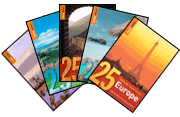 Photos courtesy of Mark Ellingham.
Our conversation started because I blogged about the 25th anniversary of Rough Guides. Congrats. What drove you to start the series?
I couldn’t get an interesting job and I was crazy about Greece and the Mediterranean. So when I talked a publisher into giving me a contract to travel around Greece and write a book, I was like a pig in clover.
Did you envision the series growing the way it has?
Travel back in 1982 was light years away from today—more like a niche hobby than a mainstream activity. Hardly anyone went to India or Thailand, places like China and Vietnam and most of Eastern Europe were largely off limits, and flights were enormously expensive. So I had a pretty modest vision of a series of perhaps 20 or so books, selling modest numbers. I think we are now up to more than 200 travel books, so the whole landscape has changed completely.
What part of starting and developing the books over the last 25 years are you most proud of?
I very much hope that the attitudes in our books—respect and enthusiasm and curiosity for a destination—have some positive impact.
In a story in the Independent you say you’re working on a guide to world music. Can you tell me a little more about that project?
I’m actually working on a third edition of the “Rough Guide to World Music”—and this time it is coming out in three volumes, with more than a million words! It’s a huge, mad undertaking, attempting to publish articles on popular and traditional music from every country in the world.
Beyond that project, what’s next for you? Any extended travel plans? More books?
With Rough Guides, I’m looking to move into more green publishing. I am seriously concerned by climate change, which is the biggest issue facing our whole generation. I am also doing some work with a brilliant new charity called Cool Earth, whose aim is to purchase at-risk rainforest in Brazil and around the world. It’s a little known fact that deforestation accounts for more carbon emissions than the US, on an annual basis. So preserving the world’s rainforests is the most urgent task in combatting climate change. I’ve been helping create a Web site aimed at ordinary people, who can buy an acre of rainforest for £70; Cool Earth will then put the land into a local trust, maintain and monitor it, and put further money in to create sustainable employment in the region.
Thanks, Mark.
A pleasure. I hope it’s clear that we want to raise issues at Rough Guides—but we’re not in the business of telling everyone how to live their lives. It’s up to each of us to decide how to respond to environmental issues.
 Email to friend
 Twitter
 del.icio.us
 Digg
Digg Facebook
 Furl
Furl Ma.gnolia
 Mixx
Mixx Reddit
 StumbleUpon
 Yahoo! Buzz
Michael Yessis is the cofounder and coeditor-in-chief of World Hum.
Michael 05.22.07 | 6:45 AM ET
I wonder if the only reason he belives binge flying is unacceptable, is that most individuals who take short breaks dont buy or need a guidebook and by criticizing this group makes an easy target, doesnt lose/affect any potential “Rough Guide’ Sales and boosts Rough Guides supossed ‘green’ credibility.
cheap airfares advocate 06.10.07 | 1:45 PM ET
Binge flying is wasteful but with budget airlines mushrooming nowadays, what is there to stop the affordable travellers doing what he wants?
Really, if airfares are affordable, everybody has the right to travel freely. As for carbon emission, that’s an entirely different argument and is not just limited to the airline industry.
Mark 10.22.08 | 9:16 AM ET
I kinda agree with the second comment, if you can afford to fly, go for it, and yes, there is a double edged sword to the argument on the whole carbon emission problem.