
Jeff Greenwald: Travel During War
Travel Interviews: As war rages in Iraq, Jim Benning speaks with the travel writer about his anti-war stand, his call for Americans to journey abroad, and his new organization, Ethical Traveler
04.01.03 | 8:17 PM ET
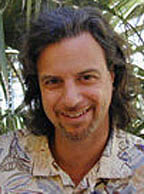
For all their worldliness, many travel writers shy away from making political statements during times of crisis. Instead, they prefer to remain quiet and reflect confidently on the past, on how moments, years or centuries earlier, changed history. It’s the travel-writing equivalent, American football fans might say, of Monday morning quarterbacking. But not Jeff Greenwald. The Oakland, California-based author of five books, including Scratching the Surface, Shopping for Buddhas, and The Size of the World, has taken a strong, public stand against the war in Iraq. In Salon last week, he not only suggested that the Bush administration “may have set foreign policy back 50 years,” but he urged Americans to travel abroad and become goodwill ambassadors to the world. “There has never been a better time for Americans to travel,” he wrote, “or a more important time for us to do so.” He also announced the creation of Ethical Traveler, an organization he founded recently to harness the power of travelers to affect change. My curiosity was piqued. I dialed up Greenwald and asked him to elaborate.
World Hum: At their best, journeys abroad shake up travelers and open their eyes to new perspectives, altering their views of the world. How have your views of the war been informed by your travels?
One person who read my Salon article wrote to the site and made the point that one thing that George Bush, Saddam Hussein and Kim Jong Il have in common is that their world views are largely circumscribed by the boundaries of their home countries. It’s reflected in their arrogance and narrow-mindedness. When a person travels, he or she gets a perspective on their own country that’s unique and unusual—it’s nothing like the worldview of a cloistered individual.
During my own travels, I’ve come to appreciate two important facts. The first is that people in other countries don’t necessarily confuse the American people with the American government. They understand that the American people are a very generous, worldly and inventive group, which is basically being run by a group of individuals who seized power in a sort of corporate coup d’etat. The second is that the current administration, with its sense of superiority and entitlement, is like a bull in a China shop, running amok without any real sense of its place in the world community—much less a sense of the temporary nature of great empires. People all over the world, from Persia to Southeast Asia, are watching America rattle its sword, and they are looking back at their own histories, thinking: somebody’s cruising for a bruising.
Many Americans are staying home right now, but you make the point that there has never been a more essential time for Americans to travel. Why do you say that?
I believe that the only antidote to what George Bush is doing to the image of America and Americans abroad is for Americans to get out there and meet people around the world. Since publishing the Salon article I’ve received letters from 17 different countries, from Americans traveling in those countries, and from citizens of those countries. Nearly everyone agrees: When people make human-to-human contact, they realize they have far more in common than they have apart.
Eye contact and interpersonal dialogue are absolutely essential now, given the world political climate. If you travel because you enjoy meeting people and expanding your worldview, this is a moment in history when you will get an earful from everyone you meet—a time when you will learn something every step of the way. It’s not a great time for the perfect vacation, but it’s a very good time for an incredible, fascinating education in what people think and feel during a time of great collective crisis. Some people are canceling trips to places like Germany and France, outraged that the leaders of these countries spoke up against a U.S. invasion of Iraq. In fact, it would be fascinating to go to France and speak with the French about their point of view. It would be very enlightening.
If what you say is true, that many people around the world view America’s actions now in a dubious light, it might not be a pleasant time to be an American abroad. What’s your sense of that?
Americans may have to answer some hard questions when they travel. But what’s called for from us when we travel right now is not so much a defense of our country or a distancing of ourselves from the administration, but a willingness to listen to what other people have to say and to give them the sense that they are being heard. The Bush administration is currently engaged in a monologue, dictating its intentions and self-righteous convictions to the world community. Let’s call a spade a spade—America is making a last desperate play for world domination. Whether or not democracy and capitalism should dominate the world is not the issue. People who inhabit other cultures and other ways of living don’t necessarily embrace the idea of a Pax Americana. They’re outraged—and they feel that no matter what they think or say, they won’t be heard. The job of the traveler is to serve as an ambassador. If we can listen to these people, lend them our ears, it’s a valuable service for both sides. They can be heard—and we can learn to listen.
In your Salon article you described being in a square in Iran in 1999 when a number of locals began to burn an American flag and chant anti-U.S. slogans. You noted that television cameras captured the angry protests but failed to capture the other Iranians in the square who gathered around you to protect you, assuring you that they’d keep you safe. In the end, the world got a very limited view of Iran. How do you think the media affect most Americans’ views of the world?
The American media are very selective in what they show us—and what they show us is what they hope will keep us glued to our TV sets. They deluge us with images that provoke anger, patriotism, indignity, and a sense that it’s us against them. The media don’t show us things that give us a sense of how tolerant or open-minded the world really is. We’re shown images that serve American corporate interests—largely because so much of the media is controlled by corporations.
If Americans do travel now, we can go to any number of places. One of my favorite lines from “Shopping for Buddhas” is, “We go where we need to go, and then try to figure out what we’re doing there.” What did you mean by that?
Perhaps I was rephrasing Kurt Vonnegut Jr.‘s wonderful line that “strange travel suggestions are dancing lessons from God”—the idea that there’s a cosmic intuition guiding our steps around this planet. When we find ourselves someplace, we might not always be able to deconstruct the way we got there, but there will be something we learn in that place that is absolutely essential. It’s often not until we view that experience in retrospect that we understand what we needed to do, who we needed to meet, or what we needed to learn.
That’s less the case right now. I’d like to go to Baghdad or Paris tomorrow, and I can easily tell you why. I would love to be in Turkey right now. I would love to be speaking to Islamic people in Iran, and getting a first-hand perspective on how this war is affecting the world. The only way to understand the world, now more than ever, is to be out in the world.
What would you like to experience in Baghdad right now?
There’s this myth that was created, mostly by the American media and to a lesser extent by the American government, that this would be a short and virtually bloodless war. The Iraqis would lay down their arms, and skip toward the American troops, tossing flowers and singing songs of liberation. As all of us know, it’s not working out that way. I’d like to experience the destruction, and to learn how these devastating bombings are affecting the local people. I’d like to hear what the people in the Iraqi bazaars are thinking. I’d like to visit the hospitals and see how much collateral damage really is being done. I’d like to get a first-hand idea of how smart our smart bombs are. Finally, I would like to see Baghdad while it’s still an Arabic city, and before it becomes a satellite regime of corporate America. I’d like to experience the hospitality that the Iraqi people would show me, even as an American, even during wartime.
Baghdad will certainly never look the same again. Do you have any trips planned at the moment?
At the moment I’m dedicating myself to putting together my new non-profit organization, Ethical Traveler. As a result of the Salon article, there’s been a surge of interest in the organization, which is dedicated to travel as diplomacy, and the combined diplomatic power of travelers. I’m probably going to have to remain in the U.S. for the next few months, setting up the non-profit and serving as its spokesperson.
The organization sounds like a great idea. What was the inspiration?
The idea came about initially in 1996, when I wrote an op-ed piece for the Washington Post suggesting that travelers combine their voices and stage an effective, large-scale boycott of travel to Burma. That didn’t happen—partially because there was no broad-based alliance of travelers with any real impact or structure.
Then, in August of last year, I was giving a reading for my new book, Scratching the Surface, at Black Oak Books in Berkeley. During a discussion with the audience, the idea of an alliance of world travelers was again brought to the table. A woman named Krista Haimovitch suggested that I consider starting such an organization. We discussed it, and I thought it was a wonderful idea.
So what are your goals?
I’d like it to be a community of like-minded travelers that uses its collective power to address and improve environmental and human rights issues around the world. We’re not quite set up for this yet, but my hope is that people visiting our site will share stories about their own travels, and situations in which their ambassadorial skills were brought to bear.
Eventually, we will have specific campaigns that support some travel destinations, and call for a boycott of others—a way to vote with our dollars, and remove our support from governments that are playing fast and loose with the environment or human rights. Travelers have tremendous economic power, and they can use it to make powerful and effective statements. Imagine the impact it would have if 10,000 members of Ethical Traveler sent automated letters to the Director of Tourism in Japan, calling for an end to dolphin slaughter—or a well-publicized tourism boycott. It’s a choice we must be willing to make—to stop pouring our money into places where coral reefs are being destroyed, whales are being “harvested,” children are being exploited as cheap labor, or people are being oppressed to create a huge tourism infrastructure.
On the flip side of the coin, we can put our support behind places that are doing a great job of protecting their environment and supporting the rights and dignity of local workers.
Best of luck with it. Given the war, it’s hard to feel optimistic about travel right now. What are your thoughts about the future of travel?
I think that the war, and the heightened political consciousness it provokes, might actually have a long-term positive effect. It might make American travelers more sensitive to who they are, where they come from, and how they’re viewed by others. It might make American travelers less self-involved, and more open to what people around them have to say.
The acts of terrorism against individuals and groups of tourists—as we saw in Bali and Egypt—are still very rare. I pray that they don’t increase. I really don’t know whether tourists from America, the UK and Australia are going to be targeted over the next few months. But I certainly think people are wrong to stop traveling out of a sense of fear.
Americans are often treated like celebrities when they travel, especially to developing or Middle Eastern nations. America is a celebrity nation, responsible for much of the innovation, technology and culture in the world. People around the globe admire and respect us for that—or they’re merely fascinated. I’ve seen pictures of Madonna in the alleyways of Mauritania, posters of Michael Jordan in Tehran, and images of World Wrestling Federation superheroes all over Bhutan. People are fascinated by this country, and that’s unlikely to change. I think many people abroad are comfortable seeing us as a wealthy and wise older sibling, conservative but generous, difficult but brilliant. Right now, admittedly, we’re acting like a big brother with a bipolar disorder—and we’re going to have to deal with the repercussions of that for a long time to come.
The question that interests me is—do we, as travelers, contribute to the healing process—or do we stick our heads in the sand? I think we can do enormous good at this juncture in history, if we have the guts to step up to the plate.
Thanks, Jeff.
 Email to friend
 Twitter
 del.icio.us
 Digg
Digg Facebook
 Furl
Furl Ma.gnolia
 Mixx
Mixx Reddit
 StumbleUpon
 Yahoo! Buzz
Jim Benning is the editor and co-founder of World Hum.