
Clockwatching in Western China
Travel Blog • Julia Ross • 04.01.09 | 12:44 PM ET
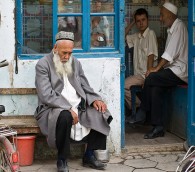 Photo by
 If you’re traveling in Kashgar, China, over the summer, don’t be surprised if the sun sets at 11 p.m. That’s because the old Silk Road city—like all of China—is required to follow the clock in Beijing, some 2,000 miles east. Aside from throwing circadian rhythms out of whack, the policy has exposed political fault lines in the region: the minority Muslim Uighurs, resentful of Chinese suppression of their culture, insist on setting their own clocks, two hours earlier.
The locals have adapted to the confusion, reports the Los Angeles Times, but tourists might find it strange that the city doesn’t get going until after 10 a.m., or that some buses run on Uighur time and some on Chinese time.
It’s all a part of Kashgar’s charm and one reason I’ve been obsessed with the city for years—well, that, along with the renowned Sunday market. I’m determined to visit on my next trip to China, and not a moment too soon; it may be my only chance to see parts of the old Uighur city, which is currently being bulldozed in the name of modernization.
 Email to friend
 Twitter
 del.icio.us
 Digg
Digg Facebook
 Furl
Furl Ma.gnolia
 Mixx
Mixx Reddit
 StumbleUpon
 Yahoo! Buzz
Frank Chen 04.02.09 | 5:35 AM ET
lol
Ignorant. No offense, but there is no such things as “Uighur time” or “Chinese time”. China is a large country ccross multiple time zones. We people in Xinjiang can use xinjiang time(which is GMT+6) and beijing time(which is GMT+8) both. You can see Xinjiang time on official local TV Xinjiang Star, though most people here use beijing time for convenient on communication/business etc. There is never any confusion to me Since I was born 35 years ago in Urumqi.
Julia Ross 04.02.09 | 10:10 AM ET
Frank, The point I was making is that the dual system might be confusing to foreign travelers in the region, not locals. And I was using “Uighur time” and “Chinese time” as a shorthand way to say these are the times that the two ethnic communities in Kashgar abide by, as explained in the LA Times article.