
“Empires of the Word” on Book TV
Travel Blog • Jim Benning • 10.21.05 | 1:18 PM ET
C-SPAN2’s Book TV will feature 90 minutes this weekend with Nicholas Ostler, author of Empires of the Word: A Language History of the World. 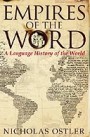 The book sounds like a great read. In a March review in The Guardian, Martin Jacques wrote: “There are many ways of recounting the history of the world…This book tells the story through the rise and decline of languages. It is a compelling read, one of the most interesting books I have read in a long while.”
Among the highlights from Jacques’ review:
The top 20 global languages - defined in terms of their use as a first or second language - provide an interesting reflection on the fortunes of those languages that have spread by organic growth and those that have expanded by means of mergers and acquisitions. At the top of the league table is Mandarin Chinese, which has 1,052 million speakers, more than twice as many as the next highest, English, with 508 million. Third is Hindi with 487 million and fourth Spanish, with 417 million. Of course, English is a far more global language - though primarily as a second language - than Chinese, the vast majority of whose speakers live in China. But with the present rise of China - and indeed India - it would not be difficult to imagine Mandarin and Hindi becoming far more widely spoken by 2100. By way of contrast, French, which until the early 20th century was, with English, the global language of choice, albeit with rather more prestige, now lingers in ninth place in the table, with a mere 128 million speakers - little more than half the number of Bengali speakers, and just above Urdu.
Ostler’s book might make a great companion to a new book Rolf Potts just wrote about on his blog, Adam Jacot de Boinod’s The Meaning of Tingo: And Other Extraordinary Words from Around the World.
 Email to friend
 Twitter
 del.icio.us
 Digg
Digg Facebook
 Furl
Furl Ma.gnolia
 Mixx
Mixx Reddit
 StumbleUpon
 Yahoo! Buzz
Jim Benning is the editor and co-founder of World Hum.
