
Falcons, Gulls and Clams at Kennedy Airport
Travel Blog • Rob Verger • 02.05.09 | 11:21 AM ET
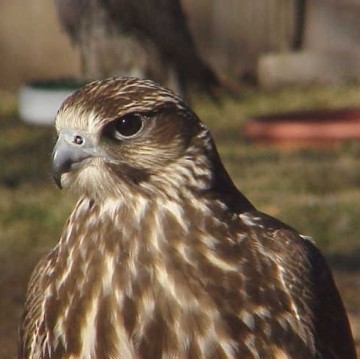 Photo courtesy of Falcon Environmental Services
There’s been a lot of press lately about airplanes and bird strikes, but the story I’ve found most interesting comes from John F. Kennedy International Airport—it’s the only U.S. commercial airport that uses falcons as a means of controlling the local bird population. It’s an effective way to deal with the bird issue, for the simple reason that while birds can get used to noise, they never habituate to having a natural predator in the area.
The project is run by Falcon Environmental Services, and in addition to JFK, the company has contracts at two U.S. Air Force bases, and a few airports in Canada. At JFK, from May 1 to the end of October, sunrise to sunset, two teams patrol the airfield in covered pickups with falcons on perches in the back.
To learn more about the project, I called up John Kellerman, the manager of operations at JFK for Falcon Environmental. He’s a retired New York City Police Sergeant, and has been working as a falconer at JFK for four years. He spoke to me over the phone from his home on Long Island.
I asked him what kinds of birds they usually encounter. “It depends upon the time of year,” he said. “When we get there in May, we have large flocks of cormorant going by, we have large flocks of geese going by, brant in the early season. Then during the course of the summer we have gulls—herring gulls, laughing gulls, black-backed gulls—they’re offshore feeding.”
“It’s funny, because they’ll pick up clams at low tide, so we’re actually looking at the tides, too,” he said. “At low tide, we’ve got to make sure we’re out there. The gulls are out there grabbing clams and they’re flying over the airfield and dropping them on any kind of hard concrete surface to try to break them open. So we have to keep them off of the airfield.” (The laughing gulls, he notes, favor grasshoppers in the grass, while it’s the herring gulls, black-backed gulls and ring-billed gulls that are usually doing the clamming.)
Listening to him speak, the airport—in my mind, a stretch of concrete and planes—suddenly started to seem like much more a part of the natural world, a place that birds like ibises, whimbrels, willets, oystercatchers, plovers and egrets visit or call home (until they’re scared away by falcons). Kennedy Airport spans 5,200 acres and sits beside nearby Jamaica Bay Wildlife Refuge, which is nearly 10,000 acres in size.
Here’s how it works. When bird activity is reported, they’ll “take the falcon out. Put him up and let him fly,” Kellerman explains. “He’ll go up, he’ll fly around, as soon as he goes up, the gulls or whatever birds are in the area will give off a distress signal, calling to the other birds saying there’s a falcon in the area, predator in the area, it’s not safe, and they’ll usually fly away.”
The falcons, which are all bred and raised in captivity, are not trained to hunt or kill the pest birds. Falcon Environmental Services uses other measures, too, such as pyrotechnics, and even a CD they keep in the truck that can broadcast recordings of bird distress signals. (Meanwhile, up in Boston, Logan Airport has a volunteer trapping and releasing the snowy owls that are drawn to that airport, the Boston Globe reports.)
“It’s something I wanted to pursue since I was 12 years old,” Kellerman said, when I asked him what he likes about the job. “The sport of falconry—hunting with falcons and hawks—I do that in the off time, with my birds, not JFK birds. That’s why I enjoy this job so much. I get to do something I’ve wanted to do my whole life, on a day-to-day basis.”
 Email to friend
 Twitter
 del.icio.us
 Digg
Digg Facebook
 Furl
Furl Ma.gnolia
 Mixx
Mixx Reddit
 StumbleUpon
 Yahoo! Buzz
Rob Verger is a frequent contributor to World Hum and the site's former air travel blogger. His articles and photographs have appeared in the Boston Globe and other publications, and he's a former undergraduate writing instructor at Columbia University. If you like, .(JavaScript must be enabled to view this email address) or follow him on Twitter.

Sophia Dembling 02.05.09 | 1:06 PM ET
WAY cool! Thanks for a fascinating post!
long island girl 02.13.09 | 1:51 PM ET
it’s good that someone enjoys his job while helping other people. He is a very important person because we already have an accident with birds and planes that may soon became a big tragedy if this will not be taken seriously.