
India: Three Great Books
Travel Blog • Eva Holland • 02.25.09 | 6:32 PM ET
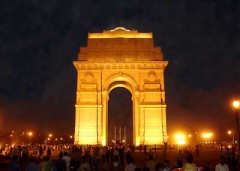 Photo of India Gate by
 The literature about India is as vast and diverse as the subcontinent that inspired it. In 60 years of independence, the country has produced a truly intimidating list of award-winning writers, from Salman Rushdie and Vikram Seth to Rohinton Mistry and Arundhati Roy, R.K. Narayan or Anita Desai. Faced with the impossibility of choosing just three novels from an endless list of great post-colonial reads, I’ve decided instead to go back further in time, to the days of the British Empire. The colonial period produced a few classics of its own, and since then, with the passing of time, new books have started to arrive that capture the colorful lifestyles, the dark patches of history, and the many oddities and implausibilities of the British Raj. Three great books:
Stones of Empire: The Buildings of the Raj
Jan Morris and Simon Winchester
Originally published in the early 1980s, “Stones of Empire” combines photography and captions from Winchester with enthusiastic prose from Morris. The two travel writers document every major landmark the British imposed on the Indian landscape during their reign, from cathedrals and railway stations to coffee shops and sports fields. The sites are organized by purpose (domestic, public, or spiritual, for example) and the result is a glimpse into the daily lives of civil servants, soldiers, housewives and children alike. A new edition includes a thoughtful foreword from Winchester about the changing (and fading) legacy of the Raj.
Women of the Raj
Margaret MacMillan
MacMillan uses diaries, memoirs, letters, and interviews with surviving ‘memsahibs’ to try to capture the experiences of the women who followed their husbands and fathers to India. MacMillan is that rare gem: an academic who can create compelling prose, and she has crafted a fascinating story. The introduction to a chapter on “First Impressions” will resonate with many more recent visitors to the subcontinent:
“Whether they came by sailing ship in the eighteenth century or by steamship in the twentieth, the first impressions the new arrivals had of India were almost always similar. The noise, the smells, the colour—and the people in all their dazzling variety. Women’s recollections of that initial encounter also reveal an undercurrent of panic. After the enclosed world of the ships, India was too big, too untidy, too crowded in fact, too much India.”
Kim
Rudyard Kipling
Kipling is largely remembered for children’s stories like “The Jungle Book,” and for his now-unsavory views on British imperialism. “Kim,” a novel, tells the story of a young orphan who becomes entangled with the British Secret Service and eventually finds himself on the North West Frontier (where present-day Pakistan meets Afghanistan), playing “the Great Game” among British and Indian allies and Russian enemies. Kipling’s love for the chaos and color of India comes through strongly, and “Kim” is, above all, a great story.
 Email to friend
 Twitter
 del.icio.us
 Digg
Digg Facebook
 Furl
Furl Ma.gnolia
 Mixx
Mixx Reddit
 StumbleUpon
 Yahoo! Buzz