
Newspapers: Still Big in Japan
Travel Blog • Julia Ross • 02.24.09 | 5:45 PM ET
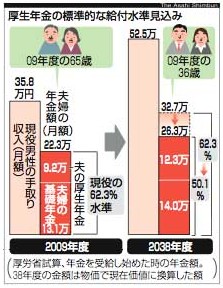 From the front page of today’s Asahi Shimbun.
As many of us await the impending death of U.S. newspapers, it’s helpful to remember that the paper-and-ink medium thrives in other parts of the world, where Internet penetration remains relatively low. Such is the case in much of Asia, Time reports this week. India alone reported 11.5 million new newspaper readers in 2008, spread among a whopping 65,000 newspapers across the country, and Indonesia’s market has grown from a few dozen papers in 1998 to about 800. The Japanese, despite widespread online access, are still the world’s most dedicated newspaper readers, subscribing to more than one paper per household, on average.
So, how does this tie into travel? After reading the Time piece, it occurred to me that in a couple years, spying newspaper readers in subways or cafes—or being able to get one’s hands on an actual newspaper itself—may become as novel as slicing into a durian fruit for Western travelers visiting Asia. Imagine picking up the latest Asahi Shimbun as a souvenir on your way out of Narita. With kimono weavers on the way out, printing presses could be the next big thing in niche tourism.
 Email to friend
 Twitter
 del.icio.us
 Digg
Digg Facebook
 Furl
Furl Ma.gnolia
 Mixx
Mixx Reddit
 StumbleUpon
 Yahoo! Buzz
Jim Benning 02.24.09 | 7:32 PM ET
Great post, Julia.
I’ve really enjoyed reading local English- or Spanish-language newspapers in my travels. And in places like Europe, I’ve always loved perusing the IHT over a cup of coffee or espresso. Looking back, those quiet moments spent reading the paper are some of my best memories, as much a part of travel for me as train rides and hotel stays. So I’m counting on some of those papers being around for a long time to come. Reading the NYT on my iPhone app at a Madrid cafe just wouldn’t be the same.
karl 02.24.09 | 9:42 PM ET
i don’t know about india or china, but newspapers in japan are in desperate shape and having very similar readership and advertising problems to their american counterparts. several big, newspaper-based media companies in japan, including fuji-sankei, are on the verge of bankruptcy.
Julia Ross 02.24.09 | 10:53 PM ET
The Washington Post reported recently that Japanese newspaper readership is holding strong, primarily because the country’s proportion of elderly is so high. Seems they have able to hold off the death spiral, for now.
http://www.washingtonpost.com/wp-dyn/content/article/2008/10/24/AR2008102403590.html?hpid=moreheadlines
pelu awofeso 02.25.09 | 7:57 AM ET
It’s re-assuring to know that there’s a part of the globe defying the myth that readership, sales and advert revenues for newspapers are falling. I access local Nigerian newspapers online whenever I want to but nothing can ever better holding a copy in one’s hands. A such, I do not believe that newspapers are anywhere near their death as yet.
Michael Yessis 02.25.09 | 6:03 PM ET
Love this post, Julia.
Reading local newspapers—or just scanning the ones in languages I can’t understand—has always been a treasured travel experience. As Jim said, travel wouldn’t quite be the same for me without ‘em.