
When Tourism Meets Nationalism
Travel Blog • Joanna Kakissis • 12.20.07 | 2:49 PM ET
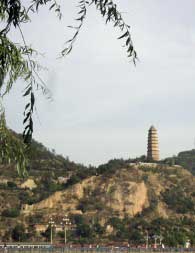 Photo of Yan’an pagodas by
 It has in a big way in Yan’an, the prefecture in northwestern China that was the center of the Chinese communist revolution from 1935 to 1948. Mao Zedong and other communist leaders lived in caves and pagodas carved into the hillside, and Chinese communists celebrate it as the birthplace of the revolution. And as China has grown into a world power, its leaders are trying to boost national pride through “red tourism” that celebrates communist touchstones such as Yan’an, according to NPR. Of course, Mao’s pagodas are an obvious choice to muscle up nationalism: Today Chinese visitors from other regions visit Yan’an so they can dress up as revolutionaries and sing the communist ditty “The East is Red” with performers wearing traditional peasant clothes.
It’s not an unusual story. Pick any place on the world map and the attractions often double as engines of national pride, community and connection. A couple of examples: The Mandalay Marionettes in Burma want to attract visitors to the National Puppet Theatre to revive an old art form that’s gotten submerged in military politics but represents a beloved part of the troubled nation’s identity. And in Greece, the government hopes citizens will visit the soon-to-open New Acropolis Museum in Athens so they can revel in their ancient glories—and (loudly) remind the British Museum to return the missing Parthenon Marbles.
 Email to friend
 Twitter
 del.icio.us
 Digg
Digg Facebook
 Furl
Furl Ma.gnolia
 Mixx
Mixx Reddit
 StumbleUpon
 Yahoo! Buzz
davis b 06.28.08 | 1:02 PM ET
I guess this flies in the face of those who say China is moving away from its communist roots- some claim that it’s communist in name only. Having communist tourist spots and dressing up like revolutionaries certainly seems the opposite. I foresee China sticking to its communist roots, in name and spirit, for quite a while.
soviet tees