
Japan’s Yoshoku Menu: Hambagoo, Ketchup-Flavored Rice and Stir-Fried ‘Napolitan’ Spaghetti
Travel Blog • Joanna Kakissis • 03.27.08 | 4:01 PM ET
 Yoshoku means “Western food” in Japanese, and it’s been a staple of the country’s cuisine for decades. Chefs have taken hamburgers, spaghetti and other dishes, and “reshaped” them for Japanese palates. Most foreigners, though, have never heard of yoshoku, writes Norimitsu Onishi in The International Herald Tribune.
The first Michelin guide to Tokyo, which came out last year, lists 150 restaurants but makes no mention of yoshoku eateries. And most visitors to Japan like to go local by eating what they recognize as traditional food—sushi, sashimi, nabeyaki udon and so on.
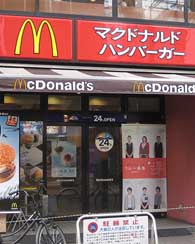
Western food began its migration into Japanese diets in the mid-19th century, after isolationist Japan opened itself to the West during the Meiji Restoration. The Japanese learned about Western laws, weapons and industry, but they also wanted to import the cuisine that had made those on the other side of the planet tall, broad and strong. “Japanese are poorly built because they eat rice,” said Den Fujita, a Japanese businessman, when he established McDonald’s in the country in the 1970s. “We’ll change that with hamburgers. After eating hamburgers for a thousand years, Japanese will even have blond hair.”
In yoshoku, a hamburger is called hambagoo, and it’s served without the bun and in a demi-glace sauce.
Sounds yummy. I hope it makes my hair blond.
Photo by unforth via Flickr (Creative Commons).
 Email to friend
 Twitter
 del.icio.us
 Digg
Digg Facebook
 Furl
Furl Ma.gnolia
 Mixx
Mixx Reddit
 StumbleUpon
 Yahoo! Buzz