
Destination: Europe
Mr. Suitcase
by Tom Swick | 09.01.10 | 10:16 AM ET

On the trauma of luggage gone astray (and how an inconvenience turned into an obsession)
 Email to friend
 del.icio.us
 Digg
Digg Facebook
 Furl
Furl Ma.gnolia
 Mixx
Mixx Reddit
 StumbleUpon
 Yahoo! Buzz
Googling Romeo
by Claire Bushey | 08.30.10 | 10:33 AM ET

Claire Bushey couldn't stop thinking about the handsome actor she met on a trip to England. Then she did something she'll always regret.
From Paris to New York—in 1906
by Eva Holland | 08.27.10 | 9:26 AM ET
Conor Friedersdorf digs up an old gem from the Atlantic’s archives: a dispatch from a native New Yorker, returning to the city after an extended stay in Paris. It’s a must-read for NYC-philes. Here’s a taste:
In a word, this returned New Yorker finds few familiar landmarks; and the few he does find seem to have lost most of their original meaning. He is as much dazed and puzzled by his surroundings as Rip Van Winkle after his twenty years’ sleep. Nobody resides, does business, dines, or drinks in the same places as before. Nobody frequents the same pleasure resorts. Nobody saunters along the same walks. It is not safe for him to make a business or social call, or to set out for a restaurant, a chop-house, a theatre, or a club, without consulting the Directory in advance; and, even so, he risks having his trouble for his pains, inasmuch as there is more than a chance that a move has been made since the Directory was issued.
After he so far recovers from the shock of his initial disenchantment, however, as to be able to take note of details, he finds that there is some balm in Gilead, after all. At the end of a month he begins to catch the spirit of New York; and at the end of six months he has come completely under its spell, and loves it, as Montaigne loved the Paris of his day, “with all its moles and warts.” The radiant white city by the Seine still appears to him at intervals, like the memory of a favorite picture or poem; but it has lost the power to disquiet him with desire. Paris is no longer a perpetual obsession,—the absolute norm by which he judges everything he sees. Indeed, it has passed so far out of his life that he is in danger of being as over-lenient in his judgments as he was at the outset over-severe.
World Travel Watch: Tube Strikes Looming in London, China’s Epic Traffic Jam and More
by Larry Habegger | 08.25.10 | 11:59 AM ET

Larry Habegger rounds up global travel news
Missing Paris
by Nancy Kline | 08.23.10 | 10:54 AM ET
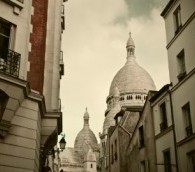 iStockPhoto
 Nancy Kline grieves for a city that no longer belongs to her
Talking Truth in Turkey
by Jim Benning | 08.20.10 | 12:20 PM ET
Claire Berlinski offers a provocative take on Turkish culture in World Affairs:
As the First General Law of Travel tells us, every nation is its stereotype. Americans are indeed fat and overbearing, Mexicans lazy and pilfering, Germans disciplined and perverted. The Turks, as everyone knows, are insane and deceitful. I say this affectionately. I live in Turkey. On good days, I love Turkey. But I have long since learned that its people are apt to go berserk on you for no reason whatsoever, and you just can’t trust a word they say. As one Turkish friend put it (a man who has spent many years in America, and thus grasps the depth of the cultural chasm), “It’s not that they’re bad. They don’t even know they’re lying.”
(Via AL Daily)
World Travel Watch: Flesh Fines in France, Medical Tourism Risks in South Asia and More
by Larry Habegger | 08.18.10 | 12:22 PM ET
Larry Habegger rounds up global travel news
World Hum Travel Movie Club: ‘Eat, Pray, Love’
by Eva Holland, Eli Ellison | 08.16.10 | 8:49 AM ET

A big-screen incarnation of author Elizabeth Gilbert heads to Italy, India and Indonesia. Eva Holland and Eli Ellison go along for the ride.
VisitBritain Preps Londoners for Olympics Tourism: ‘Don’t Mention the War’
by Eva Holland | 08.12.10 | 9:53 AM ET
The country’s tourism agency has issued some, er, helpful guidelines for locals in preparation for the 2012 Olympic Games, which will be held in London. Among the tips? Don’t serve prepackaged jam to Germans, don’t mention the Falkland Islands to Argentinians and don’t bring up the Mexican-American War with Mexicans. In the accompanying video, a Guardian reporter takes the tips for a test drive.
Chinese Developers to Recreate Salvador Dalí‘s Hometown
by Michael Yessis | 08.11.10 | 12:06 PM ET
Xiamen Bay is the new Costa Brava! From the Guardian:
Sources at the company said they had found a spot that was geographically similar to Cadaqués, with its gently sloping hills and protected bay. “Building work will start in September or October,” a spokesman said.
More than 100 acres of land will be used to build a near replica with a capacity to house some 15,000 Chinese holidaymakers who want to enjoy the Costa Brava experience without having to travel 6,500 miles.
The Chinese version will not have the sparkling Mediterranean, the madness-inducing Tramontana wind or as many jellyfish as Cadaqués, but the promoters say they will try to get as close to possible to the real thing.
The developers are following in the footsteps of Lyon in the desert and Thames Town outside of Shanghai, among other places.
Dali would surely approve. As the Guardian notes, “One of his favourite money-making habits was to sign, and sell-off, blank sheets of paper for prints and lithographs. As a result, he is one of the most frequently copied and forged artists in the world.”
World Travel Watch: Deadly Heat Wave in Moscow, Underground Colosseum Tours and More
by Larry Habegger | 08.11.10 | 11:38 AM ET
Larry Habegger rounds up global travel news
Victory at the Louvre
by Erin Byrne | 08.11.10 | 10:50 AM ET

Erin Byrne never let her mask slip, until a headless, armless Greek statue taught her a lesson she couldn't ignore
‘Crime and Punishment’ on the Moscow Subway
by Eva Holland | 08.10.10 | 3:17 PM ET
NPR explores the controversy surrounding one of Moscow’s famously decorated subway stations—Dostoevskaya, the station that honors Fyodor Dostoevsky. Apparently, some Russian psychologists are concerned that the darkness of the station’s artwork may inspire violence or suicide. David Greene sets the scene:
The walls are gray and bare, except for murals capturing scenes from Dostoevsky’s famous novels: Brothers Karamazov, The Idiot, and of course, Crime and Punishment, the book where Dostoevsky digs into the mind of his lead character, Raskolnikov, exploring a young man’s path to murder…
The fictional character—poor, desperate for money to help his family and mentally tortured—ends up killing two women. And it’s all depicted in a mural right on the subway platform in which Raskolnikov holds an ax over a woman’s head, while a corpse lies on the ground.
The tale itself is stirring, and the underground tunnel and echo of subway trains make it even creepier.
What it Means to Travel Back to the Future
by Michael Yessis | 08.06.10 | 12:21 PM ET
Another great piece by Peter Jon Lindberg, who returns to London and a pub he called home 20 years ago. He finds “not the workaday tavern of memory but a roomful of attractive people sipping Pinot Grigio” and lingers for “12 uncomfortable minutes.” Among his findings:
Good Lord, listen to me. I’ve become a bad novel: Aging crank revisits lost youth; cue strings, bittersweet regret. Forgive my maudlin self-indulgence. (If it’s any excuse, I just turned 40.) But really, what on earth did I expect? Only a child—a 20-year-old—could have wished London not to evolve, not to grow up.
Of course, this isn’t just about London, is it? It’s about the feeling any traveler has returning to a place he once knew as well as any: A city that seems to hold you in it, or some earlier incarnation of yourself. Going back, you become again that long-ago person, even while the city changes utterly around you. As it is I’ve spent most of my post-London life in New York, 5,000-odd days of it, such that I’ve scarcely noticed the incremental, wholesale transformation of Manhattan over the past 15 years. Yet an Englishman returning here after a decade away might feel the same about New York as I do about London: that it looks like an artist’s rendering; that “it’s all about money now”; that glamour has eclipsed grit, and something has been lost in the process; that the city no longer belongs to me, but to other, younger, wealthier, more exciting people.
Dispatch From the Moscow Heat
by Michael Yessis | 08.06.10 | 11:23 AM ET
World Hum contributor Jeffrey Tayler recently returned from Paris to his Moscow home, where soaring temperatures and wildfires have crippled the city and other parts of the country. Tayler reports from the brutal—and alcohol-soaked—scene for the Atlantic:
Another Russian saying has it that, “Heat isn’t vodka, but we feel drunk from it all the same.” Which hasn’t stopped a good number of metaphorically heat-wasted Muscovites from turning literal and tippling their way through this interminable zharishcha. I walked outside this morning to find a gang of bare-chested fellows, with shaved heads, sweaty snouts, and stretchmarked potbellies, sitting on the guardrail near our doorway, guzzling beer and smoking, and for good measure, belching and swearing about the heat. Any walk around town reveals similar scenes: men have at times dispensed with much of their clothing, and carrying a beer (plus lit cigarette) is now de rigueur. This is legal: there’s no law banning open containers of alcohol in Russia. Except that in Russia, beer hardly qualifies as alcohol. (Unless possibly it’s that 12-proof brew marked krepkoye.) Beer is more like a training beverage. But vodka is considered alcohol, and thus possesses, many would point out, curative properties for whatever ails you. So fighting noxious heat with medicinal doses of vodka makes perfect sense. And I don’t mean some dainty cocktail, like, say, a vodka collins. The idea of mixing vodka with anything except more vodka is an abomination. Why dilute the healing fun?