
Mark Jenkins: Seeing the World as it is
Travel Interviews: Frank Bures talks to one of Outside's "Literary All-Stars" and the author of "A Man's Life: Dispatches From Dangerous Places" about his tales of daring and adventure
01.11.08 | 11:03 AM ET
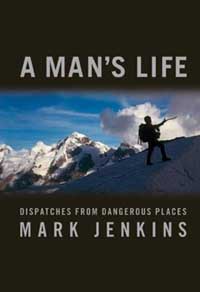
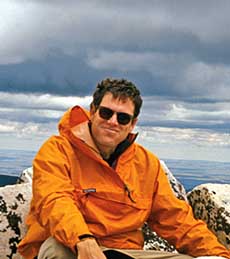 Mark Jenkins is an award-winning travel and adventure writer who, for eight years, wrote Outside Magazine’s The Hard Way column, and has written several travel books, including Off the Map: Bicycling Across Siberia, To Timbuktu: A Journey Down the Niger and The Hard Way: Stories of Danger, Survival, and the Soul of Adventure. His new book, A Man’s Life: Dispatches from Dangerous Places, showcases years worth of his writing, which has also appeared in “The Best American Travel Writing” in 2004, 2005 and 2006. He was recently hired as contributing writer for National Geographic. Frank Bures talked to him at his home in Wyoming about stories that move him, the need to get out and see the world and the state of affairs in Burma, which Jenkins knows well from his attempts to cross the Stilwell Road.
World Hum: Any idea how many countries you’ve been to?
Mark Jenkins: Actually, I never stopped to think about it. Maybe 100. I’m not really one of those collector type of guys. I don’t really think of my trips in that way. It’s always about the subject or the story or what really matters. I generally pursue those stories that mean something to me personally. I got a degree in philosophy from the University of Wyoming, then realized I was about 2,000 years too late to get a job as a philosopher. I think Aristotle had the last one. So I started as a freelancer. I just started writing about what I knew—the outdoors and travel. It took a long time, but I hung with it, living in basement apartments and eating peanut butter sandwiches and sardines. I suppose I should sit down with an atlas some time, because I’ve been asked that a couple times and I always have a pretty lame answer.
And of the places you’ve been, do you have any favorites?
I like Tibet very much, but that might be because it reminds me of my homeland in Wyoming. In terms of favorites, it’s hard to say. Each country, or each culture, or each little town I’m in has it’s own thing going. And that’s what fascinates me. It’s hard to compare a bicycling trip across Holland to a mountaineering trip in Tibet. I just try to approach each trip with an open mind and as much curiosity as I can stand. I’m willing to try and do almost anything. But on assignment, it’s not about personal preference. It’s about telling the story.
 What about your favorite stories?
I’d have to say some of my favorite stories are about people I was really close to. Mike Moe was a great friend of mine who I grew up doing adventures with, and who died in the Arctic. I wrote a book about our trip to Timbuktu together. And for me, that was a very poignant experience to write about a friendship that ended. I mean, the friendship didn’t end, but the friend died. The Burma Road trip, and those trips into Burma were extraordinary—extraordinarily difficult and dangerous. And I’m pleased with how that story came out. It’s a condensation of a lot of writing.
Have you been following what’s going on there?
Oh yeah. Every day.
What’s your take on it?
I think it’s bizarre that we’re in Iraq trying to force democracy down the throats of people who don’t want it, when we could go some place like Burma where the population is dying for democracy and we’ve got a few hundred generals and a few soldiers. And we could turn it over in a matter of a few seconds. So I think that’s very sad. We have our priorities in completely the wrong place.
There’s been a lot of talk about whether it’s better to travel to Burma and try to meet people, or whether it’s better to boycott the country.
I’m not a big fan of boycotting. If you’re just going to go on your standard cruise, where all the money goes to the big travel agency, maybe that’s not the thing to do. But I went to Burma many times, and I learned so much, and I think people learned a lot from me. I think the ordinary person wants to meet foreigners. They want to engage. Disengagement doesn’t work very well. The last thing you want to do is completely disengage, because then they’re just going to kill anybody they want.
I actually think tourism helps countries for the most part, or the kind of travel I like to do. You’re putting money into $5-a-night hotels. You’re putting money into the pockets of ordinary people who need it. You are there and you’re understanding the country. I think it probably has the reverse impact. The most important thing is for people to go to these places, and come back and write stories about it and talk about it. If you don’t go, and nobody knows what’s happening, you’ve just abandoned it.
In your piece on Burma, you write that adventure forces you to confront the world as it is, not as you imagine it. Can you explain what you meant by that?
I meant that Americans by and large don’t really understand what’s happening in other countries. And when you go out there on your own two feet and have to buy food from the local market, and have to find of a place to stay and talk to locals, you start to understand how the world is put together. Because if you just stay home and read your local newspaper, you’re not going to have a clue about the rest of the world. The news here is very slanted, and is not representative of the complexities and passions of the rest of the world. The way you imagine it is what you see on TV, or on “Survivor.” Basically full-on horseshit.
To know how it really is, you almost have to live in a place and speak the language. You’re skimming the surface as a traveler, but that’s a hell of a lot better than going to Cancun for three days and being drunk the whole time. If you really want know how the world’s put together, you’ve just got to go.
 Email to friend
 Twitter
 del.icio.us
 Digg
Digg Facebook
 Furl
Furl Ma.gnolia
 Mixx
Mixx Reddit
 StumbleUpon
 Yahoo! Buzz
John M. Edwards 01.26.08 | 5:11 PM ET
Hi Frank:
That’s an interesting interview with danger addict Mark Jenkins. I trust his book, “A Man’s Life: Dispatches from Dangerous Places,” is well worth reading.
To reparaphrase Dickens, the trend in literary travel lately is that the best of times is the worst of times. . . .