
Tag: Eco Travel
Interview with Arno Kopecky: Sailing the Northern Gateway
by Eva Holland | 04.08.14 | 10:58 AM ET
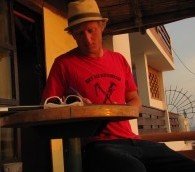
Arno Kopecky spent months sailing along a proposed oil tanker route off British Columbia. Eva Holland talks to him about the new travel book that resulted from the voyage.
 Email to friend
 del.icio.us
 Digg
Digg Facebook
 Furl
Furl Ma.gnolia
 Mixx
Mixx Reddit
 StumbleUpon
 Yahoo! Buzz
A Visit With the Emperors
by Chris Epting | 07.12.11 | 10:05 AM ET
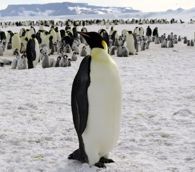 Chris Epting
 Lured by the possibility of seeing penguins, Chris Epting ventured to Snow Hill Island in Antarctica
See the full audio slideshow: »
Think You Lead a Green Life? Your Travels Say Otherwise.
by Michael Yessis | 07.05.11 | 10:28 AM ET
A study out of Norway has some troubling results for travelers who take pride in living a green lifestyle at home. Melinda Burns breaks it down:
People living in dense cities with no backyards typically consume more energy on their time off than people in cities with a little more greenery because they undertake longer getaways by car and by plane. It’s called “compensatory travel.” Environmentalists who drive less during the week tend to fly more on holidays than the less environmentally active. And the Internet, while allowing people to work at home, is promoting cheap weekend getaways—by plane.
“Thus, while green individuals strive to act in an environmentally responsible manner in their everyday lives, they seem to have a conflicting need to cast aside their environmental concerns when traveling for leisure,” the study says.
Via The Dish.
The Special Chaos of Mexico City
by Daniel Hernandez | 06.06.11 | 3:53 PM ET
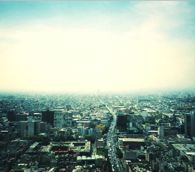
In an excerpt from "Down & Delirious in Mexico City," Daniel Hernandez endures smog season in Mexico's famously polluted capital
A Very Different Take on Nepal
by Jim Benning | 01.20.11 | 12:29 PM ET
Writes Andrew Hyde:
A deep depression hit me about an hour into my visit to Nepal and lasted for the first two weeks. Nepal, as a travel destination, is nothing short of raved about. “The Himalayan Mountains are majestic and the people are the nicest in the world!” was a common travel tidbit I heard. What I found was a developing nation with deep problems becoming worse by the month with tourism hastening the poisoning of the well. The pollution is the worst I have ever seen. Air, land, sound and water, nothing is spared the careless trash.
Will a Road Through the Serengeti Kill Tanzania’s Giant Tourism A.T.M.?
by Michael Yessis | 11.02.10 | 11:45 AM ET
Tanzania president Jakaya Kikwete wants to build a highway through the Serengeti, the location of the Great Migration, which, Jeffrey Gettleman writes, is “widely considered one of the most spectacular assemblies of animal life on the planet.” What will happen if the proposed road gets built?
Scientists and conservation groups paint a grim picture of what could happen next: rare animals like rhinos getting knocked down as roadkill; fences going up; invasive seeds sticking to car tires and being spread throughout the park; the migration getting blocked and the entire ecosystem becoming irreversibly damaged.
Tourism could also be a casualty.
Hundreds of thousands of people here depend on tourism for a living. And the Serengeti is like a giant A.T.M. for Tanzania, attracting more than 100,000 visitors each year, producing millions of dollars in park fees and helping drive Tanzania’s billion-dollar safari business, an economic pillar. “If anything bad happens to the Serengeti,” said Charles Ngereza, a Tanzanian tour operator, “we’re finished.”
Jeffrey Gettleman narrates an accompanying video.
Paris Offers Free Sparkling Water
by Michael Yessis | 09.22.10 | 11:52 AM ET
In one public water fountain, in a wooden hut, in the Jardin de Reuilly. The Guardian explains:
France’s addiction to bottled sparkling water is up there with its penchant for bike racing, foie gras and Johnny Hallyday. Now, authorities in Paris are attempting to fight back against the national dependence by unveiling a public water fountain that gushes with chilled bubbles.
La Pétillante - literally, she who sparkles - is the first fountain in France to inject carbon dioxide into tap water before cooling it and serving it up to passers-by. Inaugurated today in the Jardin de Reuilly in south-east Paris, it is expected to prove a user-friendly means of weaning the French off the bottle.
France pinched the idea from Italy, which already has 215 sparkling water fountains.
Oil Spill Update: Heartbreak on the Gulf Coast
by Michael Yessis | 06.28.10 | 1:28 PM ET
Two more moving pieces on travel and the oil spill in the Gulf: World Hum contributor and Lonely Planet’s U.S. Travel Editor Robert Reid writes about a “sobering and powerful” trip to the Florida panhandle last week, and Carl Hiaasen gets angry about the oil washing up on Florida’s shores. He writes:
It might be difficult for someone who was born and raised far from a beach or a bayou to visualize a place they cherish being poisoned and defaced on such a massive scale.
Or maybe not so difficult. Imagine if 120 million gallons of crude oil were flushed into the Minnesota headwaters of the Mississippi River, and for months the sludge was allowed to seep down through the veins of America’s midwest.
Now you begin to get the picture—the heartbreak, the helplessness.
Previously, Tom Swick wrote for World Hum about the situation in the Florida Keys.
76-Second Travel Show: A Tribute to the Gulf Coast
by Robert Reid | 06.23.10 | 5:28 PM ET
Robert Reid visits Florida's Gulf Coast beaches and contemplates an uncertain future
President Obama on the Gulf Coast: ‘Come Down Here and Visit’
by Eva Holland | 06.14.10 | 4:38 PM ET
The POTUS is visiting the Gulf Coast today—and he’s urging other Americans to do the same. USA Today’s The Oval blog quotes Obama:
There’s still a lot of opportunity for visitors to come down here. There are a lot of beaches that have not been affected and will not be affected. If people want to help, the best way to help is to come down here and visit.
The Oval dubs the suggestion “oil spill tourism,” but I’m not sure voyeur-style disaster tourism is quite what Obama has in mind. Still, whether it comes in the form of beachgoers who manage to avoid the spill or the morbidly curious aiming to witness its effects, it’s good to see tourism to the beleaguered area being encouraged.
Can’t make it in person anytime soon? World Hum contributor Robert Reid is tweeting from the Florida panhandle. Elsewhere, The Big Picture has a sobering photo essay illustrating the spill’s effects nearly two months in.
Interview With Andrew Potter: Travel and the Search for Authenticity
by Michael Yessis | 05.13.10 | 12:28 PM ET

Michael Yessis asks the author of "The Authenticity Hoax" if authentic travel experiences exist -- and about the cost of our search for them
Mapped: The Great Gulf Oil Spill—in London, New York and Paris
by Eva Holland | 05.11.10 | 11:52 AM ET
While we’re on the subject of the massive Gulf oil spill, here’s something clever: Paul Rademacher has created a satellite image of the slick that can be superimposed on the city or region of your choice. Really brings home the scope of the disaster. (Via Gawker)
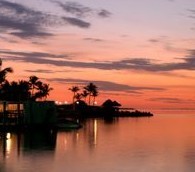
Waiting for Oil in the Florida Keys
by Tom Swick | 05.11.10 | 10:56 AM ET
 iStockPhoto
 On a visit to the islands, where some are now contemplating the unthinkable
9 Ways You Can Make a Difference as a Sustainable Traveler
by Eric Lucas | 04.22.10 | 11:40 AM ET

Do you really need that "Omaha" coffee mug made in China? Eric Lucas thinks not.
Sewage! Smokestacks! Corroded Shipping Containers! It’s the Urban Ocean Boat Cruise.
by Michael Yessis | 03.23.10 | 1:33 PM ET
This ain’t whale watching. From the Los Angeles Times:
The aim of the Urban Ocean Boat Cruise—run by the Aquarium of the Pacific and Harbor Breeze Cruises—is to ply Southern California’s most compromised waters to show the environmental effects of trade, fishing, industry and other human activities.
The tour balances lessons on tainted seawater and polluted air with an appreciation of the port as a bustling commercial hub that remains home to sometimes surprising amounts of marine life. Or as tour guide Dominique Richardson puts it: “The multiple and conflicting uses of our urban ocean.”
Aquarium president Jerry Schubel, who came up with the idea after taking an architecture cruise last year in Chicago, said he asked himself: “What is it about Long Beach and Los Angeles that’s distinctive? And I realized that Southern California is one of the most heavily used areas of coast in the nation.”
Good story. Great idea.
World Travel Watch: Smog in Hong Kong, Heavy UK Snowfall and More
by Larry Habegger | 01.06.10 | 11:25 AM ET

Larry Habegger rounds up global travel news
Video: Black Carbon Travels the Globe
by Eva Holland | 12.16.09 | 1:39 PM ET
Wired has a video simulation (and brief explanation) of the movement of black carbon—the emission from diesel, wood and coal burning—around the earth’s surface. Who knew pollution could look so cool?
On the Move: ‘Climate Migrants’ in Bangladesh
by Eva Holland | 12.14.09 | 5:16 PM ET
World Hum contributor Joanna Kakissis reports for The World on the growing numbers of Bangladeshis displaced by a changing landscape. The story’s also available as an audio file. Here’s a sample:
[T]he farmers of Kalikabari are on the leading edge of what could be a great wave of migration. Studies estimate that the effects of climate change could force 30 million Bangladeshis from their homes by the middle of this century. Many environmental migrants are already showing up here—in Bangladesh’s capital, Dhaka.
Photo You Must See: The World in Copenhagen
by World Hum | 12.11.09 | 3:06 PM ET
 REUTERS/Christian Charisius
 A large globe sits in Copenhagen’s lit-up central square. The United Nations Climate Change Conference is ongoing in the Danish capital.
Canada Makes the Next Move in Northwest Passage Dispute
by Eva Holland | 12.09.09 | 2:13 PM ET
Time for another round of diplomatic maneuvering as the ice recedes around the long-sought northern shipping route. The latest move? Canada has announced plans to create a formal marine conservation area in Lancaster Sound, in waters which the American and Russian governments claim are international. The change would allow shipping but make waste dumping, mining and oil and gas development in the area illegal under Canadian law.
- « Prev Page
- Next Page »