
The Arctic: Three Great Books
Travel Blog • Eva Holland • 12.20.07 | 12:15 PM ET
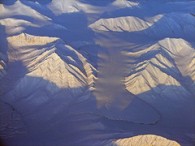 In Three Great Books, we highlight must-reads for a topic or place.
The northern reaches of North America have been inspiring visitors to write about their experiences since the earliest European explorations. Writers from Jack London to Jon Krakauer have told stories of adventure and tragedy in the Arctic, stories that always seem to boil down to the idea of challenging ourselves and testing our ability to survive in one of the harshest and most unforgettable landscapes on earth. My picks range as far south as the northernmost parts of the Prairies, but I think anyone who’s watched the migration of the polar bears through Churchill, Manitoba would argue that they were given a glimpse of life in the Arctic. Three great books:
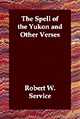 The Spell of the Yukon by Robert Service.
Service was the unofficial poet laureate of the Klondike Gold Rush. This, his first book, includes all of his most well-known poems from his time up north—most famously, “The Cremation of Sam McGee.” I can still recite those opening lines, learned years ago in school: “There are strange things done in the midnight sun / By the men who moil for gold…” The poems reflect Service’s mixed emotions about the place: admiration, amusement and disgust for the odd assortment of characters who came north searching for gold, and reverence and love for the mountains, valleys and skies of the Yukon. And there’s plenty of that sense of challenge, too. From “The Heart of the Sourdough”: “I’m sick to death of your well-groomed gods, your make-believe and your show. / I long for a whiff of bacon and beans, a snug shake-down in the snow; / A trail to break, and a life at stake, and another bout with the foe.”
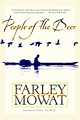 People of the Deer by Farley Mowat.
Mowat is a fixture on the Canadian literary scene, and “People of the Deer” is the book that first launched him to celebrity in 1952. It chronicles his time spent among the Ihalmiut, an isolated Inuit group in the evocatively named “Barrens” region west of Hudson Bay, where Nunavut meets Manitoba. The book is both a tribute to the Ihalmiut people and an angry condemnation of their neglect by the Canadian government. Mowat’s style can sometimes feel dated when read today, and he has been criticized for occasionally fictionalizing in his memoirs. Still, “People of the Deer” remains one of the first books of its kind, calling attention to the suffering of Canada’s Inuit long before it was fashionable to do so.
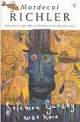 Solomon Gursky Was Here by Mordecai Richler.
Another giant of “Can-lit,” Mordecai Richler is best known as a chronicler of life in Montreal’s Jewish community. “Solomon Gursky Was Here” takes place in this familiar territory too, but also ranges across the Arctic as the main character, Moses Berger, attempts to piece together the history of the mysterious Solomon Gursky, the wayward son of a powerful and wealthy family. It’s a hefty novel that jumps around in place and time: from John Franklin’s doomed search for the Northwest Passage in the mid-1800s, to present-day Quebec’s Eastern Townships, where Moses struggles with alcoholism and with his memories of his father, also a writer, who worked for the Gursky family. The book is challenging, but Richler’s trademark satire keeps the story from ever becoming dull. It won the Commonwealth Writers’ Prize in 1990.
Related on World Hum:
* South Africa: Three Great Books
* Soccer: Three Great Books
* Los Angeles: Three Great Books
Photo by treasurethouhast via Flick (Creative Commons)
 Email to friend
 Twitter
 del.icio.us
 Digg
Digg Facebook
 Furl
Furl Ma.gnolia
 Mixx
Mixx Reddit
 StumbleUpon
 Yahoo! Buzz
Kathleen Molloy 01.31.08 | 10:42 PM ET
What a lovely way to introduce travellers to foreign lands for foreigner reading adventures. I’ll go back now and reread People of the Deer. It will be interesting to see how Mowat’s treatment of First Nations communities could be applied to our current times.
Kathleen Molloy, author
Dining with Death
http://www.diningwithdeath.ca
La Mort au menu
http://www.lamortaumenu.ca