
Travel Books for Kids: A ‘Passport to Imagination Land’
Travel Blog • Michael Yessis • 07.11.07 | 9:27 AM ET
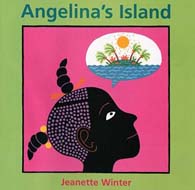
If you want to instill wanderlust in very young kids by traveling with them, read this. If you want to instill wanderlust in kids without taking them on the road, World Hum contributor and Washington Post travel book critic Jerry V. Haines has some books for you. He reviewed six travel books for kids in Sunday’s Post. In the books, Haines writes, “children can go to other lands and other centuries, unrestrained by logic, laws of physics or other unfortunate realities.” Among those he recommends: Angelina’s Island by Jeanette Winter and Hugo and Miles in I’ve Painted Everything! by Scott Magoon.
Hugo and Miles see the sights of Paris, “but a trip to the top of the Eiffel Tower makes Hugo realize that he merely needs to approach his subjects from a new angle,” Haines writes. “So back they go to Cornville, U.S.A., where Hugo now can appreciate his home town for the variety he never saw there before. It’s a nice moral we all can appreciate.”
To find out a little more about the world of travel books for kids, I asked Haines a few questions by e-mail.
World Hum: What struck you as the best thing about these travel books?
Jerry V. Haines: Not necessarily the “best” thing, but certainly an encouraging thing: With the possible exception of “Love of Two Stars,” which takes us into mythology, none of the authors felt obliged to say, “Now, children, in an exotic land far, far away….” Instead, the implicit assumption is that kids will accept that this big world has many lands with many customs, and that little Mustafa in Morocco, for example, is doing what they’d be doing if they lived there.
Do any of these books have “Harry Potter” qualities, designed for children but with appeal to adults?
In this age range (roughly 4 to 8), you’re not likely to find books that an adult, unaccompanied by a child, is going to read (at least not in a public place). Instead, I think what adults can appreciate about these books is the innocent simplicity: virtue is readily apparent; the people of other lands are more like us than they are different; doing the right thing is unquestionably the right decision (no worrying about whether it’s tax deductible or whether your employer has a philosophical conflict with it). That’s such a refreshing change from usual adult life. In addition, many of these books have terrific graphics. Moral: keep a small child handy, so you can have an excuse to enjoy these books.
You review six books in the Post. How large is the market of travel books for kids?
Publishing industry statistics aren’t broken down with that kind of specificity. According to the Association of American Publishers, however, sales of “juvenile” (children and young adults) titles in general accounted for about about $3.8-billion in 2006. (Adult titles accounted for about $4.9-billion.) That was down some from 2005, but longer term trends are positive.
As an avenue for travel writers to explore, I think travel (or, to be more inclusive, travel and multicultural) books for children would be a natural fit. For one thing, as demonstrated in your recent blog post about the appropriate age to begin traveling, even little kids are ready to travel and to get something out of the experience. And in travel reading the opportunities for vicarious adventures—seeing what lies over the horizon—are limitless. Not that writing for children is easy—as any parent will tell you, children are not merely little adults.
 Email to friend
 Twitter
 del.icio.us
 Digg
Digg Facebook
 Furl
Furl Ma.gnolia
 Mixx
Mixx Reddit
 StumbleUpon
 Yahoo! Buzz
Michael Yessis is the cofounder and coeditor-in-chief of World Hum.
