
Travel Books We Loved in 2007
Travel Books: Our contributors reveal their favorite reads from the past year. Believe it or not, they include a stain-removal guide.
12.19.07 | 10:47 AM ET
We asked some of our contributors to talk up their favorite travel books from the past year. Here’s what they loved from 2007, with a few older titles thrown in to boot, in no particular order:
 Down the Nile: Alone in a Fisherman’s Skiff by Rosemary Mahoney
Julia Ross: “‘Down the Nile’ deftly explores how gender stereotypes work for and against Western women as they go it alone. I’m drawn to books by smart, independent women travelers. Mahoney is among the most talented I’ve encountered.”
Abbie Kozolchyk: “Mahoney is such an evocative writer she could pull off the definitive guide to green bean casseroles if she wanted to. In her version of the Nile, boats dance tarantellas, camels bob like terrestrial sea horses along the horizon, and the general backdrop is “a rare instance of fantastical preconception matched by reality.” My only complaint—if I may be so catty and schoolmarmish—is that the book could have used a better copy editor. But what’s a little dangling modifier between gorgeous turns of phrase?”
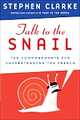 Talk to the Snail: Ten Commandments for Understanding the French by Stephen Clarke
Terry Ward: “I love his insightful, often snarky and always British-tempered insights into life as a foreigner in France. I can relate to so much of what he says. Clarke, by the way, also wrote ‘A Year in the Merde.’”
Shadow of the Silk Road by Colin Thubron
Thomas Swick: “On an arduous journey across the ages, Thubron distills history, politics and art through a restless eye, a fertile mind and a stout and compassionate spirit. He reaffirms his reputation as one of the great travel writers.”
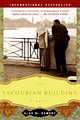 The Yacoubian Building by Alaa Al Aswany
Frank Bures: “The book that left me feeling the most completely transported this year wasn’t actually a travel book at all. It was ‘The Yacoubian Building,’ a fantastic novel about modern Egypt, written by a dentist. Reading the book is like meandering through the back alleys of Cairo. It is so rich and full of colors and smells, and the stories are so real and complicated and heartbreaking that it really felt like I was there. Even now, I feel like I’ve been to Egypt, when I never have. On the factual side, I would have to go with Josh Swiller’s The Unheard, one of the best books about foreigners in Africa I’ve read. And finally, I should put in a good word the Kasper Hauser’s Sky Maul, which no matter how many times I come back to it, never seems to get any less funny.”
The Father of All Things by Tom Bissell
David Farley: “Tom’s style—deft, but accessible and unforgivingly smart—makes anything he writes an entertaining and engaging read. The book’s structure—slipping between a trip he took with his Vietnam vet father to Vietnam and personal history and an engaging account of the war—keeps the reader engaged throughout.”
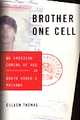 Brother One Cell by Cullen Thomas
Rolf Potts: “Cullen’s book, about a three-year stint in South Korean prisons, shows how cultural authenticity can be found even in the most extreme and trying situations. I also loved Heart Like Water by Joshua Clark. Clark’s book is about surviving in the French Quarter during the weeks after Katrina, and it shows how a city like New Orleans can maintain its resilient exuberance and sense of place, even in the face of disaster. In the interest of full disclosure, Joshua is an old friend of mine.”
 Travels With Herodotus by Ryszard Kapuscinski
Joanna Kakissis: “One of journalism’s most admired foreign correspondents belonged to a time when journalists were the ultimate travelers: seeking, searching and illuminating the most misunderstood parts of the world. This book is a beautiful, often searing homage to learning through travel.”
 Field Guide to Stains: How to Identify and Remove Virtually Every Stain Known to Man by Virginia M. Friedman, Melissa Wagner and Nancy Armstrong
David Wallis: “In 2007, I received this book, which was written in 2002. It’s a must-have for any traveler, particularly a messy one battling to keep white shirts white.”
 Assassinating Shakespeare by Thomas Goltz
Peter Delevett: “Goltz is a sort of rogue American journalist, I guess you’d say, who forays into various hot spots and reports on them in a vaguely Hunter Thompson-esque way. This book is a memoir of two years he spent in Africa as a young man in the mid-‘70s, supporting himself by putting on scenes from Shakespeare using hand-carved wooden puppets. He takes us through war-torn Rhodesia, gets arrested in Ethiopia, gets dysentery in Zambia, hitchhikes across Kenya, stows away to Zanzibar, becomes an accidental TV star in South Africa, accidentally falls in love with a couple of prostitutes, smokes way too much dope and nearly loses his mind. It’s a wonderful read—exactly the kind of crazy gonzo adventure we all wish we’d lived as young men. But with the distance of nearly 30 years, Goltz doesn’t try to glorify or glamorize his experiences; he’s very honest about the love-hate relationship he still has with that time in his life.”
The River Queen by Mary Morris
C.M. Mayo: “It’s a page turner, a heart-felt personal memoir, and a journey to rival Huck Finn’s own.”
 Arresting God in Kathmandu by Samrat Upadhyay
Jeff Greenwald: “My main discovery this year was the work of Samrat Upadhyay, a Kathmandu-born writer now living in Indiana. His short story collections—including ‘Arresting God in Kathmandu’ and The Royal Ghosts—gave me fresh insight into a country I’ve been visiting for 28 years. He’s terrific. Also, for anyone fascinated by the planet as a whole, I strongly recommend An Ocean of Air, by British science writer Gabrielle Walker. It’s about the workings of the Earth’s atmosphere, brilliantly written and wonderfully readable.”
 The Long Embrace by Judith Freeman
Deanne Stillman: I have two favorites. The first is ‘The Long Embrace,’ by Judith Freeman. Not a traditional travel book, it takes you to the heart and soul of a vanished Los Angeles by way of Raymond Chandler and his wife Cissy, the many places they lived, and Freeman’s own beautiful prose. Also includes La Jolla, and comes with a map and pix. The second is House of Rain by Craig Childs, a similar kind of journey into a disappeared world, that of the Anasazi. Childs journeys to their ancient addresses and along the way paints a stunning portrait of the desert southwest. For sand fans, this is as good as it gets. Also includes pix and maps.”
 Words Without Borders: The World Through the Eyes of Writers
Jeff Biggers: “This is a must-read for all travelers, armchair travelers, travel writers and general readers: ‘It is up to us now to listen to the expression of our fellow human beings with whom we share the planet,’ American author Andre Dubus III notes in his introduction of this anthology, which spans 20 countries and includes the often breathtaking voices of 28 foreign writers. ‘Whether we know it or not, these are notes in the world symphony in which we all play a part.’ I also found C.M. Mayo’s Miraculous Air: Journey of a Thousand Miles Through Baja California, the Other Mexico to be delightful, informed and heartfelt.”
 Longitude: The True Story of a Lone Genius Who Solved the Greatest Scientific Problem of His Time by Dava Sobel
Jim Benning: “I’m a late-comer to this fascinating book, which was first published a decade ago. It’s a history and biography, but deep down, travel is at its heart. It focuses on the 18th century quest to determine longitude at sea—a problem that vexed the likes of Newton and Galileo and led to countless shipwrecks. With GPS and jets and all our other modern wonders, it’s easy to lose sight of the most basic ways travelers have located themselves on the globe for centuries. I read much of this on a cross-country flight. As I was being beamed over the earth at 35,000 feet and feeling otherwise dislocated, I found this book to be profoundly grounding.”
 Encounters With the Middle East, edited by Nesreen Khashan and Jim Bowman
Peter Wortsman: “Would it be too self-aggrandizing to recommend Travelers’ Tales ‘Encounters with the Middle East,’ in which I am proud to have a piece? Almost every page of it resonates with an extremely specific personality of place. It’s a cliche buster, in the best sense, a book that portrays people and places with no halos and all the rough edges, but also, and above all, with those sparks that, when warped, ignite wars, and when cherished, cause bushes to sputter with wisdom and conflicting sanctities to reveal a common source.”
The Brief Wondrous Life of Oscar Wao by Junot Diaz
Stephanie Elizondo Griest: “I know, I know, it’s a novel, not a travelogue. But I cannot fathom a more insightful probe into the people, politics, and psyche of the Dominican Republic (or Jersey). And his prose is extraordinary.”
 River of No Reprieve by Jeffrey Tayler
Jerry V. Haines: “Of the books I reviewed in 2007, my favorite was one actually published in 2006. No one can ‘take me along’ (and that is the primary duty of the travel writer, in my view) like Jeffrey Tayler can. His ‘River of No Reprieve’ let me see Siberia and its people through his eyes and those of his misanthropic guide. If restricted to 2007, I’d vote for one of several children’s books with travel or multicultural themes. What I find most attractive is the purity of message: often, that in this big, diverse world we have so much to learn from each other. If I had to choose just one, it might be Thumbelina of Toulaba. Daniel Picouly and Olivier Tallec take the Hans Christian Andersen story and recast it in a fictitious South American country in whose jungles tiny Thumbellina gets lost, makes friends and, importantly for little girls, learns how to say ‘no.’ (Admittedly, parents of 2-year-old little girls will insist that their daughters need no help in that respect.)”
 Pathfinders: A Global History of Exploration by Felipe Fernandez-Armesto
Michael Yessis: “Yup, Felipe Fernandez-Armesto takes on the entire history of exploration. It’s ambitious and incredibly compelling, and it reminded me a bit of ‘Guns, Germs and Steel.’ Fernandez-Armesto shows how humans moving from place to place shaped the world. Another book I loved: The Onion’s Our Dumb World. It’s as smart and insightful as ‘Pathfinders,’ but in an entirely different way. For instance, its take on Tibet: ‘Transcending Independence Since 1950.’”
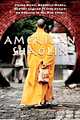 American Shaolin: Flying Kicks, Buddhist Monks, and the Legend of the Iron Crotch by Matthew Polly
Eva Holland: “It had all these different elements—insights into Chinese culture and etiquette, exciting fight scenes, the quest to fix the ‘Things That Are Wrong With Matt’ that I think everyone can relate to (although most of us don’t actually do anything about that list in our heads). They all came together to form a really engrossing story. I normally take a long time to read most travel narratives, because they’re often so dense and introspective, but I read ‘American Shaolin’ the way I’d read a detective thriller (or the latest ‘Harry Potter’), and still came out feeling like I’d learned a lot.”
Related on World Hum:
* World Hum’s Top 30 Travel Books
 Email to friend
 Twitter
 del.icio.us
 Digg
Digg Facebook
 Furl
Furl Ma.gnolia
 Mixx
Mixx Reddit
 StumbleUpon
 Yahoo! Buzz
Barbara Gillette 12.22.07 | 9:39 PM ET
My favorite book for 2007 is The Seventh Wonder, by J.C. Villar. It was originally published back in 2005, but I was just introduced to it this past summer. It is a travelog by the author who went around the Mediterranean to see what ruins were left of the Seven Wonders of the ancient world. The book is historically informative, but in a hilarious sort of way and is also deeply philosophical. The author also provides GPS coordinates for hotels, restaurants, bus and train stations, and the Wonders themselves to help anyone along who wants to follow in his footsteps faster than he had to do it. Funniest book I’ve read in years.
Jeffrey Wasserstrom 12.28.07 | 2:59 PM ET
Since some contributors mentioned books they discovered belatedly in 2007, I’d like to call attention to In an Antique Land: History in the Guise of a Traveler’s Tale, a book by Amitav Ghosh that blurs the borders between several genres. It is a beautifully written work that moves between the past and the present as well as between India and Egypt. It has a dreamlike feel and includes many amusing character sketches and descriptions of the culture shock that a highly educated Indian traveler experienced in an Egyptian village, yet it also grapples with important and sometimes disturbing issues that were topical in the 1990s when the book first appeared and that continue to be all too relevant today.
Sara Turvey 01.08.08 | 1:52 AM ET
Probably my favourite book for 2007 was “My Mother is a Tractor: A Life in Rural Japan” by Nicholas Klar. I spent two years in Japan on the JET Program so I suppose this book has a special resonance for me. Klar’s book is part blog, part social commentary, part MDN wai wai (a steamy society page in the Mainichi Shimbun News) and, despite flipping between the three constantly, comes out as a balanced read. I found myself feeling all sentimental in some places, laughing out loud at others, but sometimes cringing too when recognising myself or friends in the same likenesses of Klar’s motley crew. Intending Japan travellers and/or teachers may find this tome useful.
At present I have just started on Chuck Thompson’s “Confessions of a Rogue Travel Writer” and I think already I may be back here next year expounding what a great book it is.
Michael Yessis 01.08.08 | 3:15 PM ET
Hi Sara,
There’s a great conversation about Chuck Thompson’s book going on here:
http://www.worldhum.com/books/item/the_trouble_with_smile_when_youre_lying_20080102/
Peter Daams 01.17.08 | 8:39 PM ET
Thanks for the list, some good ideas for my upcoming b’day ;)