
Destination: Africa
Airlines to Screen “Beat the Drum” in Support of World AIDS Day
by Michael Yessis | 11.30.06 | 7:41 AM ET
American, Delta, United, British Airways and 30 other airlines will set aside their usual in-flight entertainment on more than 40,000 flights Friday to show the movie Beat the Drum. The movie depicts the impact of AIDS on African children, and, according to news reports, the screenings are expected to raise $300,000 for African charities.
 Email to friend
 del.icio.us
 Digg
Digg Facebook
 Furl
Furl Ma.gnolia
 Mixx
Mixx Reddit
 StumbleUpon
 Yahoo! Buzz
The Art of the Deal
by Peter Wortsman | 11.10.06 | 1:15 PM ET
 Photo by Peter Wortsman.
 In Marrakesh, Morocco, Peter Wortsman bargains for goods with the city's savviest shopkeeers. For him, the give-and-take is not just about the money.
“The World According to Sesame Street”
by Michael Yessis | 10.25.06 | 9:15 AM ET
Nobody brings the world together like muppets. The new season of the PBS series Independent Lens debuts this week with the documentary The World According to Sesame Street, a look at how the TV show for kids has become a global phenomenon. Los Angeles Times critic Robert Lloyd writes in a stellar review: “It runs in more than 120 countries, mostly in dubbed versions of the original, but in more and more places—beginning as far back as 1972, after an inquiry from Germany—it is being produced locally, retooled for the native audience, with new characters and settings reflecting native culture and concerns.” The documentary focuses on productions of “Sesame Street” in three countries places: Bangladesh, Kosovo and South Africa.
Kristof and Parks in Africa
by Michael Yessis | 09.20.06 | 7:46 AM ET
New York Times Columnist Nicholas Kristof and Casey Parks, the winner of the Win a Trip with Nick contest, are on the ground in Africa, reporting on their experiences via blog, vlog and column. (Unfortunately, it’s all currently behind the TimesSelect wall, though some of it will appear on mtvU in the future.) “I know I picked the right person for this trip, because her entries are actually more interesting than mine,” Kristof writes. “I’m delighted to be shown up!” Kristof isn’t in danger of losing his job, but he is onto something. Parks’ blog so far is a compelling mix of mundane things like music playlists, you-are-there descriptions and heartbreaking reportage and reflection.
Waiting for Snow in America
by Terry Ward | 09.12.06 | 4:50 PM ET
I know how it feels to be a 6-foot-tall blonde in Tokyo—or, from my first travels to the Middle East, to realize that showing a little kneecap can be tres risquÃ(c)—but I always find it more interesting to read about the culture shock foreigners experience here in America. For Somalian immigrants taking a recent crash course on American culture at a Kenyan refugee camp, one thing awaiting them in their new home proved particularly baffling: snow.
Dallol, Ethiopia
by Ben Keene | 08.26.06 | 9:32 AM ET
Coordinates: 14 14 N 40 18 E
Elevation: -157 feet (-48 meters)
If avoiding the heat is your goal, then Death Valley, California—the hottest location in the United States—might be one spot to avoid in late August. Dallol, Ethiopia is another. A small settlement in the
state of Afar near the Eritrean border, Dallol holds the record for the highest average annual temperature for any inhabited place on the planet. In addition to plenty of sweltering sunshine, this part of the African continent also offers an opportunity to see the first signs of a new ocean basin forming. Not far from Dallol in the Danakil Depression north of the Great Rift Valley, the only volcanic crater below sea level has remained silent since 1926 as the seabed it will one day occupy gradually widens.
—.(JavaScript must be enabled to view this email address) is the editor of the Oxford Atlas of the World.
‘High in Hell’: Chewing Khat in Djibouti
by Michael Yessis | 08.23.06 | 2:08 PM ET
In the latest issue of Esquire, Kevin Fedarko ventures to Djibouti to explore the world of khat—a legal “psychotropic shrub” that helps shape the culture of the country and the region. “Although banned throughout the U.S., parts of Europe, and much of the Middle East, khat is perfectly legal in a handful of countries lining both sides of the Red Sea, where it has become as much a national institution as vodka in Russia or wine in France,” Fedarko writes.
Shredding Morocco’s Sand Dunes
by Terry Ward | 08.17.06 | 11:50 AM ET
I could practically feel the grit of sand in my teeth and the harsh desert sun beating down while reading Patrick Steel’s sensory-overload account in the Guardian of carving Saharan dunes atop a snowboard in Morocco. While duneboarding is nothing new on the extreme sports circuit, the story brought back memories of my own failed attempts at riding sand. So many times—New Zealand, Uruguay and Australia all come to mind—I have followed my guidebook’s suggestion to rent a board and cruise down the nearby dunes only to fail miserably. The sand sticks to your board in a way snow never would, and when you catch an edge it’s all the more miserable.
Mumbai vs. Bombay: “Will Bollywood become Mumblywood?”
by Michael Yessis | 08.09.06 | 11:53 AM ET
“On Language” columnist William Safire is the latest to dig into why and how places around the world change their names. He covers the big recent switches—Bombay to Mumbai, Burma to Myanmar, Upper Volta to Burkina Faso—most of which have been inspired by efforts to eliminate remnants of their colonial past. But Safire also looks at another interesting part of the name-change game: The product angle.
Stone Circles of Senegambia
by Ben Keene | 07.28.06 | 7:16 PM ET
Coordinates: 13 41 N 15 31 W
Approximate area: 15,000 square miles (39,000 sq. km)
Mention stone circles and most people probably think of the photogenic megaliths that beckon tourists to England’s Salisbury Plain. Farther to the south, however, along the River Gambia in West Africa, 93 stone circles in Senegal and Gambia represent a larger, more complex sacred landscape dwarfing Stonehenge. These massive seven-ton pillars were erected between the third century BC and the sixteenth century AD in a low-lying, sub-tropical region. On July 21, the World Heritage Committee added the Stone Circles of Senegambia along with 17 other sites to its list of 830 cultural and natural properties deemed most valuable to present and future generations.
—.(JavaScript must be enabled to view this email address) is the editor of the Oxford Atlas of the World.
Tahir Shah: Books that Inspire Wanderlust
by Michael Yessis | 07.11.06 | 10:56 AM ET
The author of The Caliph’s House: A Year in Casablanca and other tomes wrote about six books that inspire wanderlust in Sunday’s Book Post section of the Washington Post. Thor Heyerdahl’s Kon-Tiki: Across the Pacific by Raft and Bruce Chatwin’s The Songlines made the cut, as did the No. 1 book in World Hum’s recent countdown of top travel books, Arabian Sands by Wilfred Thesiger. Shah writes in his lead that he once met Thesiger in Kenya. It’s a great anecdote.
The Sound of Sunshine
by Frank Bures | 07.03.06 | 10:18 AM ET
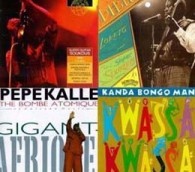
Frank Bures was working for a boss he didn't like, spending too much time alone. It was a dark time. He found light in the bright, poignant music he first encountered in Africa: soukous.
Darkness, Then Light, On a Road in Tanzania
by Jim Benning | 07.01.06 | 11:29 AM ET
South African Writer Adam Levin on Travel, AIDS and Bruce Chatwin
by Jim Benning | 06.29.06 | 6:35 AM ET
Not a Bad Time to Be in Ghana
by Jim Benning | 06.23.06 | 1:23 PM ET
Travel writer Joshua Berman is in the midst of one of those ‘round-the-world trips that would make anyone with remotely itchy feet turn, uh, green with envy. Over the last year, he has passed through Paris, Pakistan, India, Sri Lanka, Laos, Cambodia. And yesterday, he was in Ghana to see the African nation defeat the United States in a World Cup match. Not surprisingly, as this photo he shot indicates, he found himself in the midst of one serious party.