
Destination: Asia
Riding the Rails in Iran and Beyond
by Jim Benning | 05.06.08 | 4:37 PM ET
Interesting bit in a Guardian story about train travel in Iran: “Scheduled for completion later this year is a line that will run from Kerman in the south-east to Quetta across the Pakistani border. When finished, it will present a mouth-watering prospect: uninterrupted rail travel from Europe to the subcontinent.”
 Email to friend
 del.icio.us
 Digg
Digg Facebook
 Furl
Furl Ma.gnolia
 Mixx
Mixx Reddit
 StumbleUpon
 Yahoo! Buzz
Death Toll Rises in Burma
by Jim Benning | 05.05.08 | 3:35 PM ET
We can’t let the day pass without noting the tragedy in Burma (Myanmar). According to some reports, as many as 10,000 22,500 100,000 people have died as a result of the cyclone that hit over the weekend. As if the Burmese people haven’t suffered enough already.
Related on World Hum:
* Under the Banyan Tree
* Big Brother in Burma
* Burma’s Ongoing Cycle of Despair
Updated: Wednesday, May 7, 6:20 p.m. ET
The Fugu Phenomenon*
by Michael Yessis | 05.02.08 | 9:23 AM ET
Homer Simpson may have introduced you to fugu. Or perhaps Anthony Bourdain. They’re among those who have eaten the potentially deadly blowfish and helped make it “the thrill-seeking gastronome’s equivalent to scaling Mount Everest,” writes Adam Platt in New York Magazine. It’s banned through much of Europe and available only in a few restaurants in the U.S., though the FDA-sanctioned importing process, according to Platt, renders the fugu “less toxic than a piece of mercury-saturated tuna sushi at your local Korean deli.”
National Geographic’s China Issue: ‘Inside the Dragon’
by Michael Yessis | 04.29.08 | 3:39 PM ET
Stories by Peter Hessler and Amy Tan anchor what looks to be a terrific May issue of National Geographic. Hessler has the cover story, and Tan writes about the Dong people, who have no written language. Also of note: a reprint of a 1955 story by Heinrich Harrer, My Life in Forbidden Lhasa.
‘At Least’ 70 Killed in China Train Accident
by Jim Benning | 04.28.08 | 7:22 PM ET
Monday’s Shandong province crash was the worst rail accident in China in a decade, the BBC reports. Authorities blame human error.
Shrinking Planet Headline of the Day: ‘Free Tibet’ Flags Made in China
by Jim Benning | 04.28.08 | 1:33 PM ET
Police in Guangdong are on the case, the BBC reports. Here’s the kicker: “Workers said they thought they were just making colourful flags and did not realise their meaning.”
Photo by -Marlith- via Flickr, (Creative Commons)
American Teacher in China Dials Back Mob Attack Story
by Jim Benning | 04.25.08 | 10:41 AM ET
The Shanghaiist report of an American volunteer teacher attacked by a mob outside a French grocery store in China’s Hunan Province was “sensationalist,” the teacher says. Shanghaiist reports that it posted the account April 22 after reviewing emails from two additional sources, including one from the volunteer organization’s field director that “appeared to corroborate the initial version of events.” Nevertheless, the teacher writes: “The crowd ... was ... following and chanting, but not attacking me in spite of ample opportunities to do so thoroughly. I eventually got into a taxi and the crowd surrounded it, content to have a foreign audience for their message. ... In spite of plentiful false reports in the Western media, I was not harmed during the course of this protest.” We posted a short item on the story Wednesday.
American Teacher Attacked by Chinese Mob
by Jim Benning | 04.23.08 | 2:49 PM ET
Very scary story out of China: A 22-year-old American volunteer teacher in the Hunan Province city of Zhuzhou was reportedly attacked by a mob outside the French grocery store chain Carrefour on Sunday. According to one account, attackers chanted “Kill him! Kill the Frenchman.” The AP reports that the man was “quickly whisked away by police and was not hurt.”
A Writer’s Port of Call
by Adam Karlin | 04.23.08 | 12:07 PM ET
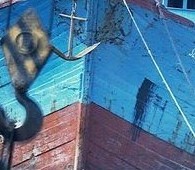
Adam Karlin went to Indonesia to work as a reporter. But after a visit to Jakarta's old wharf to see the aging Makassar schooners, he left with a calling of a different order.
Meet Li Yang, ‘China’s Elvis of English’
by Michael Yessis | 04.23.08 | 9:51 AM ET
Terrific story in the New Yorker about the Beijing man behind “Li Yang Crazy English,” whose slogans include “Conquer English to Make China Stronger!” Evan Osnos writes that Li is “the world’s only language teacher known to bring students to tears of excitement.” Officials in Beijing have turned to him to teach English to his compatriots before the Olympic Games this summer, but as Osnos writes—and that slogan hints at—it’s about more than language.
‘Long-Neck Women’ Fight Against Confinement in ‘Human Zoos’
by Michael Yessis | 04.22.08 | 11:20 AM ET
Marie Claire, The Age and the Times UK are among the publications with recent stories about the plight of the “long-neck women,” a group of Kayan refugees from Burma who are known for wearing brass coils around their necks. Tourists from around the world flock to Northern Thailand to see them, but many of the long-neck women have apparently had enough of living in a “human zoo.” Several of the women have removed their coils and are fighting to move to New Zealand and Finland, where they have been offered resettlement.
The United Nations High Commission for Refugees has taken up their cause, but so far no exit visas have materialized. The stories allege that the Thai government refuses to let the women leave, fearing that their departure will hurt tourism in the region.
Pakistan’s New Multiplex: ‘A Slice of America with Bollywood Flavoring’
by Michael Yessis | 04.21.08 | 10:23 AM ET
Great piece in the Washington Post about a new multiplex theater opening in Rawalpindi, Pakistan. The country lifted a longtime ban on screening Indian movies in February, and now the country is poised for a movie—and cross-cultural—boom.
Speaking of Powerful Photos: John Moore’s Pakistan Story
by Jim Benning | 04.09.08 | 3:23 PM ET
Yesterday, I noted the riveting story behind the Pulitzer Prize-winning Burma photo. Today, I was chatting with a photographer who told me that many in the news photo biz expected Getty Image’s John Moore to win the breaking news photography Pulitzer for his shots of the Benazir Bhutto assassination in Pakistan in December.
The Story Behind the Pulitzer Prize-Winning Burma Photo
by Jim Benning | 04.08.08 | 11:35 AM ET
Reuters photographer Adrees Latif won the breaking news photography Pulitzer Prize yesterday for his shot of a Japanese videographer killed during anti-government protests in Burma (Myanmar). Today, Reuters has Latif’s account of the how he got the shot. It’s riveting.
Related on World Hum:
* Busking Story Earns Pulitzer Prize for Feature Writing
* Dispatch from Burma: Under the Banyan Tree
In Kolkata, the ‘Last Days of the Rickshaw’?
by Michael Yessis | 04.03.08 | 4:08 PM ET
Calvin Trillin’s look at the fate of hand-pulled rickshaws in Kolkata (aka Calcutta) leads a terrific package on the subject in National Geographic. “To Westerners, the conveyance most identified with Kolkata is not its modern subway—a facility whose spacious stations have art on the walls and cricket matches on television monitors—but the hand-pulled rickshaw,” he writes. “Stories and films celebrate a primitive-looking cart with high wooden wheels, pulled by someone who looks close to needing the succor of Mother Teresa.”