
Destination: Russia
Moscow vs. Lonely Planet
by Michael Yessis | 08.10.06 | 4:08 PM ET
Politics, business and travel often intertwine. Take, for example, Lonely Planet. Recently, the guidebook giant has lobbied the United States Congress to support a National Passport Month. In 2002, Hong Kong took issue with Lonely Planet’s guidebook coverage. In 2004, Burma Campaign UK called for a boycott of the guidebook giant simply for publishing a book about the country. Now it’s Moscow’s turn to take some shots at LP. From a story by Tom Parfitt in the Guardian: “Moscow officials have launched an attack on Lonely Planet, saying the backpackers’ guide portrays the Russian capital as a gangster-infested Gotham and presents an image of the city that is at least 15 years out of date.”
 Email to friend
 del.icio.us
 Digg
Digg Facebook
 Furl
Furl Ma.gnolia
 Mixx
Mixx Reddit
 StumbleUpon
 Yahoo! Buzz
Club Gulag: Inside Post-Soviet ‘Extreme Tourism’
by Michael Yessis | 08.07.06 | 7:41 AM ET
Care to stay the night in a former KGB prison in Latvia? How about a weekend in an abandoned gulag 100 miles above the Arctic Circle? Or do you just want to make like a Volga boatman, pulling a barge up the river? According to The Age, the night at the KGB prison is already a hot destination for masochistic tourists. “On some nights, for extra money, they call out the guard, and the shivering guests can witness a mock execution, with the ‘corpse’ being flung like a sack of potatoes into a lorry before being driven away, presumably for a reviving cuppa,” Allan Hall writes. “Once past the humiliating stripping and donning of prison garb, the gruelling physical exercise regime, the interrogation and the solitary confinement cell—for those that answer back to Ivan—there is dinner. It is a delicious melange of stale rye bread, pickled fish heads, pressed meat from some unidentifiable mammal, pickles and black, sweet Russian tea.”
World Borders Redefined
by Michael Yessis | 05.29.06 | 9:22 AM ET
What defines a country’s border these days? Is it a physical place, or does it extend into the “virtual and electronic space”? Moisés Naím argues that it’s all three places and more in an intriguing essay in the Outlook section of Sunday’s Washington Post. “[W]hile geography still matters,” Naím writes, “today’s borders are being redefined and redrawn in unexpected ways. They are fluid, constantly remade by technology, new laws and institutions, and the realities of international commerce—illicit as well as legitimate.”
Russia Plans to Implement Lie Detector Tests For Airline Passengers
by Michael Yessis | 04.07.06 | 1:52 PM ET
A lie detector system could be in use at Moscow’s Domodedovo airport by July, according to Adrian Blomfield’s story in the Telegraph. Travelers’ voices will be analyzed for stresses as they respond to four questions. Blomfield writes: “The first is for full identity; the second, unnerving in its Soviet-style abruptness, demands: ‘Have you ever lied to the authorities?’ It then asks whether either weapons or narcotics are being carried.”
Chinese Cyclist Aims to Ride Solo Around the World
by Michael Yessis | 02.14.06 | 11:52 AM ET
The Olympic spirit has really gotten into Yang Guangwen. The 46-year-old plans to ride his bike around the world beginning in March, visiting the cities that have hosted the Games since their modern inception. Beijing will host the 2008 Games, and Yang wants to do his part to promote the Olympics through travel.
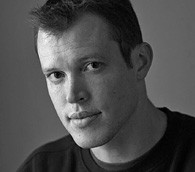
Jeffrey Tayler: Facing Africa’s “Angry Wind”
by Jim Benning | 12.31.05 | 9:22 PM ET
 Photo of Jeffrey Tayler by Tatyana Shchukina.
 Jim Benning asks The Atlantic's Moscow correspondent about travel writing, his latest book and the allure of the world's most remote regions
Russia: ‘Cold, Dark, Drowning in Vodka, and Ruled by the KGB’
by Michael Yessis | 12.12.05 | 6:37 AM ET
The land of Tolstoy and Tchaikovsky has an image problem. In brief, it is this: When people in the West think about Russia, rarely do Tolstoy or Tchaikovsky come to mind. According to a terrific article by Julian Evans in Foreign Policy, a poll commissioned by Russian President Vladimir Putin’s government revealed just how deep the problem goes.
Have You Taken the Trans-Siberian Express from Moscow to Beijing? If So, Any Advice?
by Rolf Potts | 11.27.05 | 9:15 PM ET
Vagabonding traveler Rolf Potts answers your questions about travel
Chernobyl. It’s the Latest Word in Adventure Travel.
by Michael Yessis | 05.13.05 | 10:15 PM ET
The flora and fauna in an area the size of Rhode Island are still radioactive, and the soil is still contaminated five inches deep, but that’s not keeping tourists from visiting the site of the world’s largest nuclear disaster. We think they’re a bit nuts. However, according to Mary Mycio’s story this weekend in the Los Angeles Times, some visitors think they’ve hit on the next great form of adventure travel. “The very knowledge of the buzzing background of radiation imbues even the prosaic act of walking down the street with an aura of excitement,” she writes. “It isn’t the same adrenalin punch as bungee jumping in the Andes, but it is a palpable sensation—like being surrounded by ghosts.” The Times’ editors, by the way, top this piece with a hall-of-fame headline: “Chernobyl Gets Glowing Reviews.”
Have Papal Vestments, Will Travel
by Jim Benning | 04.20.05 | 9:30 PM ET
Crossing Divides: The Bering Strait
by Jim Benning | 01.06.05 | 10:17 PM ET
The final story in Tom Haines’ four-part Boston Globe series, “Crossing Divides,” was published during our winter break. It was an eloquent end to an ambitious project. The article looked at the remote world of the Bering Strait and the people who live there. “After the ice age thaw,” Haines writes, “Chukchis, Inupiat, and other indigenous peoples crossed the strait freely in skin boats in summer. But in the 20th century, distant capitals, Moscow and Washington, split the Arctic into communist and capitalist lands, making a barrier of the border through the middle of the strait and changing forever how natives and newcomers on both sides live.” The installment also featured a fascinating look at how Haines and photographer Essdras Suarez navigated the region. “The strait crossing was made aboard a 9-seat propeller plane chartered for a flight from the coastal port town of Provideniya, Russia, to Nome,” he writes. “Passengers on board included an elderly Siberian Yupik couple traveling to visit relatives on St. Lawrence Island, in the Bering Sea, and a Russianborn anthropologist returning to Alaska after months of research on the traditional use of mushrooms in native culture.” Finally, the Globe created a handsome Web page for the entire series.
Winged Victory
by Michael Yessis | 10.30.03 | 8:51 PM ET
- « Prev Page
- Next Page »