
Travel Blog: News and Briefs
Beer Lao Goes Global
by Eva Holland | 07.09.09 | 4:19 PM ET

After years as a staple on the Southeast Asia backpacker trail, cult favorite Beer Lao is finally making a serious push for leverage in more far-flung markets. From the New York Times: “Like a film festival winner without a distribution deal, the rice-based lager has struggled to turn cult status into anything other than good press ... The company, Lao Brewery, hopes to change that. It would like to see 10 percent sold abroad, and it is counting on Vang Vieng’s beer-loving backpackers to help them make the sale.”
For now, Beer Lao’s well-traveled devotees seem happy to help—the article has the details on the mostly grassroots import effort. But any bets on how long it’ll be before someone mournfully declares that Beer Lao tasted oh, so much better before the passport-less crowds got their hands on it? (Via Frommer’s Behind the Guides)
 Email to friend
 del.icio.us
 Digg
Digg Facebook
 Furl
Furl Ma.gnolia
 Mixx
Mixx Reddit
 StumbleUpon
 Yahoo! Buzz
Africa Travel Tips ‘Not Related to Bandits, Thugs and Murder’
by Michael Yessis | 07.09.09 | 3:24 PM ET
Nicholas Kristof took some heat for his recent 15 travel tips column—here and here, for instance. One excellent response comes from WhiteAfrican.com, which put forth 15 Africa Travel tips and posted a handful more from readers. (Via Frank Bures)
Hybrid Double-Decker Buses Debut in London
by Michael Yessis | 07.09.09 | 2:30 PM ET
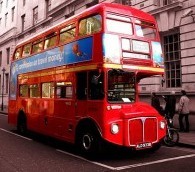
Six of them are now in use on Route 141. The city will assess just how much fuel and money it can save with the buses before expanding the fleet. (Via @joannakakissis, @ecogeek)
Japan’s Love Hotels: Recession-Proof?
by Michael Yessis | 07.09.09 | 1:43 PM ET
Looks that way. Apparently Japan’s love hotels have been rocking, even in what CNN calls the country’s deepest economic recession since World War II. “Even these days, on the weekend, every love hotel is full of people—it’s hard to get in,” one woman told CNN. “You can never stop sexual desire.” Or perhaps the drawing power of the Hello Kitty-themed rooms.
Travel Song of the Day: ‘Beijing’ by Patrick Watson
by Jim Benning | 07.09.09 | 1:00 PM ET
Give Some Time, Get Some Free Travel
by Alicia Imbody | 07.09.09 | 11:46 AM ET

A new promotion from Sage Hospitality encourages travelers to “give a day” of service and “get a night” back, via a free hotel stay or 50 percent off the rate at 52 hotels across the U.S.
Programs like these show potential to encourage public service in exchange for travel perks, especially among folks with more spare time right now than spare change. There’s no obligation to stay additional nights. Just complete eight documented hours with a registered 501(c)3 non profit organization. Extra (karma) points if you work for a green cause to help offset the environmental impact of your trip.
Even Mecca Getting Hit by Recession
by Eva Holland | 07.09.09 | 10:59 AM ET
Bookings from pilgrims are “way down” in the Muslim holy city, according to Reuters. Local hoteliers also blame the swine flu panic alongside the global economic crisis.
From Our Contributors: The Return of Flyover America, Exploring a Secret Corner of Greece and More
by World Hum | 07.08.09 | 4:01 PM ET
Props to some of our contributors and former bloggers, who have been making a splash elsewhere in the travelsphere recently. Jenna Schnuer and Sophia Dembling, along with World Hum contributor Matt Villano, relaunched the Flyover America blog today at readflyoveramerica.com. Here’s some of what they love about America.
Elsewhere, Joanna Kakissis ventured to Thrace and East Macedonia in Greece for a fine piece in the New York Times.
Congrats to David Farley, whose book An Irreverent Curiosity comes out tomorrow. Look for an interview with him tomorrow on World Hum.
Finally, on the non-travel front, Boy Alone: A Brother’s Memoir, by Karl Taro Greenfeld, has earned rave reviews in the Washington Post, among other publications.
‘Whatever Happened to the Segway?’
by Eva Holland | 07.08.09 | 3:06 PM ET
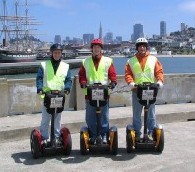
As most travelers know, it became the much-mocked vehicle of choice for niche-market guided city tours worldwide. But there’s more to the story: Slate takes a thorough look at the personal-transport revolution that wasn’t.
Climbing Ban Could be Coming to Uluru
by Eva Holland | 07.08.09 | 11:55 AM ET

An Australian government proposal is in the works to ban tourists from climbing Uluru, the distinctive red rock monolith that is considered sacred ground by local indigenous groups. Those same groups have been pushing for the move for years, but the proposal is—predictably—controversial in other quarters: “Big Brother is coming to Uluru to slam the gate closed on an Australian tourism icon,” said one conservative politician quoted in the Independent.
Invoking Orwell here seems a tad dramatic. I’m more inclined to agree with local elder Vince Forrester. “You can’t go climb on top of the Vatican, you can’t go climb on top of the Buddhist temples and so on and so forth,” he said. “Obviously you have to respect our religious attachment to the land too, so we’re saying please do not climb Uluru.”
Japanese Railway to Workers: Do You Pass the Smile Test?
by Jim Benning | 07.08.09 | 11:16 AM ET

I can’t count the number of times European friends and visitors to the U.S. have remarked on American workers’ penchant for wishing them a “nice day” after they make a purchase or eat a meal—wishes almost always delivered with a big smile. To Europeans I’ve met, that American custom was always regarded as either quaint or kooky or both.
I wonder what they would make of this bit of news about a Japanese railway company trying to improve customers’ experiences: Keihin Electric Express Railway Co. has begun using a scanner to assess the smiles of its employees.
From the story:
The device analyzes the facial characteristics of a person, including eye movements, lip curves and wrinkles, and rates a smile on a scale between 0 and 100 percent using a camera and computer.
Employees will be required to scan their smiles before work each day and carry around a photo of their brightest smile so they can try to repeat it. (Via FP Blog)
New Border Wall Going Up Between Mexico, U.S.A.
by Eva Holland | 07.07.09 | 2:31 PM ET
This time, according to The Onion, it’s the Mexican government that’s building a wall, and the move is going ahead despite fears for the tiny guitar, novelty sombrero and three-foot tall plastic margarita cup industries. Get all the details in this (sub-titled) video report:
Study: Long-Distance Travel Triples the Risk of Deep Vein Thrombosis
by Michael Yessis | 07.07.09 | 1:41 PM ET
The dangers have long been suspected. Now, apparently for the first time, there’s research to support the theory. A report in the Annals of Internal Medicine says anyone flying for longer than four hours has increased risk of blood clotting known as deep vein thrombosis. The risk is three times greater than it is for someone not traveling. USA Today and Reuters explain the science.
Experts suggest long-distance travelers lessen the risk by, among other things, drinking water and getting up and walking around the plane every now and then, lest they suffer like Dick Cheney.
The Rise of Silk Road Tourism in Uzbekistan
by Eva Holland | 07.07.09 | 11:52 AM ET

In the Wall Street Journal, Patrick Barta takes a look at the emerging tourism scene in Uzbekistan’s three great Silk Road cities, Samarkand, Bukhara and Khiva, and what the long-ignored country is doing to adapt to the new visitors. The accompanying slideshow has me sold—Uzbekistan is officially on my list.
Have We Entered the Era of the ‘Roadcast’?
by Michael Yessis | 07.07.09 | 9:57 AM ET

Mark Vanhoenacker argues that we have. What’s a roadcast? It’s “a podcast that has particular qualities of randomness and reflection; they’re fascinating and thought-provoking but not news-focused or educational,” he writes in the Christian Science Monitor. “Like the tape deck itself, or the cup holder, roadcasts manage to revolutionize the road trip while also being right in tune with its sensibilities.”
Do these types of podcasts “revolutionize the road trip”? Not quite. Are they intriguing? Sure.
Some of Vanhoenacker’s examples of good roadcasts: Philosophy Bites, In Our Time and the New Yorker’s fiction podcast.
Vanhoenacker goes on to say he believes that roadcasts fill in “some gaps in the road trip experience.” He writes:
