
UN: Half the World to Live in Cities by 2008
Travel Blog • Michael Yessis • 06.28.07 | 12:02 PM ET
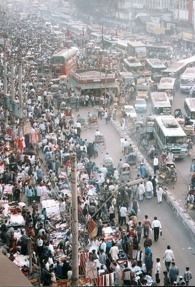 Photo of Dhaka, Bangladesh by
 The world’s urban population is surging, according to a United Nations Population Fund report released yesterday. By next year, an estimated 3.3 billion people will live in cities. By 2030, the number will rise to 5 billion. George Martin, the report’s author, calls the growth “unstoppable.” According to a New York Times story, the report predicts that the surge in population will likely occur less in mega-cities like Lagos, Nigeria than in “places like Gabarone, Botswana, whose population is projected to rise to 500,000 in 2020 from 18,000 in 1971.” Overall, Asia and Africa will see most of the growth. The “accumulated urban growth of these two regions during the whole span of history will be duplicated in a single generation,” according to the report.
What will it mean for people living and traveling to cities? Poverty is likely to increase, and so will the size of world’s slums, which, according to the report, are already home for 1 billion people. However, the report also notes that cities are economic engines and they “represent the best hope” of escaping poverty.
On an individual level, this rapid urbanization will affect people in a variety of ways, some of which are explored in a series of compelling personal stories at the United Nations Population Fund Web site. Among those revealing their urban experiences: Geeta, a “community mobilizer” in Mumbai, and Bing, who escaped rural China and now lives in Tianjin.
 Email to friend
 Twitter
 del.icio.us
 Digg
Digg Facebook
 Furl
Furl Ma.gnolia
 Mixx
Mixx Reddit
 StumbleUpon
 Yahoo! Buzz
Michael Yessis is the cofounder and coeditor-in-chief of World Hum.

lotem 02.29.08 | 1:17 AM ET
wow , just say : amazing
Jonny 07.21.08 | 6:29 PM ET
Its a fascinating area of study - its true that big cities put an enormous strain on infrastructure - particularly the most important such as clean water and sanitation facilities - yet at the same time offer a better quality of life and as you state above help drive the country forwards and reduce poverty.
At the same time big inequalities grow between urban and rural areas, which pushes more people to migrate to the cities - and over time, the remittances (sending money home) from workers in the city back to their villages can be a major factor in village development and reducing poverty there.
Its a baffling field - and it certainly is unstoppable, measures against migration never work - but the results will be very interesting indeed.